
KOSPI Whipsaw Explained: Samsung, SK Hynix and the AI Spending Doubts Behind the Swing

 Prefer us on Google

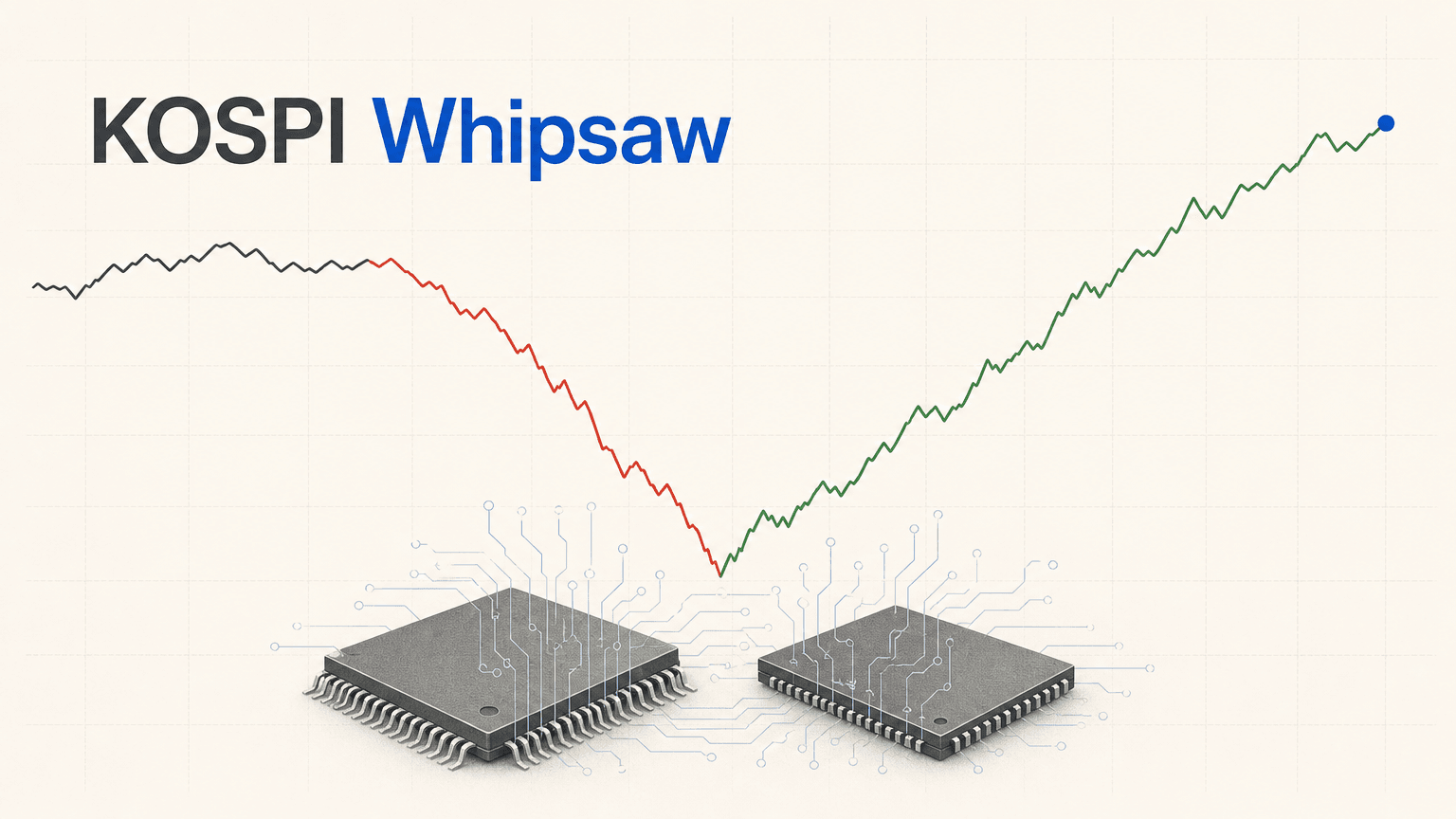
The KOSPI opened 3.17% lower on October 19, 2026, then closed 1.76% higher at 5,768.01, a swing of about 4.9 percentage points from the open to the close by the author’s arithmetic. The KOSPI’s reversal followed a sell-off in chipmakers Samsung Electronics and SK Hynix, driven by doubts that heavy AI spending will turn into revenue.
Few sources explain what turned the KOSPI around, and several market reports carry figures that do not match one another. The sections below separate what the main sources confirm from what remains unclear.
What Happened to the KOSPI on October 19?
The KOSPI opened at 5,488.41 on October 19, down 3.17% from the previous close of 5,668.05, and closed at 5,768.01, up 99.96 points or 1.76%. The opening figure appears in reports from SBS, KED Global and The Sunday Guardian, and the close comes from Seoul Economic Daily, published at 15:36 KST. The close is consistent with the earlier level, since 5,668.05 plus 99.96 points equals 5,768.01.
KED Global reported that the KOSPI opened lower after individual investors took profits following Friday’s gains and after Wall Street fell on doubts about AI infrastructure spending. The Asia Business Daily reported later in the session that the index turned slightly higher, with foreign investors and institutions net buyers. No source reviewed gives a single cause for the rebound, so the move from a 3% fall to a gain is best described as an intraday reversal with several possible contributors.
Why Do Samsung and SK Hynix Matter So Much to the KOSPI?
Samsung Electronics and SK Hynix matter to the KOSPI because they are two of the largest stocks on the Korea Exchange and the main memory-chip names tied to AI demand. When investors doubt AI spending, these two tend to move first and hardest, which pulls the whole index with them.
KED Global reported that SK Hynix hit a nearly six-month intraday low on October 19 and that Samsung was near a three-month low during the morning. A market report published by The Sunday Guardian put Samsung’s fall at 17.8% and SK Hynix’s at 24.3% in the week ended October 16, and described the SK Hynix drop as the steepest weekly fall since November 2008. That report said its own figures were supplied and needed verification, so those two percentages should be treated as unconfirmed.
What Are the AI Spending Doubts Behind the KOSPI Swing?
The doubts concern whether the heavy investment in AI data centers will produce enough revenue to justify it, and they spread to chipmakers because those companies sell the hardware. KED Global named these doubts as a reason for the October 19 opening, and a Sunday Guardian report said foreign investors sold about 11.21 trillion won of KOSPI shares in the previous week, mostly Samsung and SK Hynix. That foreign selling figure comes from a single report with a reliability caveat.
The concern was not limited to Korea. KuCoin’s October 19 daily report said AI-related selling hit U.S. equities, that the semiconductor index had eight straight losing sessions, and that stronger-than-expected inflation data and AI-company debt worries drove the move. CoreWeave, an AI cloud company, also fell sharply that week. Reuters said its roughly $50 billion debt load had rippled across the AI industry, and Bloomberg, cited by Yahoo Finance, reported a record cost of default insurance on its debt. The same doubts that hurt CoreWeave appear to be the ones reaching Korean chipmakers, though no source reviewed states a direct link.
-- Price
What Is Confirmed and What Is Still Unclear About the KOSPI Move?
The confirmed facts are the opening level, the close and the sell-off in chip stocks, while the cause of the rebound and several percentage figures remain unclear. The open at 5,488.41, the close at 5,768.01 and the previous close at 5,668.05 line up across sources, and KED Global and Asia Business Daily agree on the direction of the chipmakers and the flows.
Several items are not confirmed. The weekly Samsung and SK Hynix losses and the 11.21 trillion won of foreign selling come from one report that flags its own data problems. Headlines from the Asia Business Daily and Seoul Economic Daily cited analyst warnings that the KOSPI could slide toward 5,000 or 5,100, but the underlying notes were not reviewed here, and the two levels differ. KOSDAQ figures also conflict across reports and are left out of this article.

What Could Move the KOSPI Next?
The KOSPI is likely to stay tied to chip stocks, foreign investor flows and U.S. technology shares, and the sources point to a few things worth watching. Foreign buying or selling in Samsung and SK Hynix has been the clearest swing factor, since foreigners were reported as net sellers earlier in the month and net buyers on October 16 and during the October 19 session.
U.S. data and central bank decisions also matter. Finwire’s weekly calendar lists the U.S. Federal Reserve policy meeting for October 27 to 28 and Tesla and Meta earnings on October 21, and strong inflation data was named as a factor in the recent U.S. sell-off. Another leg down in AI-linked stocks or in credit markets, where CoreWeave has become a focus, could keep pressure on Korean chipmakers, while a recovery in U.S. tech could help the KOSPI. None of these sources predicts a direction.
How Can Traders Follow Samsung and SK Hynix on WEEX?
Traders who follow the KOSPI can trade Samsung Electronics and SK Hynix on WEEX, although they are single stocks and not the KOSPI itself. Because the two chipmakers carry so much weight in the index’s mood, their price action is often the closest tradable read on days like October 19, when the market opened sharply lower and recovered within hours.
The Samsung and SK Hynix pages show the trading details for each pair. Both are price-based contracts, so trading them gives exposure to the price and is not the same as owning Samsung or SK Hynix shares. They can involve leverage, liquidation and funding fees, which matters when a stock can open more than 3% lower and recover the same day, so the contract terms on each page are worth reading first, and pair availability can change.
WEEX also maintains a 1,000 BTC protection fund, which adds a layer of safeguard but does not remove market risk. Position size and exit levels are worth deciding before a volatile session, not after the first sharp move.
Conclusion
The KOSPI opened 3.17% lower and closed 1.76% higher on October 19, 2026, a reversal tied to doubts about AI spending that hit Samsung Electronics and SK Hynix. The open, the close and the direction of the chipmakers are well supported, while the cause of the rebound, the weekly stock losses and the analyst warning levels are not.
Readers following the KOSPI can watch foreign flows, the two chipmakers and U.S. technology shares, and check official Korea Exchange data before relying on any single report’s figures.
FAQ
1. Why did the KOSPI fall at the open on October 19?
The KOSPI opened 3.17% lower on doubts that heavy AI spending will pay off and on profit-taking, according to KED Global.
2. Why did the KOSPI close higher on October 19?
The KOSPI closed up 1.76% at 5,768.01, but no source reviewed gives one cause. Asia Business Daily reported foreign and institutional net buying during the session.
3. How do Samsung and SK Hynix affect the KOSPI?
Samsung Electronics and SK Hynix are two of the largest KOSPI stocks, and AI-related doubts hit them first. SK Hynix reached a near six-month intraday low on October 19.
4. Will the KOSPI fall below 5,000?
Some headlines cite analyst warnings of 5,000 to 5,100, but the underlying notes were not reviewed. No source reviewed predicts a KOSPI direction.
5. Can I trade Samsung and SK Hynix on WEEX?
Yes, WEEX lets users trade Samsung and SK Hynix. These are price-based contracts and not share ownership, so check the WEEX trading page for current terms and risks.
This content is provided for general informational purposes only and doesn't constitute financial, investment, legal, or tax advice. Any events, rewards, online promotions, or related information mentioned herein should not be considered a recommendation, solicitation, or invitation to purchase, sell, trade, or otherwise deal in any crypto assets. Crypto assets are highly volatile and may result in loss. The availability of WEEX services, products, and related events may vary by region. You are responsible for ensuring that your participation is in accordance with applicable local laws and regulations.
You may also like

SKHY Stock Falls Again: Is the SK Hynix Selloff About China’s CXMT and YMTC or AI Profit-Taking?
SK Hynix Stock Jumps as OpenAI's New Model Revives the Memory Chip Trade
SK Hynix Stock Hits New Highs in Korea as Its US Listing Surges 8%: What's Driving Both
WEEX Stock Spot 2.0 Rewards Guide: Trade & Share $100K
CXMT Stock Explained: What Is ChangXin Memory, Why It Fell on October 19 and What to Watch Next
Why Is CoreWeave (CRWV) Stock Falling? Debt, Bond Yields and What Analysts Say
Is Bitget Leaving Russia? What Account Holders Should Check
How to Day Trade Crypto for Beginners: The Math Behind One Trade
Tokenized Stocks List 2026: Issuers, Sectors and What WEEX Lists

Trading Psychology for Beginners: Crypto Traps and Hard Rules
What Is a Bitcoin ETF? How Creation, Custody and Fees Work
What Is Blockchain and How Does It Work? One Transaction, Traced

The Cost of Idle USDT: What Unused Balances Miss Each Year

Flying Tesla Roadster (FTR) Coin: What Is It and What to Check Before Trading a Roadster Memecoin

Tesla Roadster Performance, Thrust and Rocket Trims: Specs, Price and 2028 Production
Cyberleek Token Risks: Memecoins Tied to Leaks, Anonymous Wallets and Why Verification Matters

Staking APR vs Inflation: How Much of Your Crypto Yield Is Real?
CRWV Stock Swings From -9.5% to +5.9%: Why CoreWeave Reversed

WEEX Convert Fees: What Zero-Fee Conversion Really Costs You
Starknet Independent L1 Vote: What It Really Means for STRK

WEEX Convert Quote: How the 8-Second Price Lock Really Works
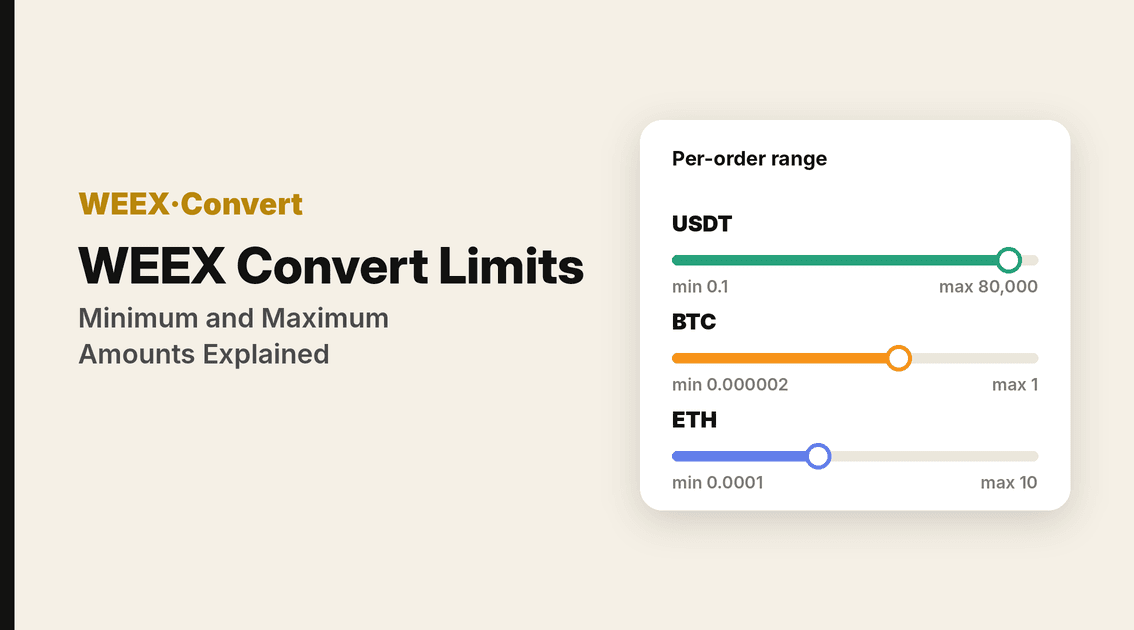
WEEX Convert Limits: Minimum and Maximum Amounts Explained
How to Check a WEEX Convert Order: History, Rate and Status
What Is Walrus Coin (WAL)? Why It Is Rising and What Is Still Unconfirmed
PYTH USDT After the 100% Rule: Buyback Mechanics, Overbought Signals and Risks Before Trading
USDC Significant EMT Status in the EU: What Changes on November 12 Under MiCA

APR vs APY in Crypto: Why the Bigger Number Can Mislead You
Walrus (WAL) Jumps 30%: Sui Storage Token Rallies on AI Data
Bitcoin Price After Hot CPI: Why BTC Is Pinned Near $82,000
Sandisk Stock After a 524% Run: Why SNDK Keeps Sliding Now
SKHY Stock Falls Again: Is the SK Hynix Selloff About China’s CXMT and YMTC or AI Profit-Taking?
SK Hynix Stock Jumps as OpenAI's New Model Revives the Memory Chip Trade
SK Hynix Stock Hits New Highs in Korea as Its US Listing Surges 8%: What's Driving Both
WEEX Stock Spot 2.0 Rewards Guide: Trade & Share $100K
CXMT Stock Explained: What Is ChangXin Memory, Why It Fell on October 19 and What to Watch Next
Why Is CoreWeave (CRWV) Stock Falling? Debt, Bond Yields and What Analysts Say
Contents
Popular coins
Latest articles


