
What Is Blockchain and How Does It Work? One Transaction, Traced

 Prefer us on Google


A blockchain is a shared record of transactions that thousands of independent computers keep in sync without a central owner. New entries are grouped into blocks, each block carries a cryptographic fingerprint of the one before it, and the network agrees on which block comes next through a rule called consensus. That is the short answer to "what is blockchain and how does it work." This guide follows one Bitcoin payment from a phone wallet to a confirmed block using real network numbers from October 2026, then explains how proof of work and proof of stake reach the same result in very different ways.
Most explainers stop at the diagram of linked boxes. The boxes are real, but the interesting part is the process around them: who builds a block, why they bother, and what makes changing an old block so expensive that nobody seriously tries on a large network.
What Is a Blockchain, in Plain Terms?
Think of a blockchain as a ledger that is copied, not stored. On Bitcoin, every full node holds the entire history back to the first block in January 2009, and each node checks every new block against the same rules before accepting it. If your node and mine disagree, both follow the valid chain with the most accumulated work behind it.
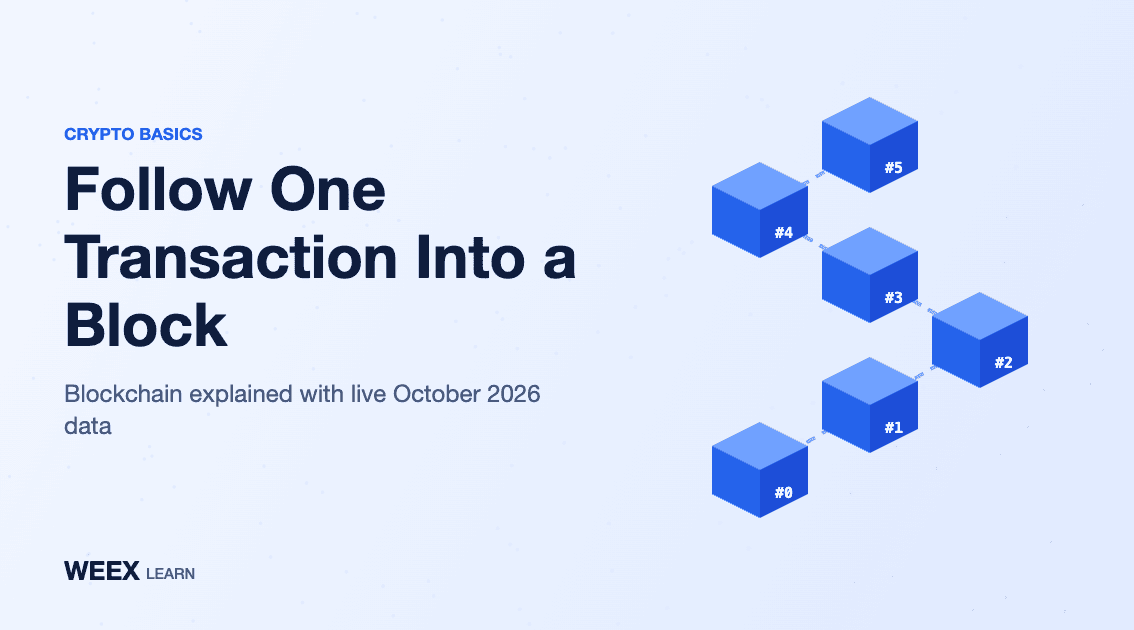
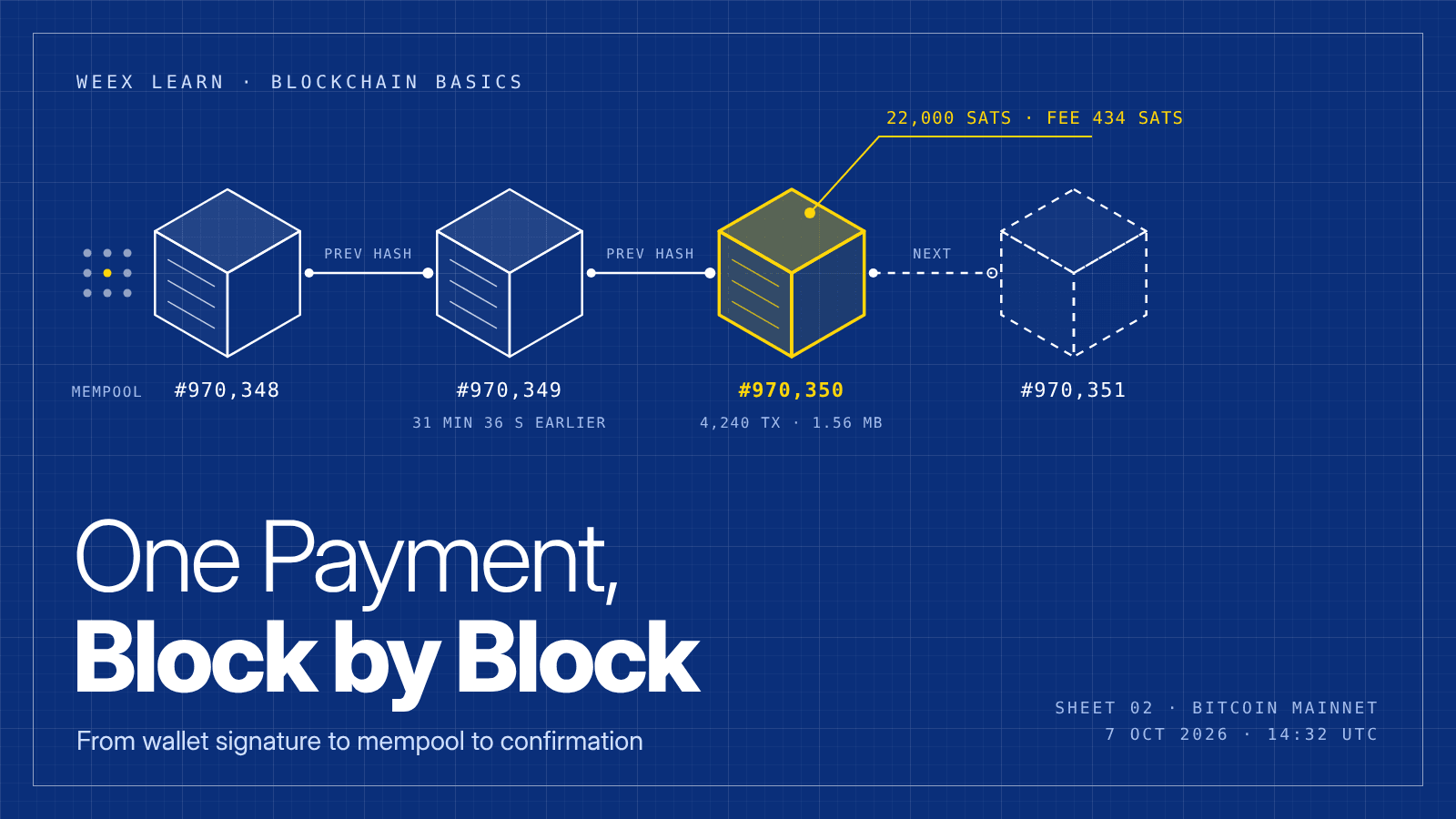
Each block has two parts. The body is a list of transactions. The header is a small summary that includes a timestamp, a hash of all the transactions in the body, and the hash of the previous block's header. A hash is a fixed-length fingerprint produced by a function (SHA-256 on Bitcoin): change one character of the input and the output changes completely. Because every header contains the previous block's hash, editing an old transaction breaks that block's fingerprint, which breaks the link in the next block, and so on up to the present. That chain of fingerprints is where the name comes from.
The scale is no longer theoretical. On Oct. 18, 2026, Bitcoin's chain passed block 972,036, and the network was processing several thousand transactions per block, per mempool.space data.
How Blockchain Works: One Bitcoin Payment From Wallet to Block
Here is the life of an ordinary payment, say Alice sending 0.01 BTC to Bob, using figures from the Bitcoin network on Oct. 18–19, 2026 (source: mempool.space).
- Alice's wallet builds the transaction. It picks one or more unspent outputs Alice already controls (Bitcoin tracks coins as "outputs," not account balances), assigns 0.01 BTC to Bob's address and sends the remainder back to Alice as change. A simple one-input, two-output SegWit transaction is roughly 140 virtual bytes.
- The wallet sets a fee. Bitcoin fees are priced per virtual byte, not per dollar sent. On Oct. 18 the recommended rates were just 1 to 3 satoshis per vbyte, so Alice's fee at 3 sat/vB comes to about 420 satoshis, or 0.0000042 BTC. Sending 0.01 BTC or 100 BTC costs the same if the transaction is the same size.
- Alice's private key signs it. The signature proves she owns the coins without revealing the key. Anyone can verify the signature with her public key; nobody can forge it without the private key.
- The transaction is broadcast to nodes. Alice's wallet hands it to a node, which checks the signature, confirms the inputs are unspent and passes it to its peers.
- It waits in the mempool. Each node keeps a pool of valid but unconfirmed transactions. Around 78,000 were waiting on Oct. 18. Block space is limited, so miners prioritize the highest fee per vbyte first. At 1 to 3 sat/vB with a quiet mempool, Alice should not wait long; in a fee spike, a low bid can sit for hours.
- A miner packs it into a candidate block. Mining pools assemble a few thousand mempool transactions into a block template. Block 972,036, mined by the OCEAN pool at 18:23:34 UTC on Oct. 18, held 5,191 transactions in about 1.88 megabytes.
- The miner searches for a valid hash. The pool repeatedly hashes the block header with a changing number called a nonce, looking for a result below a target set by the current difficulty (about 140.6 trillion that week). The network as a whole was running roughly 1,022 exahashes per second, which is about a sextillion guesses every second, to find one winner roughly every ten minutes.
- The winning block is broadcast and checked. Every node re-verifies every transaction and the proof of work. If it passes, they add the block to their copy of the chain. The miner earns the block reward: 3.125 BTC of new coins (the subsidy since the April 2024 halving) plus fees. Block 972,036 paid about 3.13 BTC in total, meaning fees across all 5,191 transactions added only around 0.005 BTC.
- Bob sees one confirmation, then more. Alice's payment is now in one block. Each later block adds another confirmation. Exchanges and merchants commonly wait for several, because the deeper a block sits, the more work an attacker would have to redo to reverse it.
One detail in that data shows why "every ten minutes" is an average, not a schedule. Block 972,035, mined by F2Pool, landed at 18:23:11 UTC, just 23 seconds before OCEAN's block. The block before it arrived about 14 minutes earlier. Mining is a lottery, and the protocol corrects for luck by readjusting difficulty every 2,016 blocks, with the next retarget due at block 973,728. If you want to see where the asset itself trades after this process, the Bitcoin price page on WEEX tracks BTC market data.
Why Changing a Confirmed Block Is So Hard
Rewriting history on Bitcoin would mean redoing the proof of work for the target block and every block after it, then outpacing the honest network going forward. At more than 1,000 exahashes per second, that requires controlling more computing power than all other miners combined, sustained over time, plus the electricity to run it. This is the so-called 51% attack. It has happened on small proof-of-work chains with little hashpower, which is a fair reminder that a blockchain's security depends on how much work or stake stands behind it, not on the word "blockchain" itself.
It also explains what "immutable" really means. Old blocks can technically be replaced; doing so is designed to be economically irrational. Six confirmations on Bitcoin represent roughly an hour of the world's largest computing network working against the attacker.
-- Price
Proof of Work vs Proof of Stake: Same Job, Different Cost
Both systems answer the same question: who gets to propose the next block, and why should anyone trust them? Proof of work, which Bitcoin uses, answers with spent energy. Miners burn electricity to find a valid hash, and a cheater wastes that cost because honest nodes reject invalid blocks.
Proof of stake, which Ethereum has used since September 2022, answers with locked capital. Validators deposit ETH as collateral. Time is cut into 12-second slots, and in each slot the protocol picks one validator at random, weighted by stake, to propose a block while committees of others vote to attest to it. Thirty-two slots form an epoch of 6.4 minutes, and a block is usually considered finalized after two epochs, about 13 minutes. Break the rules, for example by signing two conflicting blocks, and part of your deposit is destroyed, a penalty called slashing. As of Oct. 6, 2026, roughly 43.7 million ETH was staked across about 863,000 validators, according to Crypto Briefing.
The practical contrast for a user comes down to three things. Timing: Bitcoin blocks arrive at random intervals averaging ten minutes, while Ethereum blocks arrive on a fixed 12-second clock. Finality: Bitcoin's settlement is probabilistic and strengthens with each block, while Ethereum offers explicit economic finality after about two epochs. Cost of attack: on Bitcoin an attacker must out-buy and out-power miners; on Ethereum they must acquire a huge share of staked ETH and accept that the protocol can burn it. Ethereum's details, including its own market data, are on the Ethereum page on WEEX.
The better reading is that neither design is free. Proof of work is criticized for energy use but is simple and battle-tested since 2009. Proof of stake uses a tiny fraction of the energy but concentrates influence in large staking providers, which is why the share of stake held by a few operators is worth watching.
What Most Blockchain Explainers Get Wrong
A few common claims need correcting before you use any blockchain with real money.
- "Blockchain is anonymous." Bitcoin and Ethereum are public. Addresses are pseudonymous, but every transaction is visible forever, and exchanges that verify identity link addresses to people.
- "Transactions are instant." Broadcast is near-instant; settlement is not. Expect around ten minutes for one Bitcoin confirmation and about 13 minutes for Ethereum finality, longer in congestion.
- "Mistakes can be reversed." There is no support desk on the base layer. Send to a wrong address or a wrong network and the funds are usually gone.
- "The blockchain stores your coins." It stores the record. Your control lives in your private key, so a lost or leaked key is a lost wallet.
Once you understand that a blockchain is a ledger secured by either energy or collateral, the jargon gets easier: fees are bids for block space, confirmations are layers of protection, and validators and miners are paid referees. For readers ready to move from theory to practice, WEEX's step-by-step guide to buying Bitcoin covers the account and order basics. Nothing here is investment advice, and crypto prices can swing sharply.
FAQ
1. Is blockchain the same thing as Bitcoin?
No. Bitcoin is the first and largest application of blockchain technology. A blockchain is the underlying record-keeping method, and it also powers networks such as Ethereum, as well as private ledgers used by companies.
2. How long does a blockchain transaction take to confirm?
It depends on the chain and the fee. A Bitcoin transaction usually gets its first confirmation within about ten minutes if the fee is competitive, while Ethereum includes transactions in 12-second slots and reaches finality in roughly 13 minutes.
3. Can a blockchain be hacked?
Large chains like Bitcoin and Ethereum have never had their core ledger rewritten, because doing so would require a majority of hashpower or stake. Most losses happen around the chain instead: stolen private keys, phishing, buggy smart contracts and hacked platforms.
4. What are the main types of blockchain?
Public blockchains such as Bitcoin let anyone read, transact and help validate. Private blockchains restrict participation to approved members, consortium chains are run by a group of organizations, and hybrid designs mix public and private elements.
This content is provided for general informational purposes only and doesn't constitute financial, investment, legal, or tax advice. Any events, rewards, online promotions, or related information mentioned herein should not be considered a recommendation, solicitation, or invitation to purchase, sell, trade, or otherwise deal in any crypto assets. Crypto assets are highly volatile and may result in loss. The availability of WEEX services, products, and related events may vary by region. You are responsible for ensuring that your participation is in accordance with applicable local laws and regulations.
You may also like
How to Day Trade Crypto for Beginners: The Math Behind One Trade
Trading Psychology for Beginners: Crypto Traps and Hard Rules
What Is a Bitcoin ETF? How Creation, Custody and Fees Work
WEEX Convert Fees: What Zero-Fee Conversion Really Costs You
WEEX Convert Quote: How the 8-Second Price Lock Really Works
WEEX Convert Limits: Minimum and Maximum Amounts Explained
How to Check a WEEX Convert Order: History, Rate and Status

USDC Significant EMT Status in the EU: What Changes on November 12 Under MiCA
Walrus (WAL) Jumps 30%: Sui Storage Token Rallies on AI Data
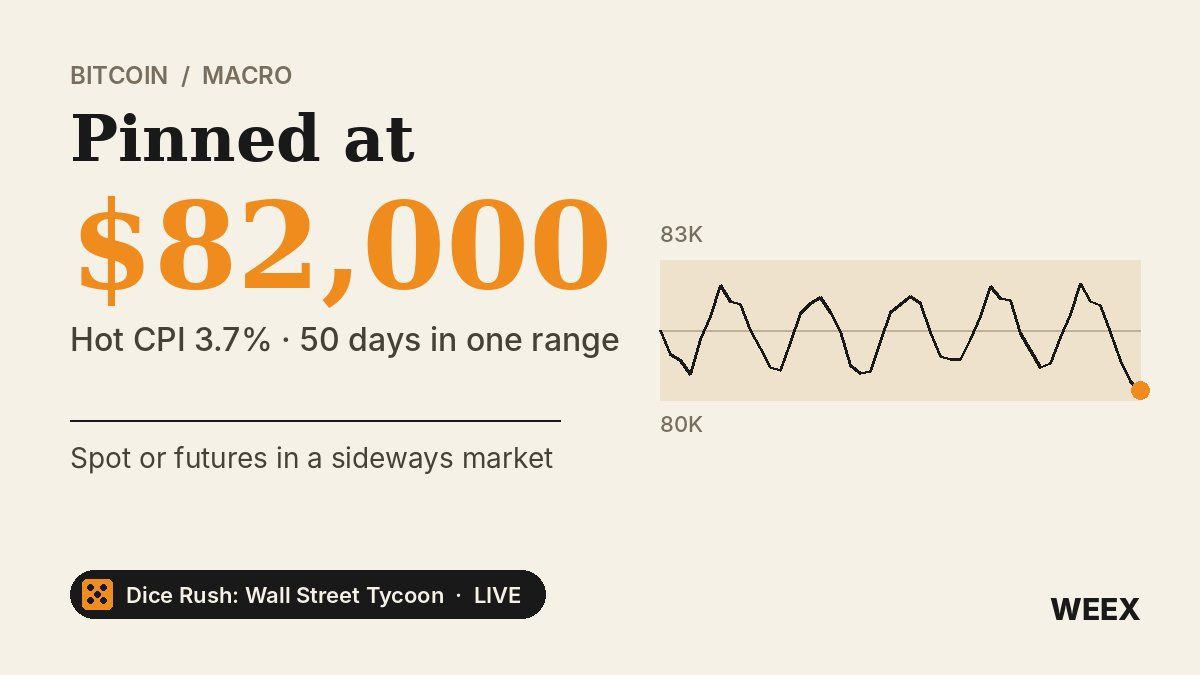
Bitcoin Price After Hot CPI: Why BTC Is Pinned Near $82,000
What Is a Limit Order? How It Works and When to Use It

Best Crypto Miner for Beginners: What to Check on Cost, Power, Hashprice and Profit Before You Buy

Limit Order vs Market Order: Which One to Use When Trading Crypto
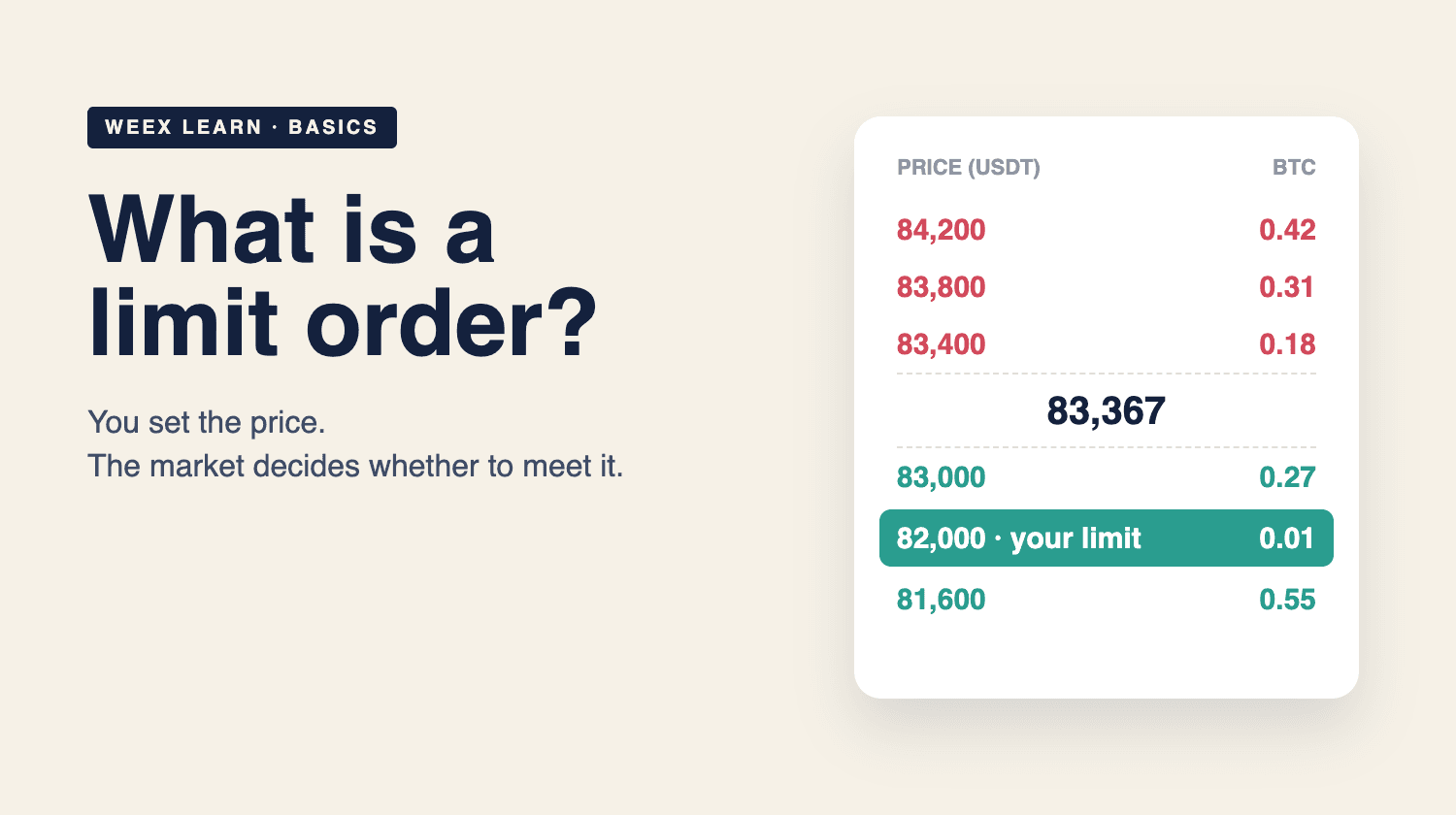
What Is a Limit Order? How It Works in Crypto With BTC Examples
Stop Limit Order: How It Works and Why It Can Fail to Fill
Best Crypto Platform for Beginners: Pick by Goal, Not Brand

Best Crypto Podcasts for Beginners: A 4-Week Listening Plan
How to Buy Crypto Anonymously: 5 Methods, Real Costs and Limits
Will Bitcoin Break $87,000 This Week? CPI, Fed Speakers and ETF Outflows to Watch
Conflux (CFX) Price Jumps on China's National Blockchain Network Plan: Does the Policy Actually Name CFX?
BTC Futures Analysis: $80K Held, but Longs Are Still Paying Up
ETH Futures: Why Ether Is Falling Faster Than Bitcoin This Week
ENA Token Price Drops After October 5 Unlock: What Happened to Ethena?
What Is Blockchain and How Does It Work? One Real Payment Traced

How to Buy Crypto With a Prepaid Card: Step-by-Step Guide
Best Crypto Trading Strategies for Beginners: What to Know Before You Trade
LayerZero Unlock October 2026: Can ZRO Hold $2 Amid Whale Inflows?
How to Buy Crypto With Apple Pay in 5 Steps: Why Your Bank May Decline the Payment

Why Does Bitcoin (BTC) Drop? How to Read a BTC Liquidation Heatmap Without Guessing the Bottom
Best Crypto Wallet App in 2026: How to Choose Between Hot, Cold, Custodial, and Web3 Wallets
How to Day Trade Crypto for Beginners: The Math Behind One Trade
Trading Psychology for Beginners: Crypto Traps and Hard Rules
What Is a Bitcoin ETF? How Creation, Custody and Fees Work
WEEX Convert Fees: What Zero-Fee Conversion Really Costs You
WEEX Convert Quote: How the 8-Second Price Lock Really Works
WEEX Convert Limits: Minimum and Maximum Amounts Explained
Contents
Popular coins
Latest articles


