
- Buy Crypto
- Markets
 Futures
- Spot
- Copy Trade
- Earn
- More
Bitcoin in the Shadow of a Trade War: How to Find a Balance Between Risk and Hedging?

Original Article Title: "Bitcoin in the Shadow of Trade Wars: How to Find a Balance Between Risk and Hedge?"
Original Article Author: Andrew Singer, Block Unicorn

A few years ago, many in the crypto community described Bitcoin as a "hedge" asset. Today, fewer people use that term to describe it.
A hedge asset retains or increases in value during times of economic stress. It can be government bonds, currencies like the US dollar, commodities like gold, or even blue-chip stocks.
The US-led global trade war and unsettling economic reports have led to stock market crashes, and Bitcoin has followed suit – something that should not happen to a "hedge" asset.
Bitcoin has also underperformed compared to gold. "Since January 1, the price of gold has risen +10%, while Bitcoin has fallen -10%," the Kobeissi Letter pointed out on March 3. "Cryptocurrency is no longer seen as a hedge tool." (Bitcoin fell even more last week.)
But some market observers say this is not entirely unexpected.
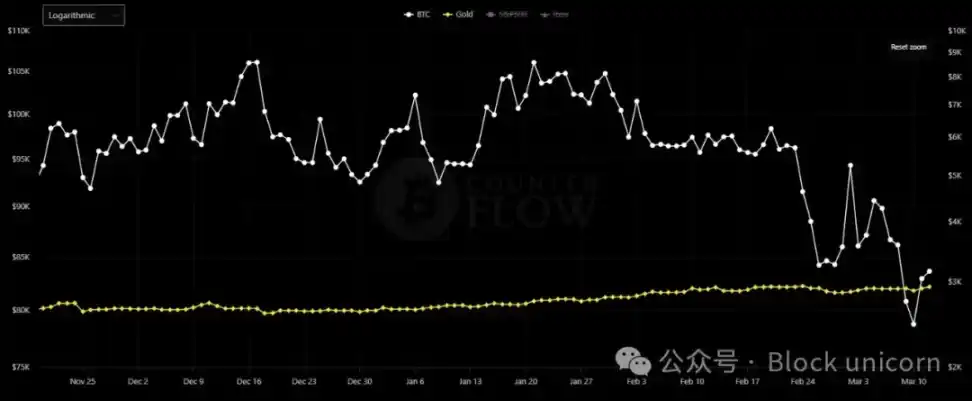
Bitcoin (white) and Gold (yellow) price chart from December 1 to March 13. Source: Bitcoin Counter Flow
Was Bitcoin Ever a Hedge Asset?
"I have never considered Bitcoin a 'hedge asset,'" Paul Schatz, Founder and President of Heritage Capital, told us. "The volatility of Bitcoin is too great to fit into the hedge category, although I do believe investors can and should have an overall allocation to this asset class."
"To me, Bitcoin is still a speculative tool, not a hedge asset," Jochen Stanz, Chief Market Analyst at CMC Markets (Germany), told us. "Hedge investments like gold have intrinsic value that will never be zero. Bitcoin could drop 80% in a major correction. I don't think gold will do that."
"Cryptocurrencies, including Bitcoin, have never been a hedge tool in my opinion," Buvaneshwaran Venugopal, Assistant Professor of Finance at the University of Central Florida, told us.
However, things are not always as clear-cut as they may initially seem, especially when it comes to cryptocurrency.
People may think of different types of safe-haven assets: one for geopolitical events such as war, pandemics, and economic downturns, and another for severe financial events such as bank failures or a weakening US dollar.
The perception of Bitcoin may be shifting. By 2024, with the issuance of exchange-traded funds (ETFs) from major asset management companies like BlackRock and Fidelity, it is being included, broadening its ownership base but potentially also altering its 'narrative'.
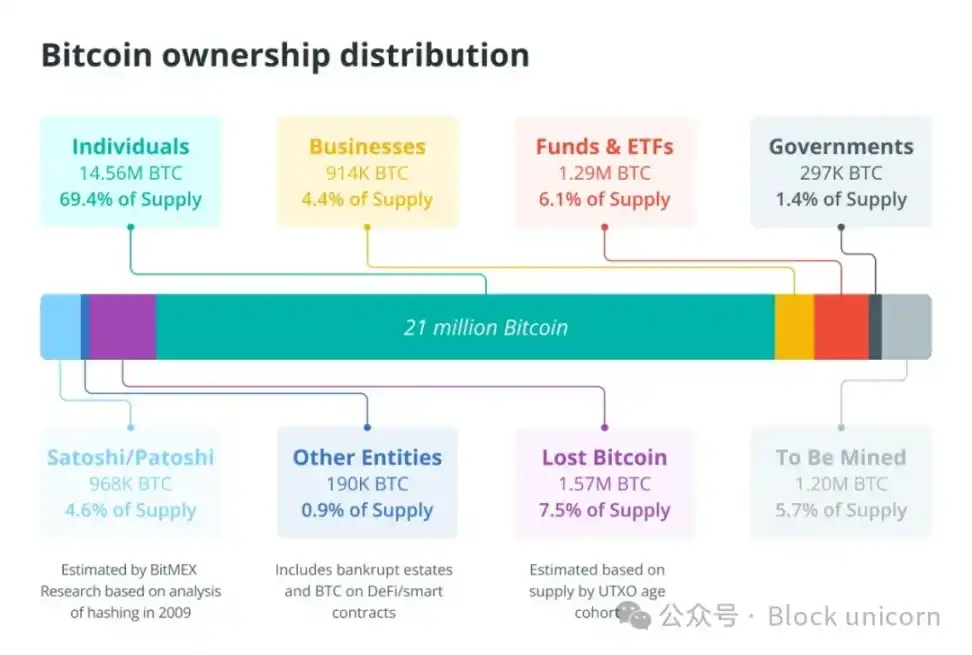
Now, it is more widely seen as a speculative or 'risk-on' asset, akin to tech stocks.
"Bitcoin and the entire cryptocurrency space have become highly correlated with risk assets and are usually inversely correlated to safe-haven assets like gold," Adam Kobeissi, editor of the Kobeissi Letter, told us.
He further noted that with "more institutional involvement and leverage," there is significant uncertainty about Bitcoin's future, and the narrative has shifted from Bitcoin being seen as 'digital gold' to a more speculative asset.
People might think that the acceptance by traditional financial giants like BlackRock and Fidelity would make Bitcoin's future more secure, enhancing its safe-haven narrative - but according to Venugopal, this is not the case:
"The entry of large corporations into Bitcoin does not make it safer. In fact, it means that Bitcoin is becoming more like any other asset institutional investors tend to invest in."
Venugopal continued to say that it would be more influenced by the regular trading and drawdown strategies used by institutional investors. "If there is anything different, Bitcoin is now more correlated with risk assets in the market."
Bitcoin's Dual Nature
Few would argue against Bitcoin and other cryptocurrencies still being subject to significant price swings, recently driven by increased retail adoption of cryptocurrency, particularly fueled by the meme coin craze, which, as Kobeissi pointed out, is one of the largest cryptocurrency onboarding events in history. But perhaps that is the wrong focus.
"Safe-haven assets are always long-term assets, which means short-term volatility is not an intrinsic feature," Noelle Acheson, author of the Crypto is Macro Now newsletter, told us.
The biggest question is whether Bitcoin can maintain its value against fiat currency in the long term, and it has already been able to do so. "Its digital proof of work is proven—it has outperformed gold and U.S. stocks in almost any four-year time frame," Acheson said, adding:
“Bitcoin has always had two key narratives: it is a short-term risk asset, sensitive to liquidity expectations and overall sentiment. It is also a long-term store of value. It can be both, as we are seeing.”
Another possibility is that Bitcoin may be a hedge asset for certain events but not for others.
Gold can serve as a hedge against geopolitical issues (such as trade wars), and both Bitcoin and gold can serve as hedges against inflation. "Therefore, both are useful hedge assets in a portfolio," Kendrick added.
Others, including Ark Investment's Cathie Wood, also agreed that Bitcoin acted as a hedge asset during the run on SVB and Signature banks in March 2023. According to CoinGecko data, when SVB collapsed on March 10, 2023, Bitcoin was priced at around $20,200. A week later, it was close to $27,400, up about 35%.
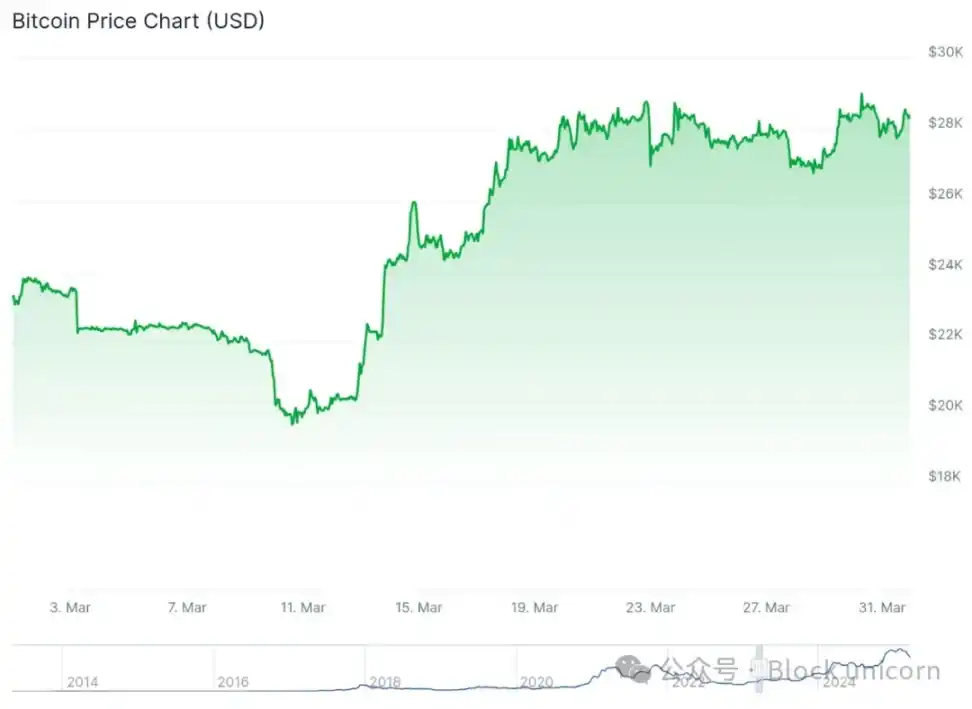
Bitcoin price fell on March 10 and rebounded a week later. Source: CoinGecko
Schatz does not believe that Bitcoin is a tool to hedge against inflation. The events of 2022, when FTX and other crypto companies collapsed, marking the beginning of the crypto winter, "severely challenged this argument."
Perhaps it is a tool to hedge against the U.S. dollar and treasuries? "This is possible, but these scenarios are quite bleak and hard to imagine," Schatz added.
Don't Overreact
Kobeissi agrees that short-term volatility in asset classes "is usually the least correlated over long-term timeframes." Despite some recent pullback, many of Bitcoin's fundamentals remain positive: a crypto-friendly U.S. government, announcements of U.S. Bitcoin reserves, and the surge in cryptocurrency adoption.
The biggest issue facing market participants is: "What is the next major catalyst for upward momentum?" Kobeissi told us. "This is the reason for market pullbacks and consolidation: looking for the next major catalyst."
“Since macro investors started viewing Bitcoin as a high-volatility, liquidity-sensitive risk asset, it has behaved like a risk asset,” Acheson added. Furthermore, “It’s almost always short-term traders setting the final price, and if they’re in the process of unwinding risk assets, we’ll see weakness in Bitcoin.”
The market overall is struggling. “The reappearance of the inflation specter and a severe economic slowdown have greatly impacted expectations,” which has also affected Bitcoin’s price. Acheson further noted:
“Given this backdrop, and Bitcoin’s dual nature as both a risk asset and a long-term hedge, I’m surprised it didn’t drop further.”
Venugopal stated that Bitcoin hasn’t been a short-term hedge or safe haven asset since 2017. As for the long-standing argument of Bitcoin being digital gold due to its 21 million supply cap, this only holds true “if a majority of investors collectively expect Bitcoin to appreciate over time,” and “this may or may not be the case.”
You may also like

What Is Vibe Coding? How AI Is Changing Web3 & Crypto Development
What is vibe coding? Learn how AI coding tools are lowering the barrier to Web3 development and enabling anyone to build crypto applications.

The parent company of the New York Stock Exchange strategically invests in OKX: The intentions behind the $25 billion valuation

WEEX P2P update: Country/region restrictions for ad posting
To improve ad security and matching accuracy, WEEX P2P now allows advertisers to restrict who can trade with their ads based on country or region. Advertisers can select preferred counterparty locations for a safer, smoother trading experience.
I. Overview
When publishing P2P ads, advertisers can now set the following:
Allow only counterparties from selected countries or regions to trade with your ads.
With this feature, you can:
Target specific user groups more precisely.Reduce cross-region trading risks.Improve order matching quality.
II. Applicable scenarios
The following are some common scenarios:
Restrict payment methods: Limit orders to users in your country using supported local banks or wallets.Risk control: Avoid trading with users from high-risk regions.Operational strategy: Tailor ads to specific markets.
III. How to get started
On the ad posting page, find "Trading requirements":
Select "Trade with users from selected countries or regions only".Then select the countries or regions to add to the allowlist.Use the search box to quickly find a country or region.Once your settings are complete, submit the ad to apply the restrictions.
When an advertiser enables the "Country/Region Restriction" feature, users who do not meet the criteria will be blocked when placing an order and will see the following prompt:
If you encounter this issue when placing an order as a regular user, try the following solutions.
Choose another ad: Select ads that do not restrict your country/region, or ads that allow users from your location.Show local ads only: Prioritize ads available in the same country as your identity verification.
IV. Benefits
Compared with ads without country/region restrictions, this feature provides the following improvements.
Aspect
Improvement
Trading security
Reduces abnormal orders and fraud risk
Conversion efficiency
Matches ads with more relevant users
Order completion rate
Reduces failures caused by incompatible payment methods
V. FAQ
Q1: Why are some users not able to place orders on my ad?
A1: Their country or region may not be included in your allowlist.
Q2: Can I select multiple countries or regions when setting the restriction?
A2: Yes, multiple selections are supported.
Q3: Can I edit my published ads?
A3: Yes. You can edit your ad in the "My Ads" list. Changes will take effect immediately after saving.

What are the key highlights of this year's Ethereum's most important upgrade, the Glamsterdam upgrade?

March 6 Key Market Update You Can't Miss! | Alpha Morning Report

Sell Nvidia, Buy Power Plant: 27-Year-Old AI Investor Earns $5 Billion in One Year
The $24 Million Heist Behind It: The Most Dangerous Vulnerability in the Crypto World is Actually Human

Justin Sun Lawsuit Dismissed, BlackRock Bullish on Tokenization, What Is the English-Speaking Community Paying Attention To?

Morning News | NYSE parent company invests in OKX; Morgan Stanley provides $500 million loan to Core Scientific; Western Union partners with Crossmint to launch stablecoin USDPT

These former crypto builders have transitioned to the hottest AI projects globally

Ethereum Overhaul 2026 Blueprint, this time to abandon "gradualism"

What Is OpenClaw? How AI Agents Could Change Crypto Exchange Trading
OpenClaw is a rapidly growing open-source AI agent that can autonomously execute tasks and interact with software, including connecting to crypto exchanges through APIs to analyze markets and automate trading strategies. While this creates new opportunities for smarter trading, it also introduces security and operational risks. Through this article, WEEX aims to help users better understand the potential and risks of AI trading agents so they can explore new technologies while trading more safely and responsibly.
Ethereum 2029 Strawmap Guide: Ultra-Fast Consensus, Native Privacy, and the "Acceleration Variables" Brought by AI

Altcoin ETF Surge: SOL and XRP Inflows Total $23 Million as Institutions Diversify
Key Takeaways Institutional interest in altcoin ETFs is expanding, with SOL and XRP showing significant inflows on March…
Vitalik Drops Ethereum Endgame Bombshell: ETH USD to $3,000?
Key Takeaways Vitalik Buterin introduces the “Sanctuary Tech” manifesto to address Ethereum’s non-financial limitations. A current lack of…
Exclusive: Yuliya Barabash Predicts the Most Regulated Could Be the Biggest Crypto Winners
Key Takeaways The aftermath of FTX and Celsius collapses has ushered a new regulatory era, reshaping the crypto…

iPhone Crypto Wallets Under Threat from State-Grade Malware
Key Takeaways: The Coruna exploit kit exploits 23 iOS vulnerabilities, threatening iPhone users’ crypto wallets. Initially state-level surveillance,…

Bitcoin Nears Two-Year ‘Make-or-Break’ Resistance: Future Implications
Key Takeaways Bitcoin’s price is approaching key resistance levels around $73,000, observed for the first time since early…
What Is Vibe Coding? How AI Is Changing Web3 & Crypto Development
What is vibe coding? Learn how AI coding tools are lowering the barrier to Web3 development and enabling anyone to build crypto applications.
The parent company of the New York Stock Exchange strategically invests in OKX: The intentions behind the $25 billion valuation
WEEX P2P update: Country/region restrictions for ad posting
To improve ad security and matching accuracy, WEEX P2P now allows advertisers to restrict who can trade with their ads based on country or region. Advertisers can select preferred counterparty locations for a safer, smoother trading experience.
I. Overview
When publishing P2P ads, advertisers can now set the following:
Allow only counterparties from selected countries or regions to trade with your ads.
With this feature, you can:
Target specific user groups more precisely.Reduce cross-region trading risks.Improve order matching quality.
II. Applicable scenarios
The following are some common scenarios:
Restrict payment methods: Limit orders to users in your country using supported local banks or wallets.Risk control: Avoid trading with users from high-risk regions.Operational strategy: Tailor ads to specific markets.
III. How to get started
On the ad posting page, find "Trading requirements":
Select "Trade with users from selected countries or regions only".Then select the countries or regions to add to the allowlist.Use the search box to quickly find a country or region.Once your settings are complete, submit the ad to apply the restrictions.
When an advertiser enables the "Country/Region Restriction" feature, users who do not meet the criteria will be blocked when placing an order and will see the following prompt:
If you encounter this issue when placing an order as a regular user, try the following solutions.
Choose another ad: Select ads that do not restrict your country/region, or ads that allow users from your location.Show local ads only: Prioritize ads available in the same country as your identity verification.
IV. Benefits
Compared with ads without country/region restrictions, this feature provides the following improvements.
Aspect
Improvement
Trading security
Reduces abnormal orders and fraud risk
Conversion efficiency
Matches ads with more relevant users
Order completion rate
Reduces failures caused by incompatible payment methods
V. FAQ
Q1: Why are some users not able to place orders on my ad?
A1: Their country or region may not be included in your allowlist.
Q2: Can I select multiple countries or regions when setting the restriction?
A2: Yes, multiple selections are supported.
Q3: Can I edit my published ads?
A3: Yes. You can edit your ad in the "My Ads" list. Changes will take effect immediately after saving.


 App
App