
- Buy Crypto
- Markets
 Futures
- Spot
- Copy Trade
- Earn
- More
Hedged Market Shrouded in Fear: Bitcoin May Need Extended Consolidation

Original Article Title: A Market Hedged in Fear
Original Article Authors: Chris Beamish, CryptoVizArt, Antoine Colpaert, Glassnode
Original Article Translation: AididiaoJP, Foresight News
Bitcoin trading below a key short-term holder cost basis indicates exhausted demand and waning momentum. Long-term holders are selling into market strength, while the options market shifts to a defensive posture with increasing demand for put options and heightened volatility, signaling a cautious phase before any sustainable recovery.
Abstract
· Bitcoin trading below short-term holder cost basis indicates waning momentum and exacerbated market fatigue. Multiple failures to reclaim have increased the risk of entering a more prolonged consolidation phase.
· Long-term holders have accelerated selling since July, now disposing of over 22,000 BTC daily, signaling continued profit-taking putting pressure on market stability.
· Open interest has reached an all-time high, but market sentiment leans bearish as traders prefer put options over call options. Short-term bounces are met with hedging activity rather than new optimism.
· Implied volatility remains elevated, and realized volatility has caught up, ending a period of calm low volatility. Market makers' short positions have amplified selling and suppressed rebounds.
· Both on-chain and options data indicate the market is in a cautious transition phase. Market recovery may hinge on the emergence of new spot demand and a moderation in volatility.
· Bitcoin has gradually retraced from its recent highs, stabilizing below the short-term holder cost basis of around $113,000. Historically, this structure often heralds the start of a mid-term bearish phase as weaker holders begin to capitulate.
· In this issue, we assess the current state of market profitability, examine the scale and sustainability of long-term holder spending, and finally determine whether this pullback is a healthy consolidation or a sign of deeper weakness to come by evaluating sentiment in the options market.
On-chain Insights
Testing Conviction
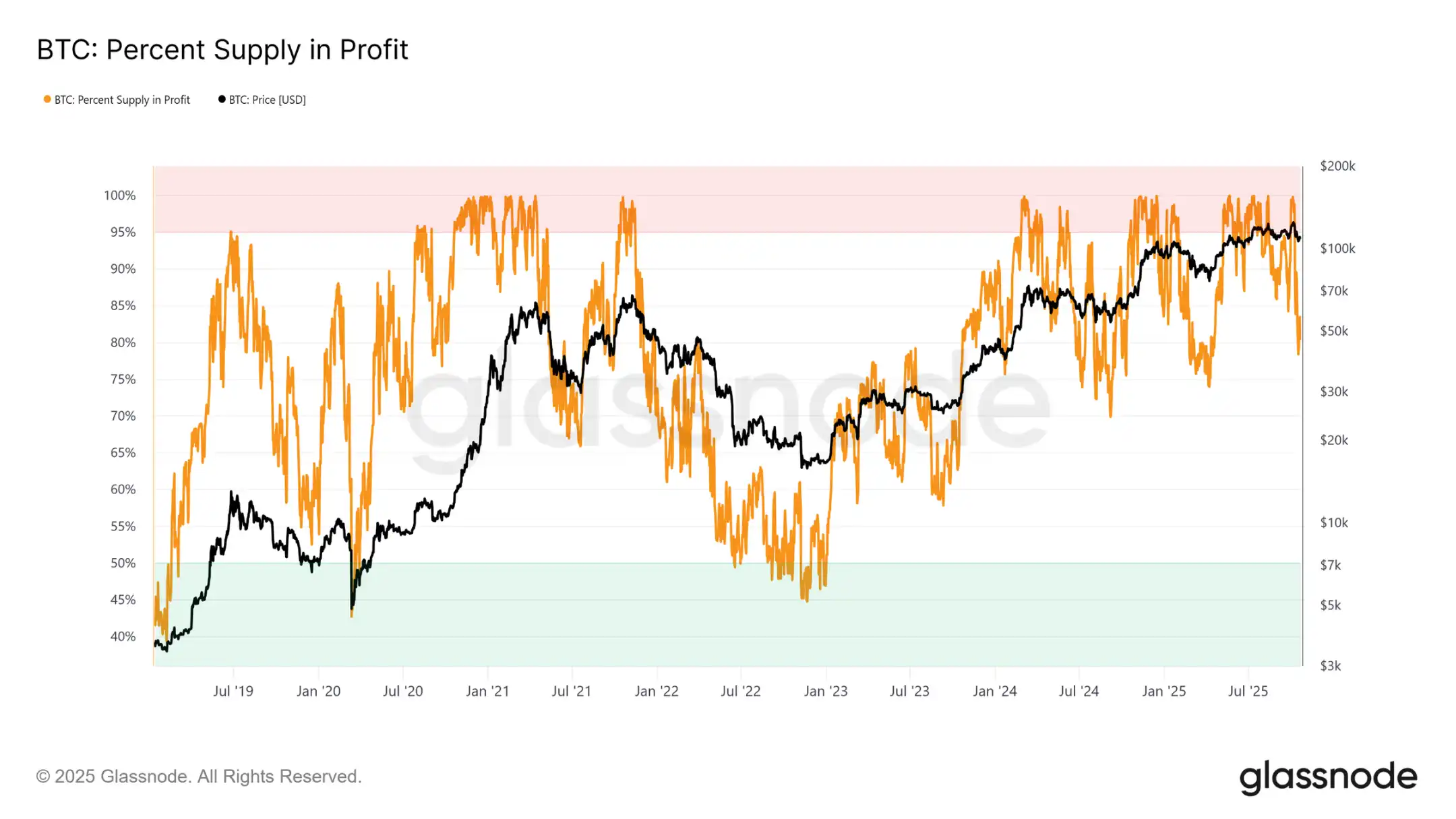
Trading near the short-term holder cost basis signifies a crucial stage where the market tests the conviction of investors who bought near recent highs. Historically, breaking below this level after setting new all-time highs has led to a decline in profit-supply percentage to around 85%, meaning over 15% of the supply is in a loss position.
We are now witnessing this pattern for the third time in the current cycle. If Bitcoin fails to reclaim the key level around $113.1K, a deeper retracement could flush out a larger portion of the supply, intensify selling pressure from recent buyers, and potentially set the stage for a broader market capitulation.
Key Threshold
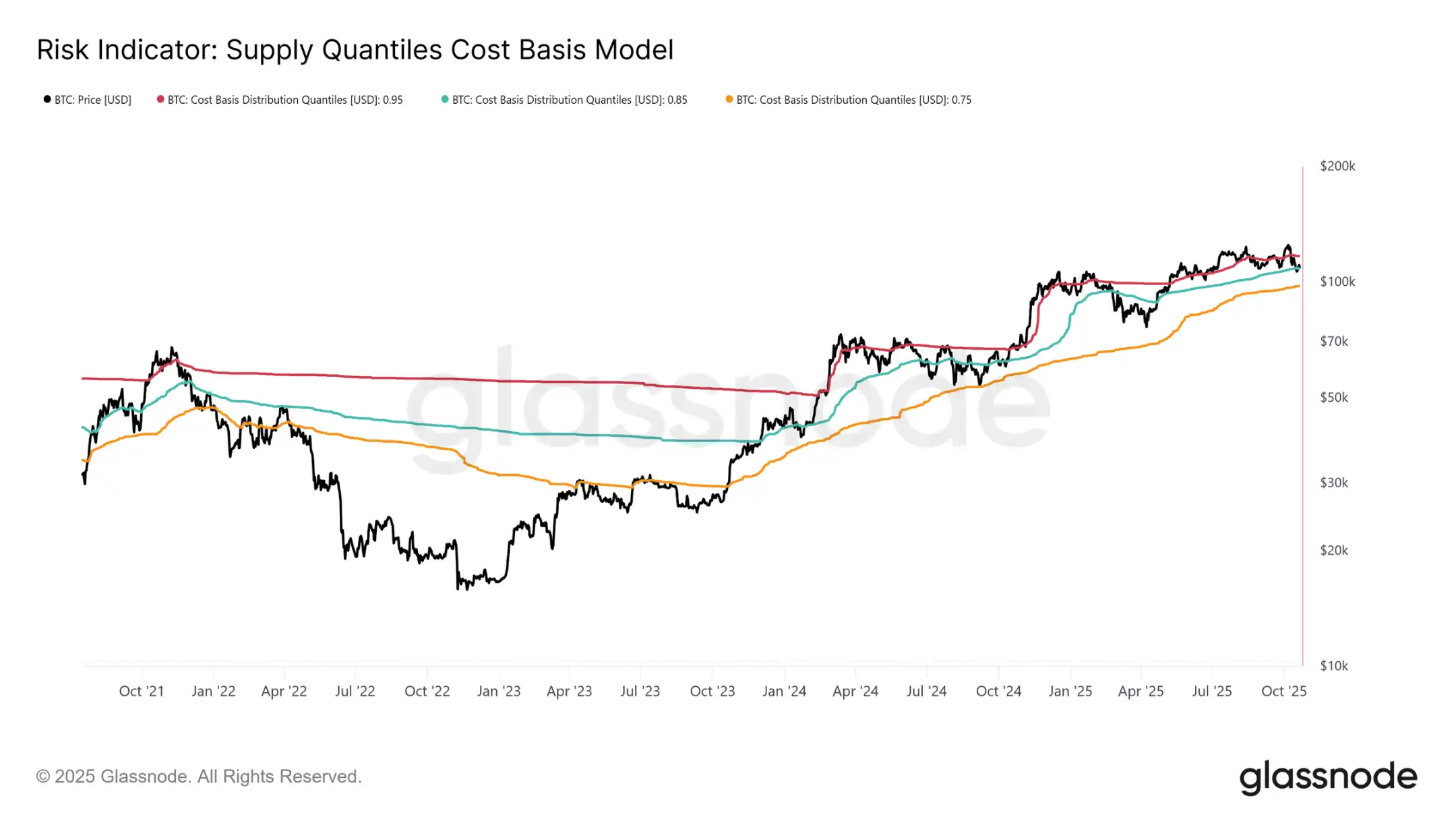
To further grasp this structure, understanding why reclaiming the short-term holder cost basis is crucial for sustaining the bullish phase is key. The supply percentile cost basis model, mapping the 0.95, 0.85, and 0.75 percentiles, provides a clear framework indicating that 5%, 15%, and 25% of the supply is at a loss, respectively.
Currently, Bitcoin is not only trading below the short-term holder cost basis ($113.1K) but also struggling to stay above the 0.85 percentile at $108.6K. Historically, failing to hold this threshold signals a weakened market structure and typically foreshadows a deeper pullback towards the 0.75 percentile, currently around $97.5K.
Depletion of Demand
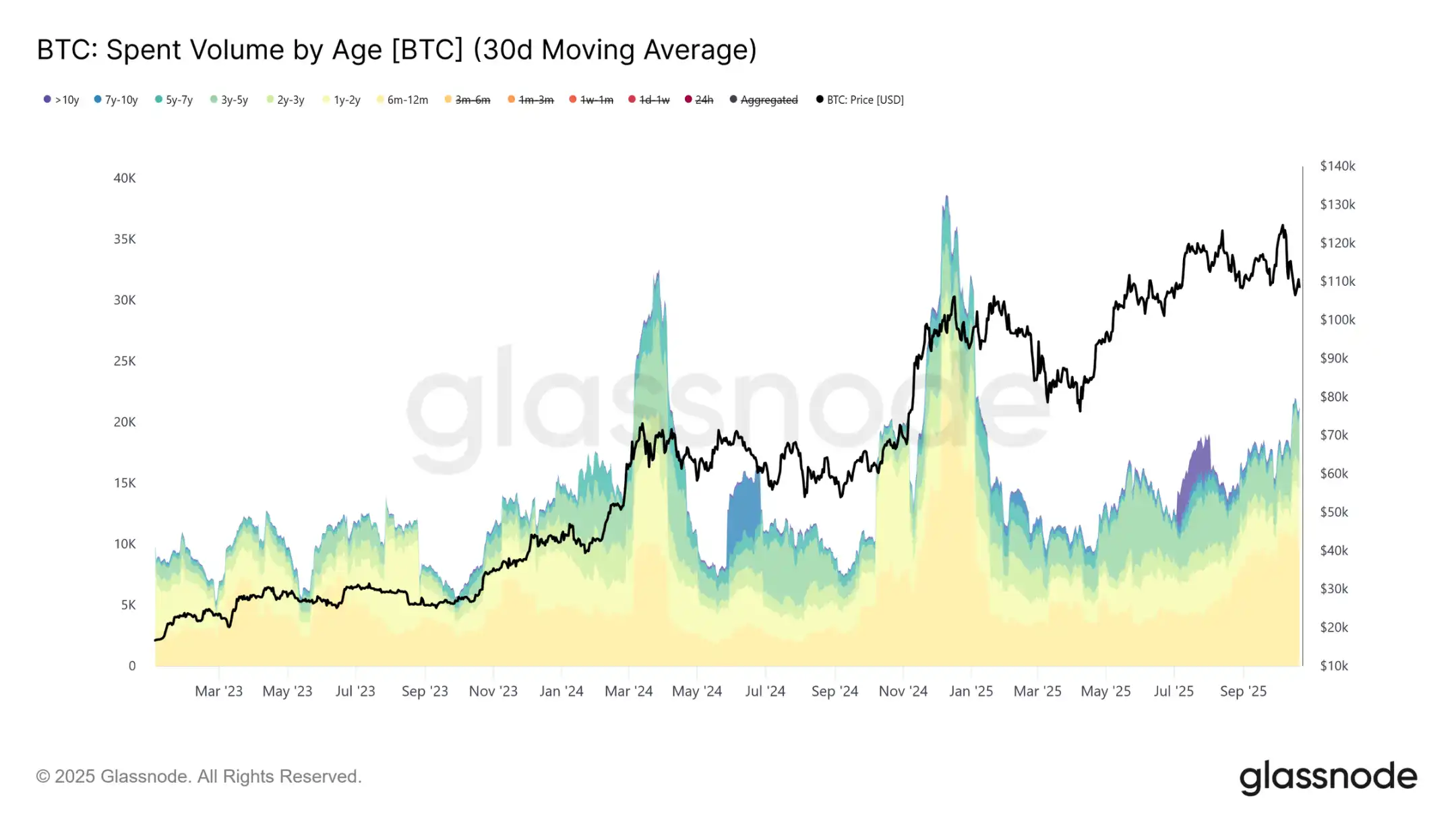
The third retracement to the short-term holder cost basis and below the 0.85 percentile in this cycle has sparked structural concerns. From a macro perspective, repeated depletion of demand suggests the market may need a more extended consolidation phase to regain strength.
Examining the spending behavior of long-term holders makes this depletion even clearer. Since the market peak in July 2025, long-term holders have steadily increased their spending, with the 30-day simple moving average rising from a baseline of 10,000 BTC to over 22,000 BTC daily. Such sustained distribution indicates that experienced investors are facing profit-taking pressure, a key factor in the current market vulnerability.
Having assessed the risk of a prolonged bearish phase resulting from demand depletion, we now turn to the options market to gauge short-term sentiment and observe how speculators are positioning amid rising uncertainty.
On-Chain Insights
Rising Open Interest in Futures
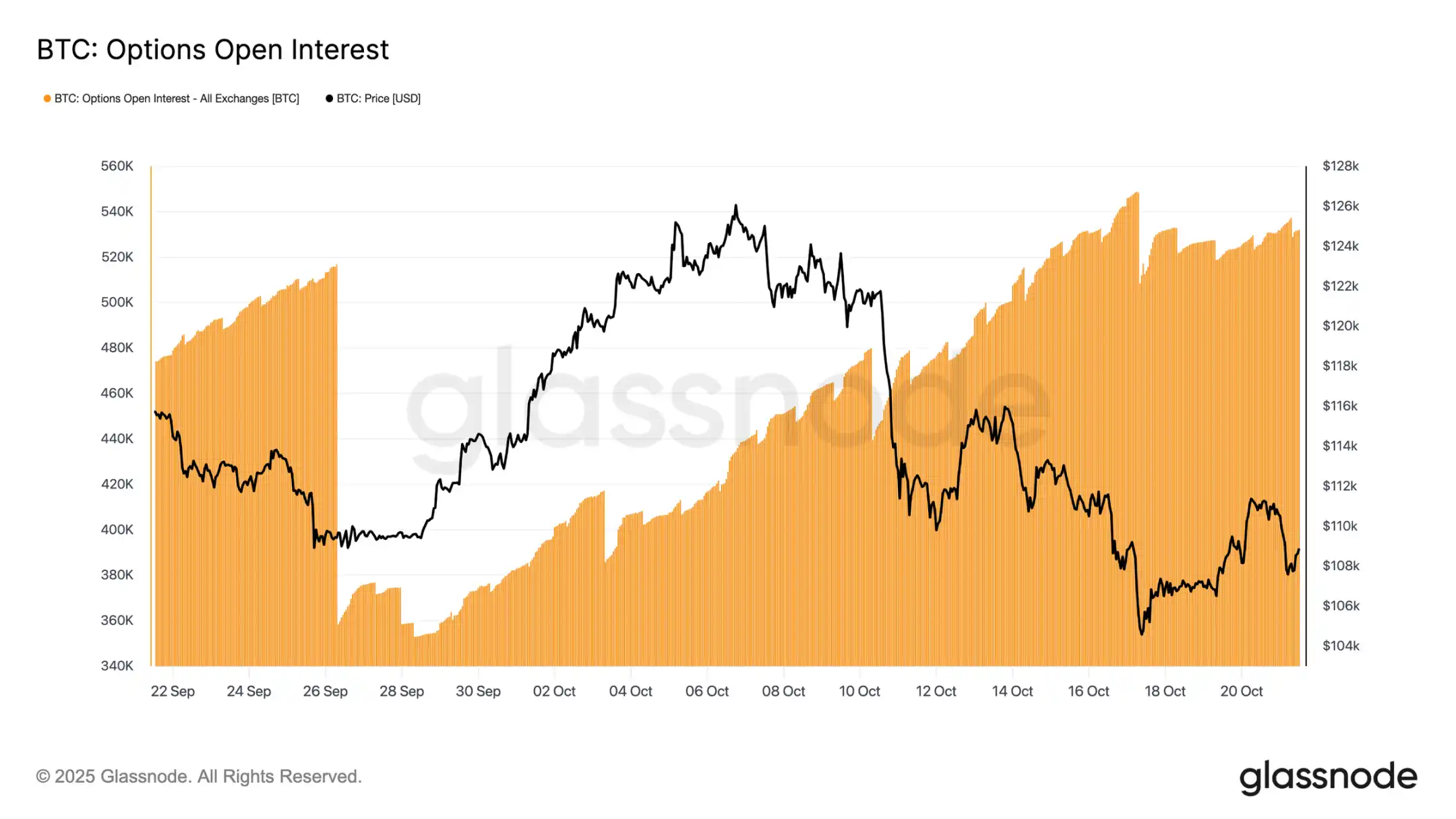
Bitcoin futures' open interest has reached a new all-time high and continues to expand, signaling a structural evolution in market behavior. Investors are increasingly using futures to hedge risk exposure or speculate on volatility rather than selling spot. This shift reduces direct selling pressure in the spot market but amplifies short-term volatility driven by market maker hedging activities.
With the growth of open interest in futures contracts, price volatility is more likely to be driven by funding flows in the futures and perpetual contract markets, led by Delta and Gamma. Understanding these dynamics is becoming increasingly important, as options positions now play a dominant role in shaping short-term market trends and amplifying reactions to macro and on-chain catalysts.
Volatility Regime Shift
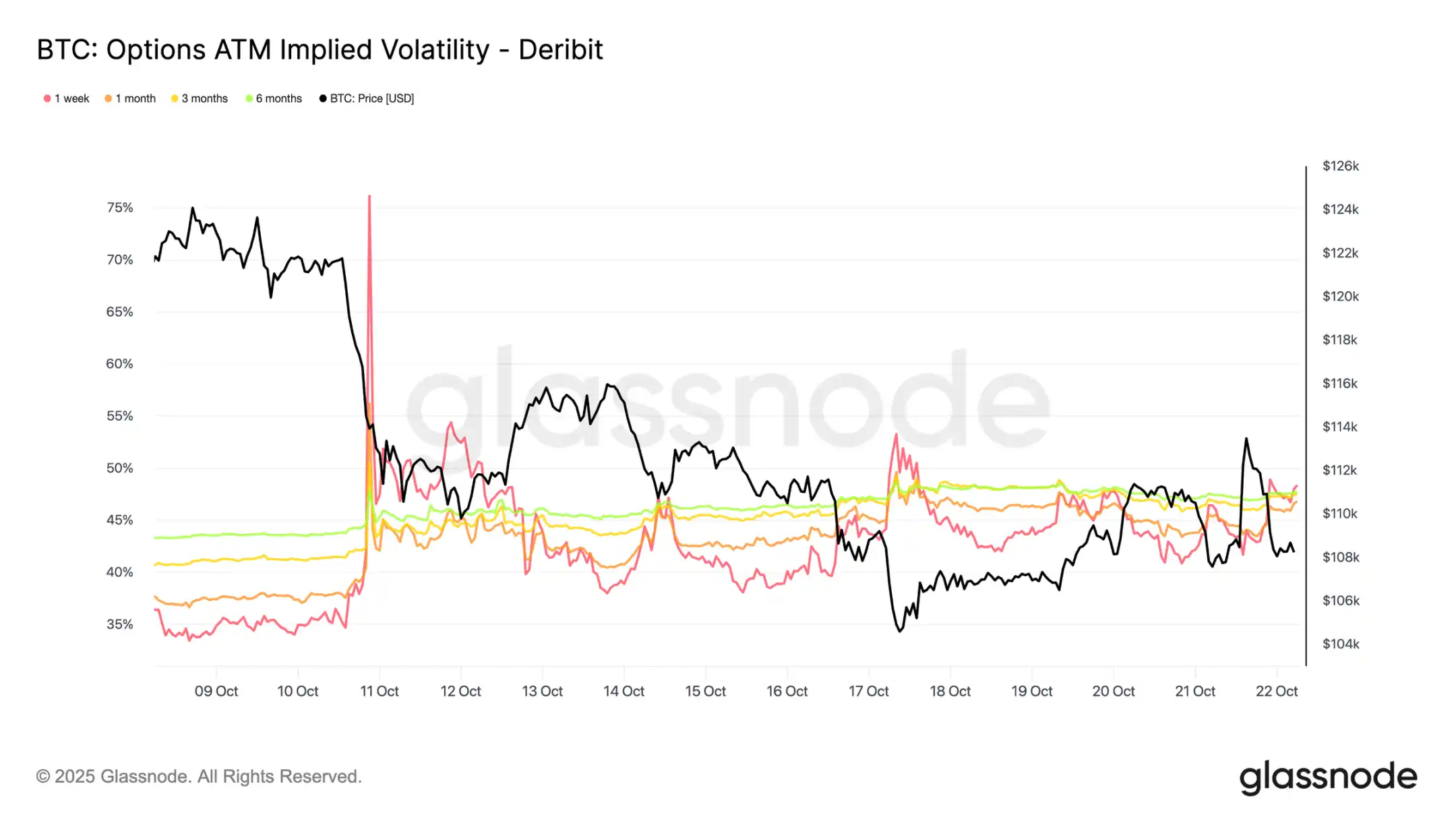
Since the liquidation event on the 10th, the volatility pattern has undergone a significant change. Implied volatility is now around 48 across all maturities, up from 36-43 just two weeks ago. The market has not fully absorbed this shock yet, and market makers are cautious, not selling volatility cheaply.
The 30-day realized volatility is at 44.1%, while the 10-day realized volatility is at 27.9%. As the realized volatility gradually cools off, we can expect the implied volatility to follow suit and normalize in the coming weeks. For now, the volatility remains elevated, but it appears more like a short-term repricing rather than the start of a sustained high-volatility regime.
Increased Put Option Demand
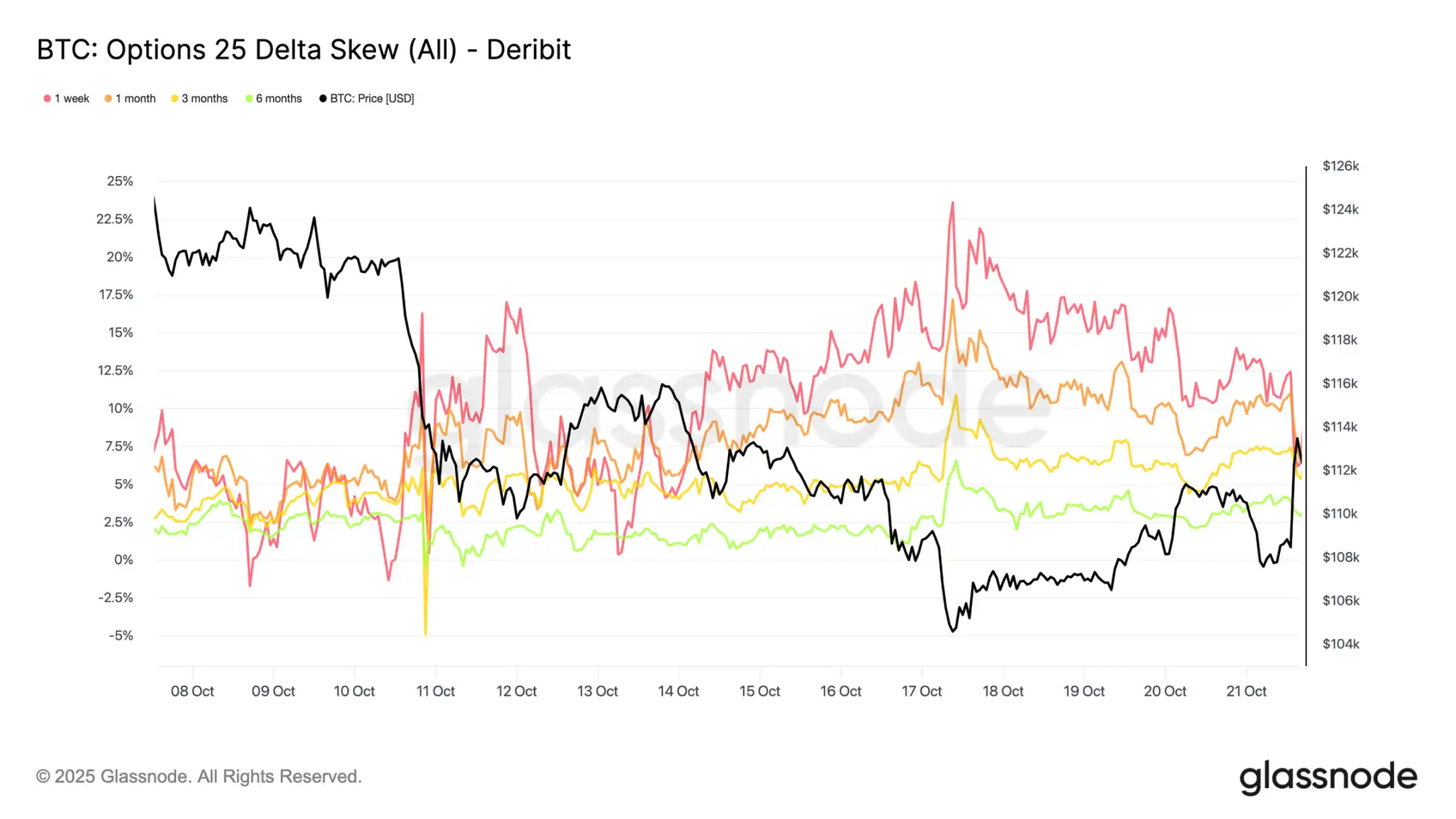
In the past two weeks, demand for put options has steadily risen. The surge in large-scale liquidations has driven a sharp increase in put option skew, which, although briefly reset, has since stabilized at a structurally higher level, indicating that put options are still more expensive than call options.
The skew in the 1-week maturity over the past week has been oscillating but staying in a highly uncertain territory, while all other maturities have further shifted 2-3 volatility points towards put options. This inter-maturity widening indicates a cautious sentiment spreading across the entire curve.
This structure reflects a market willing to pay a premium for downside protection while maintaining limited upside exposure, balancing short-term fears with long-term prospects. Tuesday's minor rebound illustrates this sensitivity, with put option premiums halving within hours, showing how tense the market sentiment still is.
Shift in Risk Premium
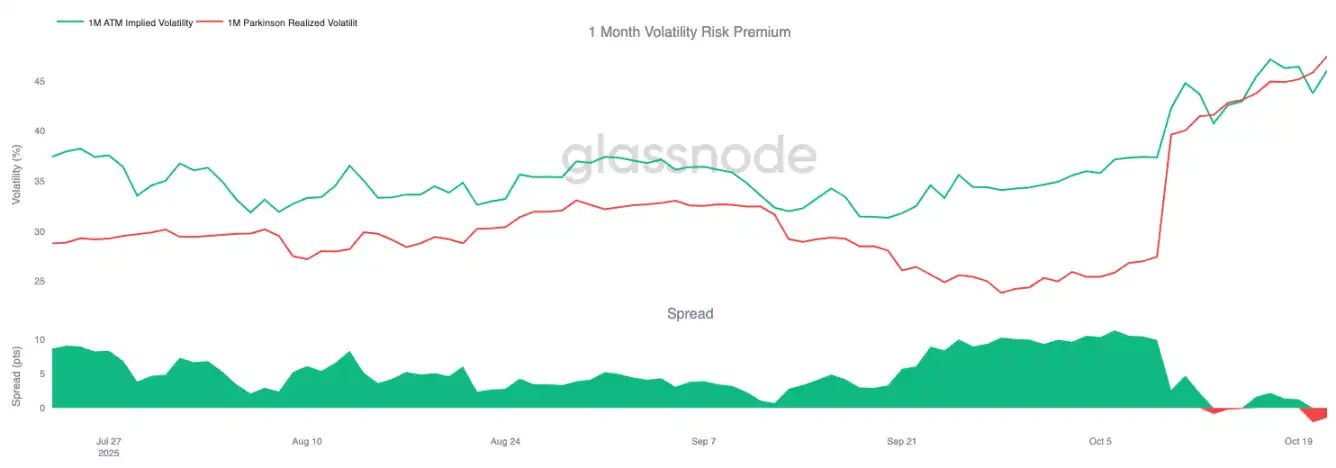
The 1-month volatility risk premium has turned negative. For months, implied volatility remained high while actual price volatility stayed calm, allowing volatility sellers to enjoy consistent returns.
Now, actual volatility has surged to match implied volatility, erasing this advantage. This marks the end of the calm regime: volatility sellers can no longer rely on passive income and are instead forced to actively hedge in a more volatile environment. The market has transitioned from a state of quiet contentment to a more dynamic, swiftly reacting environment, with the return of real price volatility putting increasing pressure on short positions.
Defensive Fund Flow
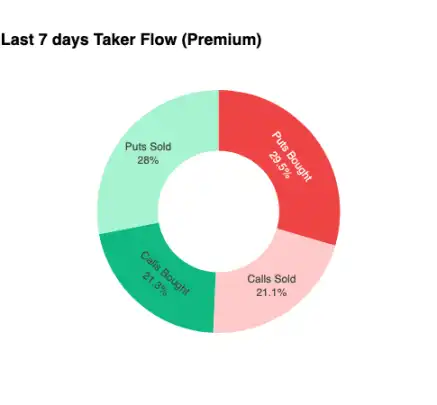
To focus the analysis on the very short term, we zoom in on the past 24 hours, observing how options positions responded to the recent bounce. Despite the price rebounding from $107.5k to $113.9k, a 6% increase, the buying pressure on call options didn't offer much confirmation. Instead, traders increased their put option exposure, effectively locking in at a higher price level.
This position layout has market makers holding a bearish posture on the downside and a bullish one on the upside, a setup that usually leads them to dampen rallies and accelerate selling, creating a dynamic that will continue to act as resistance until the positions reset.
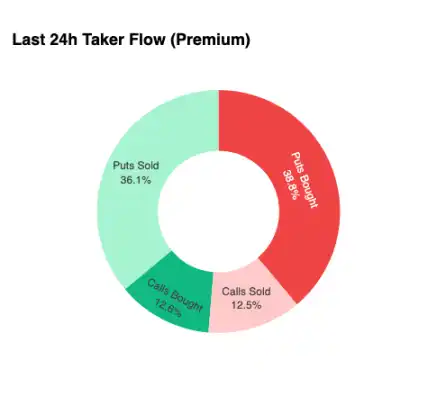
Premium
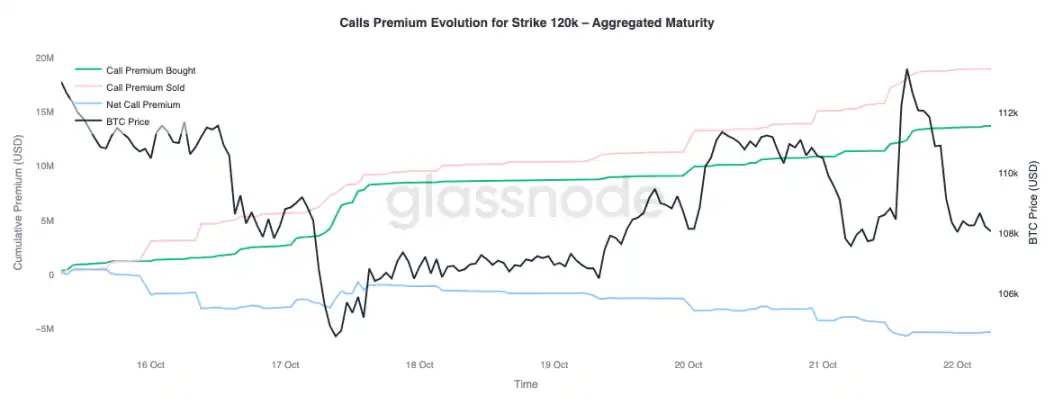
Glassnode's aggregated premium data, segmented by the strike price, confirmed the same pattern. At the $120k call options, the premium sold increased as the price rose; traders are curbing the uptrend and selling volatility during what they perceive to be a temporary strength. Short-term profit seekers are taking advantage of the surge in implied volatility by selling call options on the rebound rather than chasing the rise.
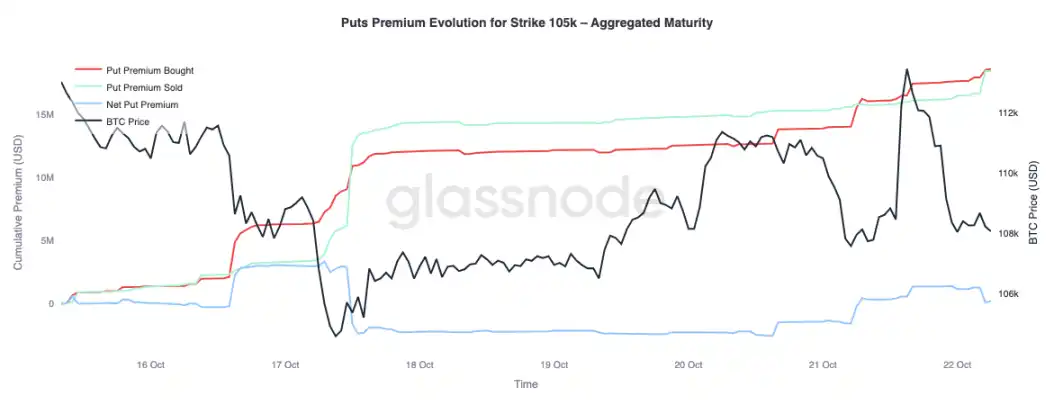
Looking at the $105k put options premium, the pattern is reversed, affirming our argument. As the price rises, the net premium for the $105k put options increased. Traders are more eager to pay for downside protection rather than purchase upside convexity. This indicates that the recent bounce faced hedging rather than conviction.
Conclusion
Bitcoin's recent pullback to the short-term holder cost basis ($113k) and below the 0.85 quantile ($108.6k) highlights the growing exhaustion of demand as the market struggles to attract new inflows while long-term holders continue to distribute. This structural weakness suggests that the market may require a longer consolidation phase to rebuild confidence and absorb the sold supply.
Meanwhile, the options market reflects a similarly cautious tone. Despite record high open interest, the position layout leans defensive; the put skew remains elevated, volatility sellers are under pressure, and the short-term bounce faces hedging rather than optimism. In conclusion, these signals indicate that the market is in a transitional phase: a period of waning enthusiasm and suppressed structural risk-taking, with recovery likely dependent on reviving spot demand and alleviating volatility-driven fund flows.
You may also like

$70 trillion wealth transfer, the financial gateway is being rewritten | Interview with Robinhood CEO Vlad Tenev

Whale Opens 20x Oil Short on Hyperliquid With 5.6M USDC at Risk
Key Takeaways A significant leveraged short position on crude oil has been initiated on Hyperliquid using 5.6 million…

Bitcoin: The Ultimate Hedge Against Chaos
Key Takeaways Michael Saylor, co-founder of Strategy, firmly believes Bitcoin is the ultimate hedge against macroeconomic chaos. Strategy…

“Set 10 Major Targets First,” Whale Reopens Long Positions in Bitcoin
Key Takeaways A prominent cryptocurrency whale known as @Jason60704294 has reopened a long position in Bitcoin. The whale…

Analysis: Despite Bitcoin’s Price Dip, Bullish Trends Persist
Key Takeaways Despite Bitcoin’s decline below $71,000, its bullish momentum remains strong, with significant buying activity from ETFs…

DeFi Protocol Neutrl Faces Potential Security Breach
Key Takeaways The DeFi protocol Neutrl has reported a suspected attack on its front-end interface, urging users to…

OpenClaw Developers Targeted by Sophisticated GitHub Phishing Campaign
Key Takeaways OpenClaw developers are being targeted by a phishing campaign using fake GitHub accounts. Attackers claim to…

User Loses $85,000 in sNUSD to Phishing Scam
Key Takeaways A user lost approximately $85,000 in sNUSD due to a phishing attack. The attack involved a…

Bitcoin Tumbles Below $71,000 Amid Global Market Volatility
Key Takeaways Bitcoin (BTC) recently experienced a sharp drop, falling below the $71,000 mark, a significant decline influenced…

Ethereum: A Closer Look at Recent Price Movements
Key Takeaways Ethereum’s price has recently fallen below $2200, showing a daily increase of 0.55%. Ethereum (ETH) operates…

Pudgy Penguins’ Game Sparks Security Warning Amid Growing Phishing Scams
Key Takeaways A phishing campaign is targeting the Pudgy Penguins’ newly-launched game, Pudgy World, to steal cryptocurrency wallet…

The Cryptocurrency Market Downturn: An In-Depth Look
Key Takeaways The cryptocurrency market is experiencing a downturn driven by geopolitical tensions and surging oil prices. Bitcoin…

Ethereum Whale Activity: Major Accumulation Detected
Key Takeaways A significant whale activity has been detected, involving the purchase of 10,811.34 ETH over two weeks.…
Cryptocurrency Market Update: Major Developments and Insights
Key Takeaways Sky co-founder Rune Christensen has leveraged strategic moves to short the S&P 500 and invest in…

Whale Trading Strategies: Insights into Massive Crypto Moves
Key Takeaways A notable whale, @Jason60704294, made a profit of $7.093 million by closing a short position during…

BlackRock’s Significant Crypto Withdrawal from Coinbase
Key Takeaways In a surprising move, BlackRock has withdrawn 2,267 BTC and 5,041 ETH from Coinbase in the…

Ancient Whale’s Bitcoin Sale Spurs Market Movements
Key Takeaways An ancient cryptocurrency whale offloaded 1,000 BTC, valued at approximately $71.57 million, causing significant ripples in…

SEC Clarifies How Federal Securities Laws Apply to Crypto Assets
Key Takeaways: The SEC and CFTC jointly released a comprehensive guidance classifying crypto assets into five distinct categories.…
$70 trillion wealth transfer, the financial gateway is being rewritten | Interview with Robinhood CEO Vlad Tenev
Whale Opens 20x Oil Short on Hyperliquid With 5.6M USDC at Risk
Key Takeaways A significant leveraged short position on crude oil has been initiated on Hyperliquid using 5.6 million…
Bitcoin: The Ultimate Hedge Against Chaos
Key Takeaways Michael Saylor, co-founder of Strategy, firmly believes Bitcoin is the ultimate hedge against macroeconomic chaos. Strategy…
“Set 10 Major Targets First,” Whale Reopens Long Positions in Bitcoin
Key Takeaways A prominent cryptocurrency whale known as @Jason60704294 has reopened a long position in Bitcoin. The whale…
Analysis: Despite Bitcoin’s Price Dip, Bullish Trends Persist
Key Takeaways Despite Bitcoin’s decline below $71,000, its bullish momentum remains strong, with significant buying activity from ETFs…
DeFi Protocol Neutrl Faces Potential Security Breach
Key Takeaways The DeFi protocol Neutrl has reported a suspected attack on its front-end interface, urging users to…


 App
App