
Pantera Capital: How has Crypto as a Service affected us?





Original Title: 2026: The Invisible Revolution
Original Author: Paul Veradittakit, Pantera Capital
Original Translation: AididiaoJP, Foresight News
2026 will be a pivotal year. We will see "crypto as an industry" evolve into "crypto as a service".
Over the past decade, the crypto world has been full of various gimmicks. The approval of the Bitcoin ETF in 2024 gave it mainstream financial recognition. In 2025, everyone was busy building the underlying infrastructure. By 2026, real value will belong to companies that use blockchain to solve entrenched problems in traditional industries while making users completely unaware of the presence of blockchain.
The future crypto unicorns will no longer rely on hype. They will be the kind of companies that use blockchain technology to significantly increase product efficiency, tap into multi-billion-dollar markets, and completely hide the complex technology.
Crypto Tech Beats "Weekend"
During the Iran conflict outbreak, the US stock market was closed for the weekend and unable to respond to sudden global risks. However, the crypto market did not stop, with Bitcoin briefly rising to $74,000. Commodities were the first to complete price discovery on the decentralized prediction market Hyperliquid, even before the traditional markets opened. This is not an isolated case—similar situations occurred last month when China announced policies.
Traditional hedge funds are increasingly pouring into this field. The crypto market's "24/7 non-stop" is no longer just a slogan but a structural advantage that traditional finance cannot match.
Nevertheless, the current valuation of the crypto market is still far below the level its fundamentals should reach. Without a doubt, we are once again in a bear market (the fourth one I've experienced), but this time is entirely different: regulations are becoming clearer, institutional funds have entered, and the infrastructure is improving.
This sentiment was particularly strong at the recent Hong Kong Consensus conference. The vibrancy of the Asian market contrasts sharply with the West. There, the support of both the incumbent and opposition parties, new institutional funds, and a strong focus on consumer applications are driving bullish sentiments.
Key Highlights for Asia in 2026:
· Cross-Border Payments through Stablecoins, especially in the B2B sector. For the more fragmented Asian economy, crypto payments are a natural choice.
· Tokenization of Gold, Stocks, and Real Estate. Asian banks and fintech companies are catching up to the U.S.
· Perpetual Contract Trading on DeFi. Fueled by retail investors, the development speed may surpass that of the West.
· Prediction Markets are expected to become a key track, although the form may differ from the West.
Core Trend: "Crypto as a Service"
The core theme of 2026 is transitioning from "Crypto as an industry" to "Crypto as a service." The goal is no longer to show users the blockchain but to make them completely forget about the existence of blockchain.
Over the past decade, we have been eager to create the "Crypto Wonder" — Gas Fee Wars, TPS Races, Modular Stacks, ZK Proofs. The ETF in 2024 was mainstream institutional acknowledgment. In 2025, we laid down all the underlying infrastructure. In 2026, it's time to turn the page.
Saying Goodbye to the "Casino" Era
The new generation of unicorns will not be the kind of "L3 network built for AI-NFT." They will be the ones leveraging blockchain to improve product efficiency tenfold, while completely hiding the technology and thus unlocking billion-dollar markets.
This perfectly explains our recent investment logic:

Novig: Farewell to the "Rake" Era ($75 Million Series B)
Traditional sports betting is a monopolistic distorted market. The house edge extracts high commissions from each bet, resulting in a user profitability rate of only 2%. Our $75 million lead investment in Novig is because they treat sports betting as a high-frequency financial product. Through a peer-to-peer trading model, Novig users have an average profitability rate of 23%. Most users don't care if there's a decentralized order book in the background; they only know they can get the best odds in the U.S. here. This is a vivid example of "Crypto as a Service."
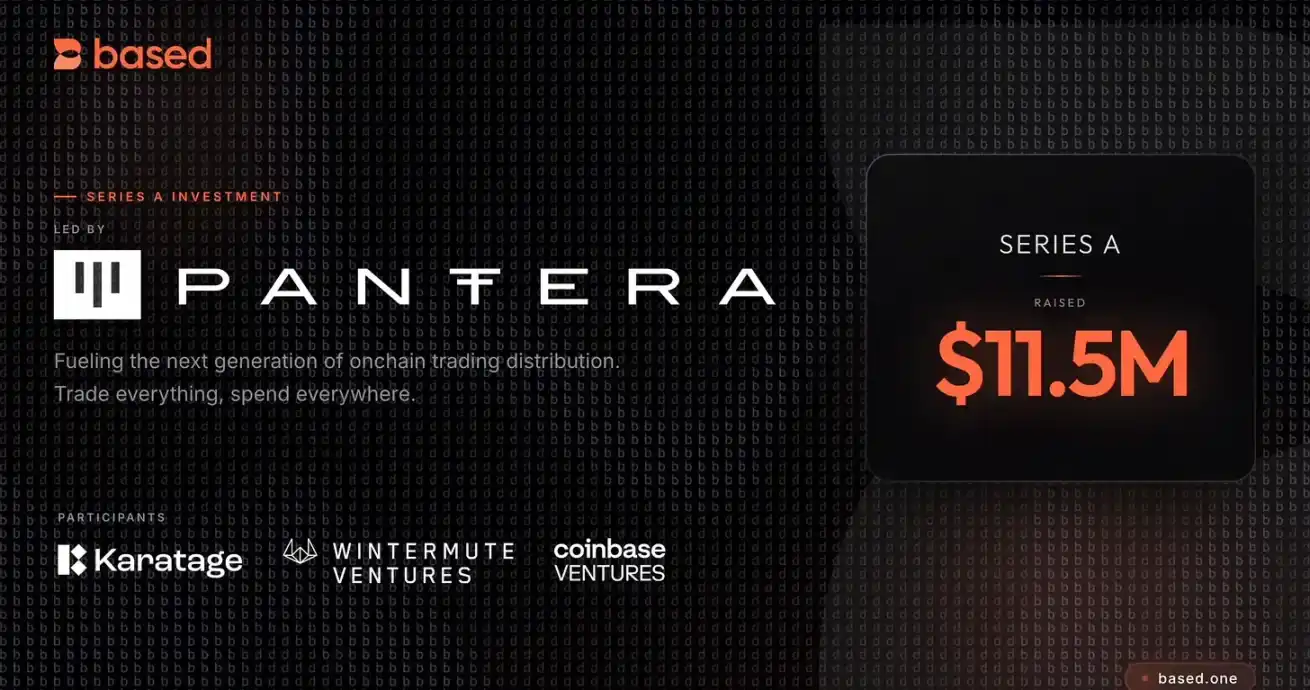
Based: Consumer-Grade Super App ($11.5 Million Series A)
We recently led Based's Series A funding round. This is a composable Web3 consumer-grade super app built on the Hyperliquid ecosystem. In the past, "consumer-grade crypto" was often equated with "clumsy user experience." Based is changing that by making on-chain interactions feel as smooth as top-tier fintech apps. Cross-chain bridging, gas fees, and other complex operations have been abstracted away, making users unaware of the underlying complexities. They can simply focus on the social and financial value their assets bring.
Doppler: Default Asset Issuance Infrastructure ($9 Million Seed Round)
If Based and Novig are cool new cars, then Doppler is the high-performance fuel system. We led Doppler's $9 million seed round, aiming to become the default infrastructure for on-chain asset issuance. It allows developers to issue assets with institutional-grade security and compliance standards without having to build everything from scratch. Doppler is like the Stripe of on-chain assets—pure utility packaged behind a clean API.
Why "Invisibility" Is More Important Than "Viral Spread"
This trend of "invisibility" is also prevalent throughout our entire investment portfolio:
· Real-World Assets: Tokenized government bonds are no longer an experiment in the crypto world; they are becoming the backend liquidity cornerstone of global trade.
· AI Agents: Blockchain provides AI agents with a trusted "truth layer" through predictive markets and verifiable data, enabling them to autonomously and credibly interact with digital assets.
· Agent-Based Payments will accelerate all of this. Payment standards like x402 enable AI agents to transact directly using crypto assets. The gradual clarity in stablecoin regulation further smoothes this payment track.
Advice for Entrepreneurs
If you are planning to start a business in 2026, my advice is simple: Stop focusing solely on technology and talk more about the practical problems you can solve. If the page in your pitch deck explaining the consensus mechanism comes before discussing customer ROI, it means your mindset is still stuck in 2022.
What we are looking for are teams that are building the next Novig, Based, or Doppler — those who truly understand what “mass adoption” means: It is only when a technology becomes so seamless that people completely forget it exists that it truly enters the mainstream.
You may also like

Pantera Capital Partner: How Tokenization is Restructuring the Private Equity and Early Investment Ecosystem?

New York Proposes Stricter Stablecoin Issuer Rules Aligned With Federal GENIUS Act
NYDFS proposed stricter stablecoin issuer rules aligned with the GENIUS Act, covering reserves, custody, redemption timelines, audits, and capital buffers.
Every exchange is a "Universal Exchange."

The counterattack of traditional finance: Alliance chains are quietly reviving

CryptoQuant Says Bitcoin Profitable Supply Is Near 45% Pressure Zone as On-Chain Data Points to Market Repricing
CryptoQuant said Bitcoin’s profitable supply is nearing the 45% pressure zone, signaling rising market stress, unrealized losses, and a possible on-chain repricing phase.

Bitcoin Falls Below 200-Week Moving Average as On-Chain Data Shows Over Half of Supply in Loss
Bitcoin dropped below its 200-week moving average as on-chain data showed over 50% of circulating supply is now in loss, signaling rising market stress.

CFTC Reportedly Plans New Prediction Market Rules Focused on Manipulation Risk and Public Interest Review
The CFTC is reportedly preparing new prediction market rules focused on manipulation risk, public interest review, and retail trader protections.

Meet the new WEEX trial fund—your gateway to greater profits

WEEX Labs Lands at Dutch Blockchain Week: A Disruptive Crypto × AI Conversation Sets Sail in Amsterdam

SK Hynix Reportedly Plans U.S. ADR Listing as Early as August, With SEC Approval Possible in Late June
SK Hynix may pursue a U.S. ADR listing as early as August, with SEC approval reportedly possible in late June amid strong AI chip supply chain demand.

SpaceX vs Tesla vs xAI: Which Elon Musk Trade Has the Biggest Upside in 2026?
OpenAI Reveals It Has Confidentially Submitted an S-1 to the SEC, Keeping the Door Open for a Future IPO
On June 9, according to an OpenAI announcement, the company recently confidentially submitted a draft S-1 registration statement to the U.S. Securities and Exchange Commission (SEC), beginning the preliminary compliance process for a potential initial public offering. OpenAI said it chose to disclose this proactively because it expected the news might leak; however, the company has not yet set a specific listing timeline, and related arrangements may still take some time.

Latest research from 13 top universities including Cornell University: The current state, challenges, and misconceptions of the fusion of Crypto and AI
Deconstructing Anthropic: The Best AI Company, Possibly Also a Type of Organizational Invention
Apollo and Blackstone Reportedly Back $35 Billion Anthropic Chip Financing as Deal Details Remain Unclear
On June 9, according to currently available news alerts, Apollo and Blackstone Group participated in a $35 billion financing for an Anthropic “chip project.” Based on the original wording of the report, the funding has already been raised, but public information remains limited. The financing structure, use of proceeds, project entity, and whether Apollo and Blackstone participated through equity, debt, or project financing have not yet been disclosed.

Humanity Protocol Security Incident Escalates: More Than $31 Million Stolen From Related Addresses as Attacker Continues Selling H for ETH
On June 9, according to monitoring by Onchain Lens, more than $31 million has been stolen from addresses linked to Humanity Protocol, and the attack is still ongoing, with the hacker continuously swapping H tokens for ETH. Project founder Terence Kwok later confirmed the security incident on X, saying the issue involved a private key leak.

Bloomberg: As Bitcoin Weakens, Stablecoins and RWA Continue to Drive Expansion in Crypto Businesses
In June, Bloomberg reported that despite Bitcoin falling below $60,000 last week, wiping out about $235 billion in market value within seven days, and dropping close to 50% from last year’s peak, some core businesses in the crypto industry are still expanding, mainly in stablecoins, real-world asset tokenization (RWA), payments, and infrastructure. The report also noted that overall altcoin activity has contracted significantly: altcoin market capitalization has fallen from a peak of about $431 billion in November 2021 to around $170 billion, and among the tens of millions of tokens issued in recent years, fewer than 1,700 still maintain meaningful trading activity.

Galaxy Deep Research Report: How Hyperliquid's HIP-4 Upgrade Changes the Landscape of Prediction Markets?
Pantera Capital Partner: How Tokenization is Restructuring the Private Equity and Early Investment Ecosystem?
New York Proposes Stricter Stablecoin Issuer Rules Aligned With Federal GENIUS Act
NYDFS proposed stricter stablecoin issuer rules aligned with the GENIUS Act, covering reserves, custody, redemption timelines, audits, and capital buffers.
Every exchange is a "Universal Exchange."
The counterattack of traditional finance: Alliance chains are quietly reviving
CryptoQuant Says Bitcoin Profitable Supply Is Near 45% Pressure Zone as On-Chain Data Points to Market Repricing
CryptoQuant said Bitcoin’s profitable supply is nearing the 45% pressure zone, signaling rising market stress, unrealized losses, and a possible on-chain repricing phase.
Bitcoin Falls Below 200-Week Moving Average as On-Chain Data Shows Over Half of Supply in Loss
Bitcoin dropped below its 200-week moving average as on-chain data showed over 50% of circulating supply is now in loss, signaling rising market stress.


