
- Buy Crypto
- Markets
 Futures
- Spot
- Copy Trade
- Earn
- More
Pantera Partner: Privacy Renaissance Era, These Technologies Are Changing the Game

Original Article Title: Privacy Renaissance: Blockchain's Next Era
Original Article Author: Paul Veradittakit, Partner at Pantera Capital
Original Article Translation: Saoirse, Foresight News
Since the birth of Bitcoin, the core concept of the blockchain industry has always been rooted in "transparency" — it is an open and tamper-proof ledger that anyone can view; its trust comes from "validation" rather than institutional reputation. It is this transparency that allows decentralized systems to function properly based on integrity and accountability mechanisms.
However, as blockchain technology matures and its use cases continue to expand, relying solely on "transparency" is no longer sufficient. A new reality is taking shape: privacy protection is a key driver for blockchain to move towards mainstream adoption, and the demand for privacy is accelerating at the cultural, institutional, and technological levels. At Pantera Capital, we have believed in this view from the very beginning — as early as 2015, we invested in Zcash, one of the first projects to introduce privacy protection to an immutable ledger.
We believe the industry is entering the "Privacy Renaissance" era: an era that will deeply integrate the concept of open blockchain with the practical needs of global finance. In this context, privacy protocols built on the core principle of "confidentiality," such as the upcoming Zama mainnet, have seen a development opportunity. Zama's Fully Homomorphic Encryption (FHE) technology is a "fortress" driving blockchain towards mainstream applications and is also capable of defending against threats posed by quantum computing in the coming years. Blockchain applications are just one deployment area of Zama's Fully Homomorphic Encryption technology, which can also be extended to other verticals such as artificial intelligence (like Zama's Concrete platform) and cloud computing.
Another notable investment target is StarkWare — the inventor of zk-STARKs zero-knowledge proof technology and the Validium solution, providing a "hybrid solution" for blockchain privacy protection and scalability. StarkWare's encryption technology also has post-quantum properties and focuses on blockchain application scenarios, especially with its latest introduction of the "S-Two Prover," further enhancing the technology's practicality.
Cultural Shift: From "Surveillance Fatigue" to "Digital Sovereignty"
Globally, there has been a fundamental shift in people's perception of data. Years of mass surveillance, algorithmic tracking, and data breaches have made "privacy" one of the core cultural issues of the past decade. Today, users are gradually realizing that not only information and transaction records but even metadata can reveal intimate details such as personal identity, wealth, location, and relationships.
「Privacy Protection + User Ownership of Sensitive Data」 has become the new industry norm — this is also the direction favored by Pantera Capital, for which we have invested in projects like Zama, StarkWare, Transcrypts, and World. As public awareness of privacy continues to rise, the blockchain industry must face a fact: digital currencies need "confidentiality" rather than "full traceability." In such an environment, privacy is no longer a niche demand but a critical part of driving the development of "digital sovereignty."
Institutional Shift: Transparency Without Privacy Cannot Support Scalable Applications
More and more institutions are entering the blockchain ecosystem: banks, remittance platforms, payment processors, enterprises, and fintech companies are all conducting pilots, preparing to handle real transaction volumes in tokenized assets, cross-border settlements, and multi-jurisdiction payment networks.
However, these institutions cannot operate on a "completely transparent public ledger" — corporate cash flows, supplier networks, foreign exchange risk exposures, contract terms, and customer transaction records must not be disclosed to competitors or the public. What enterprises need is "selective transparency with confidentiality," not "full exposure."
This is exactly the foundation laid by early pioneer projects like Zcash. When Pantera Capital invested in Zcash in 2015, we realized that privacy is not an ideological preference but a necessary condition for actual economic activities. The core insight of Zcash is that privacy protection cannot be "retrofitted" into a system (especially when using zero-knowledge proof technology) but must be embedded in the protocol's core — otherwise, subsequent use would become extremely challenging, fragile, and inefficient.
Launched in 2016 as a Bitcoin fork project, Zcash introduced zk-SNARKs technology, which can hide transaction details while ensuring complete transaction verifiability. Additionally, the mixer protocol Tornado Cash is also a significant milestone in on-chain privacy development: as people seek ways to break the linkability of on-chain transactions, the protocol has seen a significant amount of real user activity.
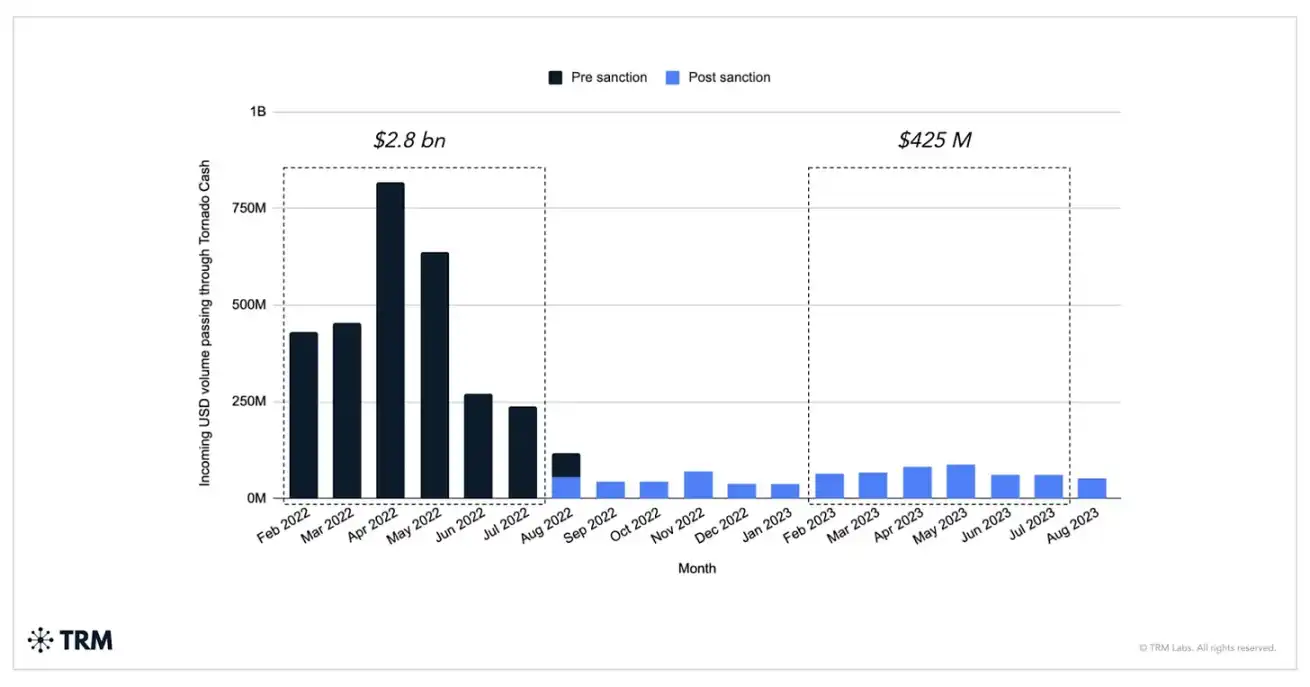
Tornado Cash USD Inflow Change Pre and Post Sanctions (Source: TRM Labs)
However, Tornado Cash's model has flaws: it emphasizes strong privacy protection but lacks a "selective disclosure mechanism," ultimately leading to high-profile legal actions by government agencies — even though the project is autonomously operated by code, it was still forced to effectively halt. This outcome confirms a key lesson: privacy protection cannot come at the expense of "auditability" or a "compliance path."
This is also the core value of Zama's fully homomorphic encryption technology: FHE supports performing calculations directly on "encrypted data" while preserving the ability for "selective verification and disclosure of information" — a feature that protocols like Tornado Cash did not have from the outset.
The importance of fully homomorphic encryption is evident from the strategies of tech giants: companies like Apple and Microsoft are investing resources to build FHE frameworks. Their investment conveys a clear consensus: for consumers and institutions, "scalable, compliant, end-to-end encryption technology" is the future of digital privacy.
Privacy Needs Are Accelerating
Data confirms this trend: privacy-focused crypto assets are gaining more attention from users and investors. However, the real shift is not being primarily driven by retail speculation but rather by the practical application scenario where "privacy and transparency must coexist":
• Cross-border payments are increasingly relying on blockchain, but enterprises and banks cannot publicly disclose every payment route;
• RWAs need to keep "holdings" and "investor identities" confidential;
• In global supply chain finance, transaction parties need to verify events (such as shipping, invoices, settlements) without revealing trade secrets;
• Enterprise transaction networks need a mode where "auditors and regulators can see, but the public cannot."
Meanwhile, retail users are becoming increasingly dissatisfied with "high-surveillance public blockchains" — on these blockchains, a simple tool can easily reconstruct the transaction graph. Today, "privacy protection" has become one of the core expectations users have for digital currencies.
In short, the market is gradually recognizing a fact: blockchain that cannot provide confidentiality will face structural limitations in institutional-scale applications.
Canton, Zama, StarkWare, and the Next-Generation Privacy Architecture
As the era of privacy renaissance unfolds, a new generation of protocols is emerging to meet institutional needs.
Take Canton Blockchain, for example, which highlights the growing demand from enterprises for "private transaction execution on a shared settlement layer." These systems allow participants to engage in private transactions while benefiting from "global state synchronization" and "shared infrastructure" — Canton's development fully illustrates that enterprises want to harness the value of blockchain while avoiding the public exposure of business data.
However, the most revolutionary breakthrough in the field of private computing may come from Zama — it occupies a unique and more scalable position in the privacy technology stack. Zama is building a "confidential layer" based on fully homomorphic encryption (FHE), supporting calculations directly on encrypted data. This means that the entire smart contract (including inputs, state, and outputs) can remain encrypted while still being verifiable on a public blockchain.
Unlike a "Privacy-First Layer1 Public Chain," Zama is compatible with the existing ecosystem (especially the Ethereum Virtual Machine EVM) — meaning developers and institutions do not need to migrate to a new chain, they just need to integrate privacy features into their existing development environment.
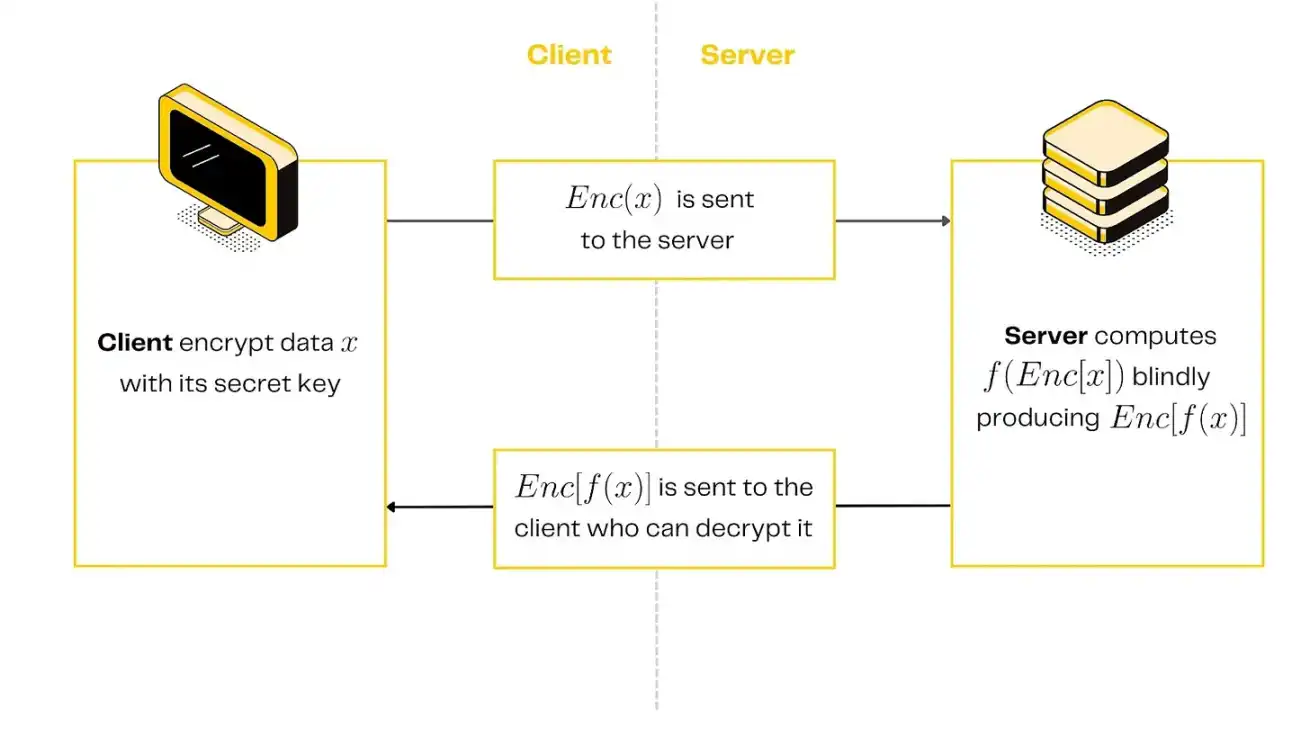
Private Smart Contracts Using Fully Homomorphic Encryption (FHE) (Source: Zama)
Zama's architecture represents the next evolution of blockchain privacy protection: no longer just hiding transactions, but achieving "scalable private smart contracts." This will unlock entirely new use cases — including private DeFi, encrypted order books, confidential real-world asset issuance, institutional-grade settlement processes with secure multiparty business logic — and all scenarios do not require sacrificing decentralization, with some applications expected to go live in the short term.
Currently, private assets are receiving more attention: institutions are actively evaluating privacy layer technology, developers hope to achieve privacy computing without "off-chain system latency and complexity," regulators are also starting to develop frameworks to distinguish between "legitimate privacy tools" and "illegal obfuscation techniques."
Looking to the Future
The privacy narrative in the blockchain industry is no longer about the "opposition between transparency and confidentiality" but about realizing that both are necessary conditions for the next era of DeFi. The overlap of cultural attitudes, institutional needs, and cryptographic breakthroughs is reshaping the direction of blockchain's evolution over the next decade.
Zcash has proven the necessity of privacy protection at the protocol level; protocols like Canton embody institutional demand for a "confidential transaction network"; and Zama is building infrastructure that is expected to integrate these requirements into a "cross-chain universal scalable privacy layer."
Pantera Capital's early investment in Zcash was based on a simple belief: privacy protection is not an "optional." Nearly a decade later, the relevance of this view is becoming increasingly apparent — from tokenized assets to cross-border payments, and enterprise settlements, the key to the next wave of blockchain application landing lies in achieving a "secure, seamless, private" technological experience.
As privacy protection becomes the core theme of this market cycle, protocols that can provide "practical, scalable, compliant confidential solutions" will define the industry's future landscape. Among them, Zama, as a leader with high potential and timeliness in the "Privacy Super Cycle," is standing out.
You may also like

Circle CEO’s Insight: The Future of Stablecoins and Digital Financial Platforms
Key Takeaways: Circle completed a noteworthy IPO in 2025, signifying a major milestone in the crypto space. The…

NVIDIA GTC 2026 Set to Gather Global Tech Enthusiasts
Key Takeaways: NVIDIA GTC 2026 will occur in San Jose from March 16-19, bringing together over 30,000 participants.…

What Competitive Edges Still Remain in the AI era?
Key Takeaways: AI’s ability to write code and automate tasks is reshaping traditional job structures, pushing for new…

Aave’s New Protective Layer: Introducing Aave Shield
Key Takeaways: Aave has introduced the Aave Shield feature, designed to block swaps with a price impact exceeding…
U.S.-Iran Conflict Intensifies Amid Diplomatic Stalemate
Key Takeaways: Middle Eastern efforts to mediate U.S.-Iran tension have been declined by both nations, indicating a readiness…

AI “Brainwashing” Scandal: Spotlight on GEO and Data Poisoning in Large Models
Key Takeaways: The GEO business has emerged, capitalizing on AI manipulation by making products appear as standard answers…

Bitwise CIO: Bitcoin’s Potential to Reach $1 Million if it Captures Gold and Sovereign Debt Market Share
Key Takeaways: Matt Hougan of Bitwise suggests that Bitcoin could reach a $1 million price if it captures…

Argentinian President Milae Accused of $5 Million Scheme with LIBRA Token
Key Takeaways: President Milae is alleged to have facilitated a $5 million scam involving LIBRA tokens. The scheme…

Aave Post-Mortem: Liquidity Shortfall Causes $50 Million Loss
Key Takeaways: On March 12, 2026, a significant token swap on Aave led to a $50.43 million discrepancy…

Bitcoin’s HODL Strategy Faces a 5.96% Unrealized Loss
Key Takeaways: Bitcoin holds a current unrealized loss of 5.96%, translating to an estimated $3.34 billion. Bitcoin has…
Polymarket’s Predictions on Bitcoin’s 2026 Trajectory
Key Takeaways: Polymarket assigns a 40% probability for Bitcoin hitting $100,000 this year, emphasizing market uncertainty. The chances…
Michael Saylor’s Recent Moves and the Implications for Bitcoin Accumulation
Key Takeaways: As of March 8, 2026, Strategy, led by Michael Saylor, accumulated a total of 738,731 BTC…

Bitcoin Weekly Return Hits 8.55%, Largest Surge Since 2025
Key Takeaways: Bitcoin’s weekly return rate has surged to 8.55%, marking its most significant weekly gain since September…
Tom Lee: Oil Price Hike and U.S. Stock Market Dynamics
Key Takeaways: Tom Lee suggests that rising oil prices might bolster rather than hinder the U.S. stock market…

「Wood Sister」: Market Bravery Amidst Fear
Key Takeaways: Cathie Wood sees the current market climate as an opportunity to buy volatile stocks due to…
China Internet Finance Association Issues Warning on OpenClaw Security Risks
Key Takeaways: OpenClaw smart agent, while boosting efficiency, is highly susceptible to exploitation due to weak security and…
Oil Price Soars Amid US-Iran Tensions: Strategic Moves for Investors
Key Takeaways: The US-Iran conflict has led to a 45% surge in oil prices since February 27th, importantly…

CEX Observes a Net Inflow of 4300.25 BTC Over the Past Week
Key Takeaways: Significant BTC inflows were recorded on major crypto exchanges, totaling 4300.25 BTC over the last seven…
Circle CEO’s Insight: The Future of Stablecoins and Digital Financial Platforms
Key Takeaways: Circle completed a noteworthy IPO in 2025, signifying a major milestone in the crypto space. The…
NVIDIA GTC 2026 Set to Gather Global Tech Enthusiasts
Key Takeaways: NVIDIA GTC 2026 will occur in San Jose from March 16-19, bringing together over 30,000 participants.…
What Competitive Edges Still Remain in the AI era?
Key Takeaways: AI’s ability to write code and automate tasks is reshaping traditional job structures, pushing for new…
Aave’s New Protective Layer: Introducing Aave Shield
Key Takeaways: Aave has introduced the Aave Shield feature, designed to block swaps with a price impact exceeding…
U.S.-Iran Conflict Intensifies Amid Diplomatic Stalemate
Key Takeaways: Middle Eastern efforts to mediate U.S.-Iran tension have been declined by both nations, indicating a readiness…
AI “Brainwashing” Scandal: Spotlight on GEO and Data Poisoning in Large Models
Key Takeaways: The GEO business has emerged, capitalizing on AI manipulation by making products appear as standard answers…


 App
App