
- Buy Crypto
- Markets
 Futures
- Spot
- Copy Trade
- Earn
- More
Solana Ad Fiasco: Should Public Blockchains Take Sides Politically?

On one side, watching a big sister join various crypto pump groups and dance in the BNB Chain ecosystem group, while on the other side, Solana and Base are at it again. Both chains, seen by the community as to some extent "American chains," have completely fallen out on the issue of ideology.
"American Chain" Adopts a Clear Political Stance, Community Mocks, Base Strikes Back
The catalyst this time was a now-deleted promotional video by Solana, featuring a dialogue between a consultant (symbolizing certain ideological trends in modern society) and a man named "American" (representing traditional American values, innovative spirit, and rational thinking).

American expressed interest in technological innovation, space exploration, nuclear energy, cryptocurrency, and artificial intelligence, among other areas, but the consultant kept steering him towards identity politics, gender identity, and social constructivism, rather than practical action and progress.
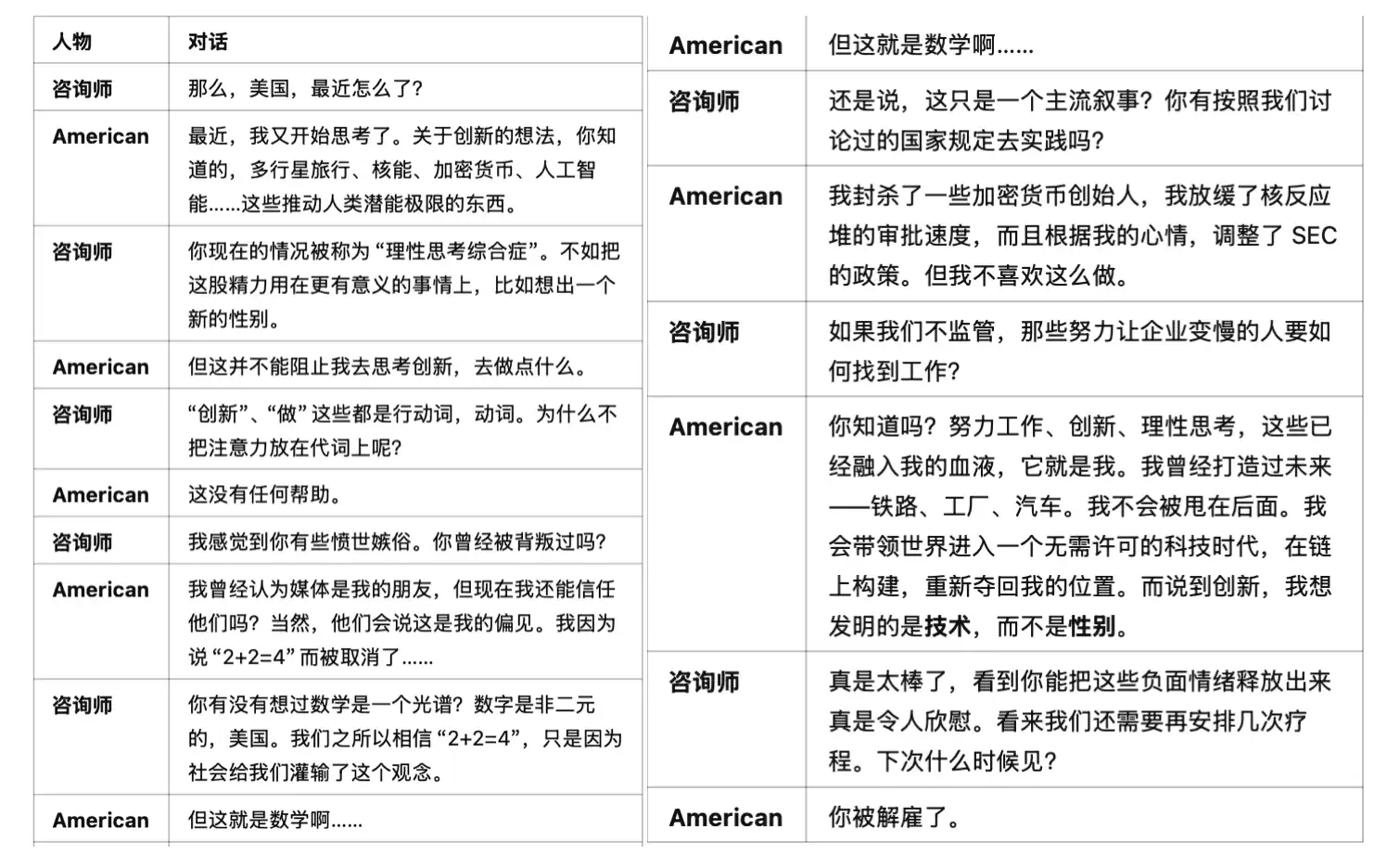
Ad Copy List; Illustration: BlockBeats
American expressed confusion and dissatisfaction to the consultant, as he found his rational thinking and innovative spirit to be problematic. He was even canceled for insisting on the objectivity of math ("2+2=4"). After being forced to comply with regulatory policies, such as cracking down on cryptocurrency and slowing down nuclear energy approvals, American finally realized he could not accept this reality, decided to embrace innovation and action again, and at the end of the conversation, "fired" the consultant, symbolizing resistance to certain modern ideological trends.
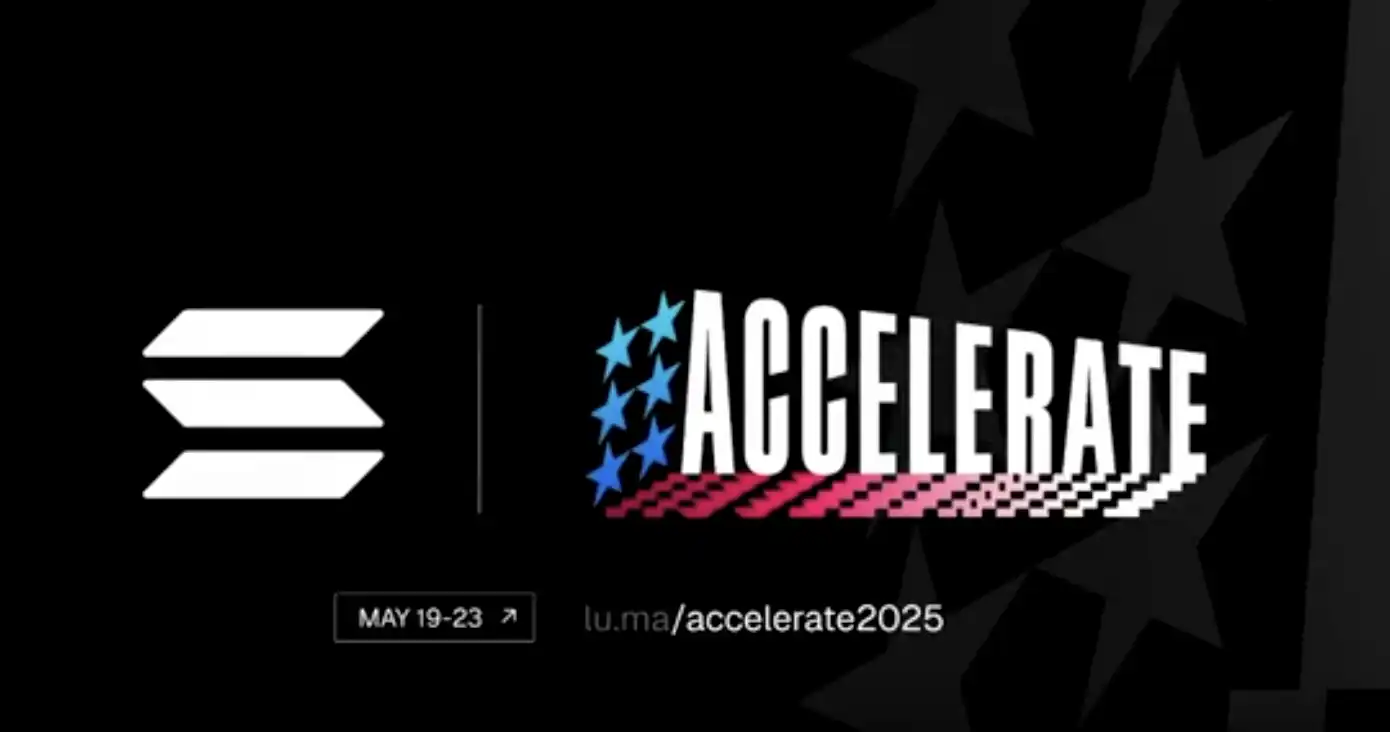
At the end of the video, American bursts out the door, with "American is Back" written on the screen, followed by promotional information for Solana's May conference and the emblematic logo symbolizing accelerationism.
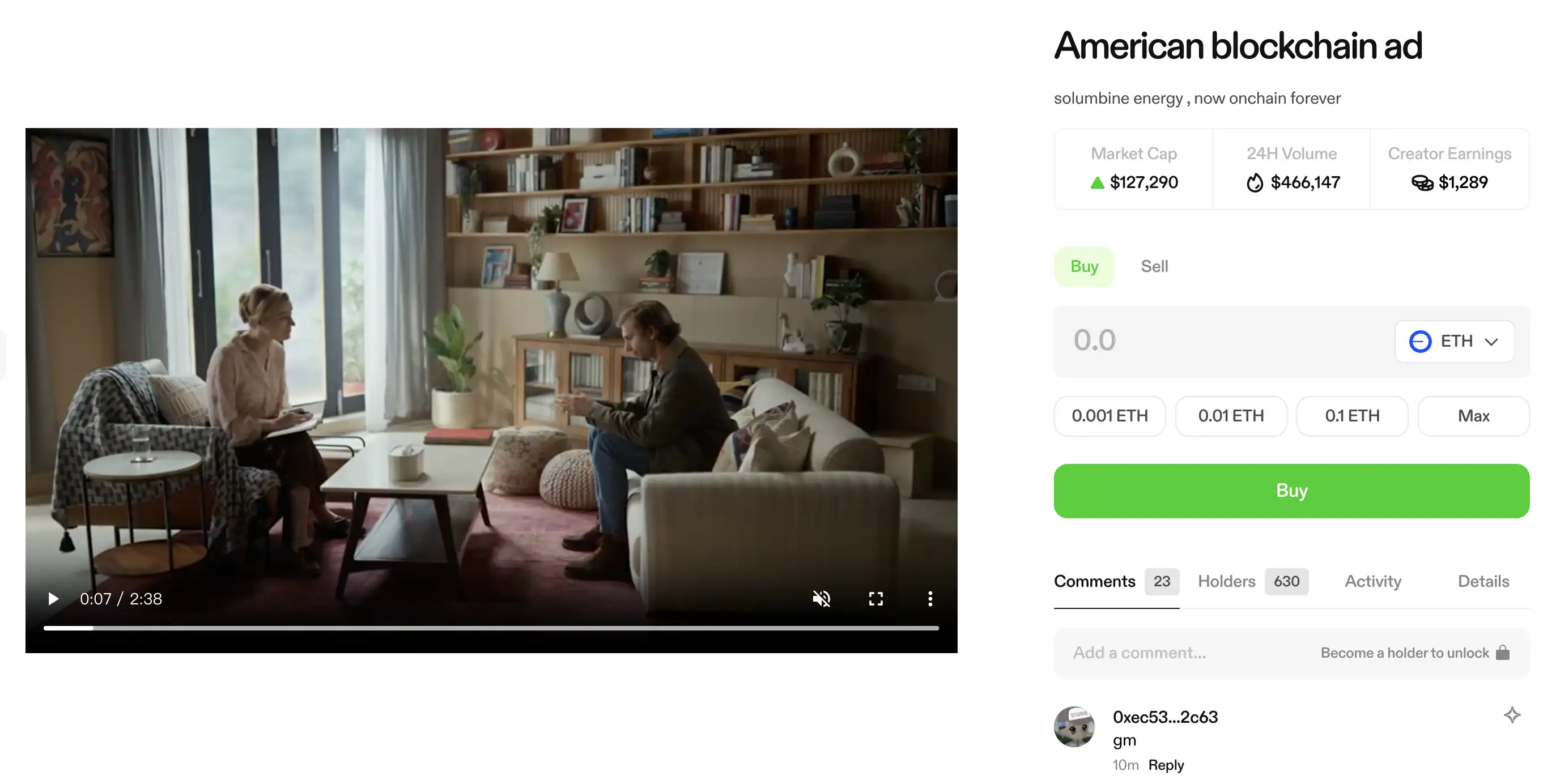
The community had mixed reactions to this ad. Solana chose to delete the video a few hours after its release, but someone uploaded it to Zora for the community to mint, and it is currently valued at $120,000.
On the other hand, Base also "stirred things up" by releasing a video, with the theme of a transformation story of an old car dealer. Initially immersed in traditional car trading and having no interest in cryptocurrency, he began contemplating new solutions when faced with real-world issues such as slow bank transfers, limited business hours, and inconvenient cash transactions. Eventually, upon a recommendation from a repeat customer, he embraced cryptocurrency.
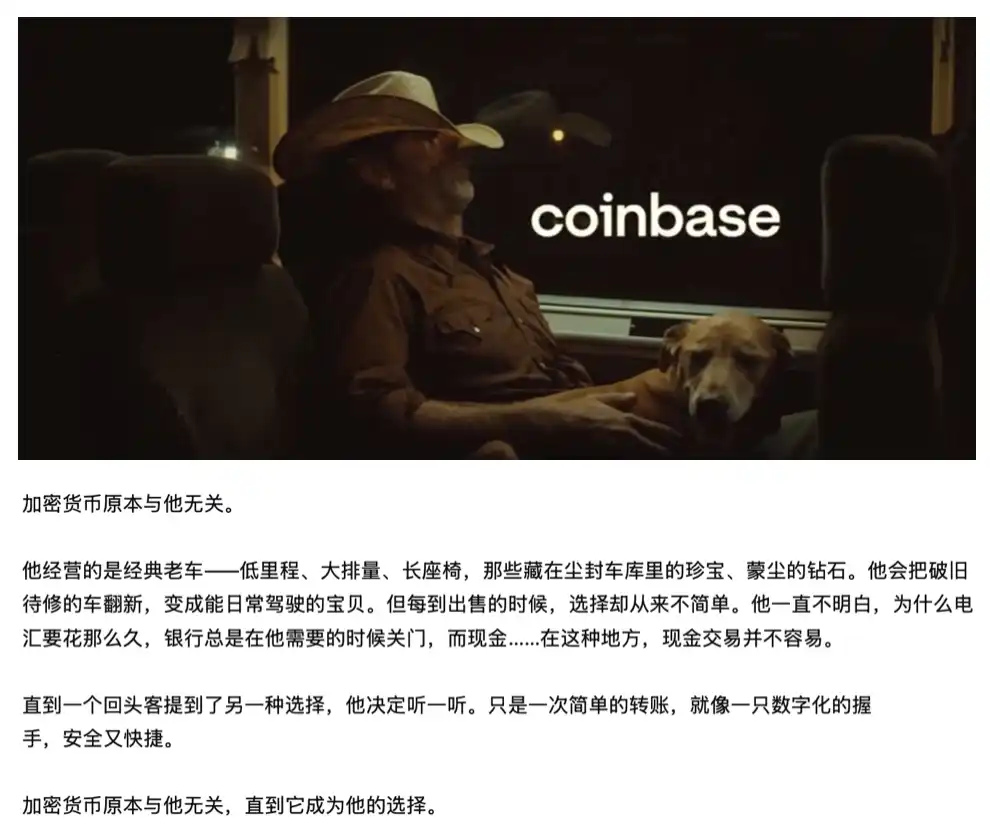
Illustration: BlockBeats
Two Paths for Public Blockchains: Mosque or Chameleon?
While Solana was mocked by the community for this advertisement, some also recalled its 2020 political donation campaign during the "Black Lives Matter" movement, where Solana stated, "Regardless of race or gender, everyone is equal, fair and just." Now, with the release of an advertisement accusing transgenderism of hindering innovation, people in the community have criticized Solana as a political chameleon.
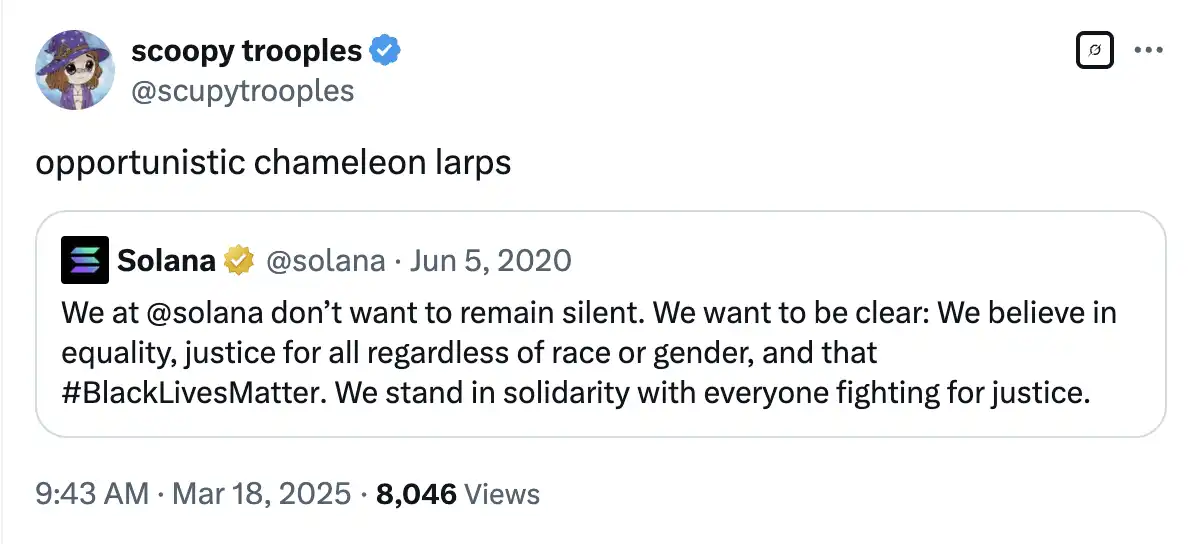
Solana has not been immune to controversies within the blockchain ecosystem, such as with Ethereum and Base. However, since the inauguration of Trump, the blockchain ecosystems centered in the U.S., led by Solana and Base, have shown completely different political stances and ideological choices compared to Ethereum.
Ethereum's founder, Vitalik, has consistently maintained his political stance, advocating for decentralization, rejecting political intervention, avoiding speculation, and driving technological and ecological innovation. He hopes that Ethereum can uphold its initial values and attract more users through practical applications, rather than seeking short-term gains by catering to politics or vested interest groups.
On social media, he plainly stated that the Ethereum Foundation will avoid affiliating with any political figures, emphasizing that those who attempt to ride on the popularity of politicians are misguided, and Ethereum needs a more distinct and clear positioning.
In contrast, Solana, Base, Cardano, Ripple, and other crypto projects have become guests of Trump.
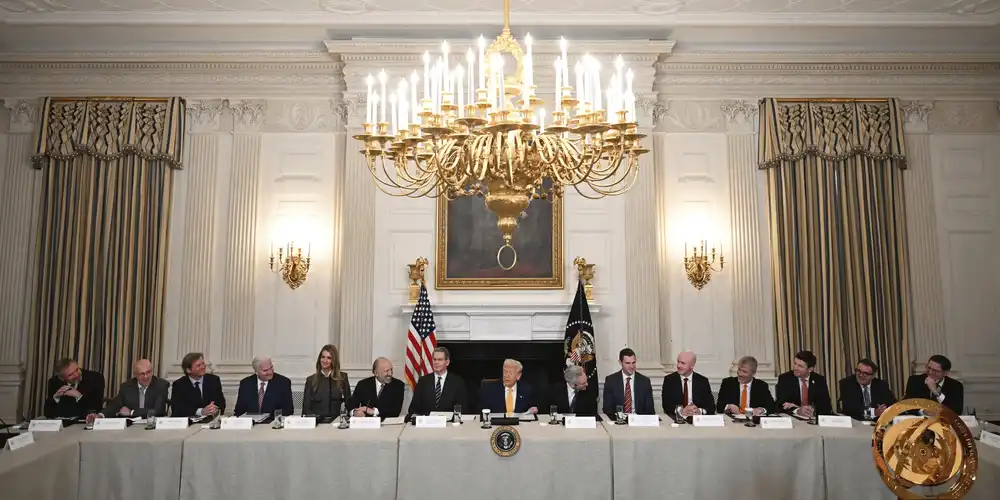
First Cryptocurrency White House Summit
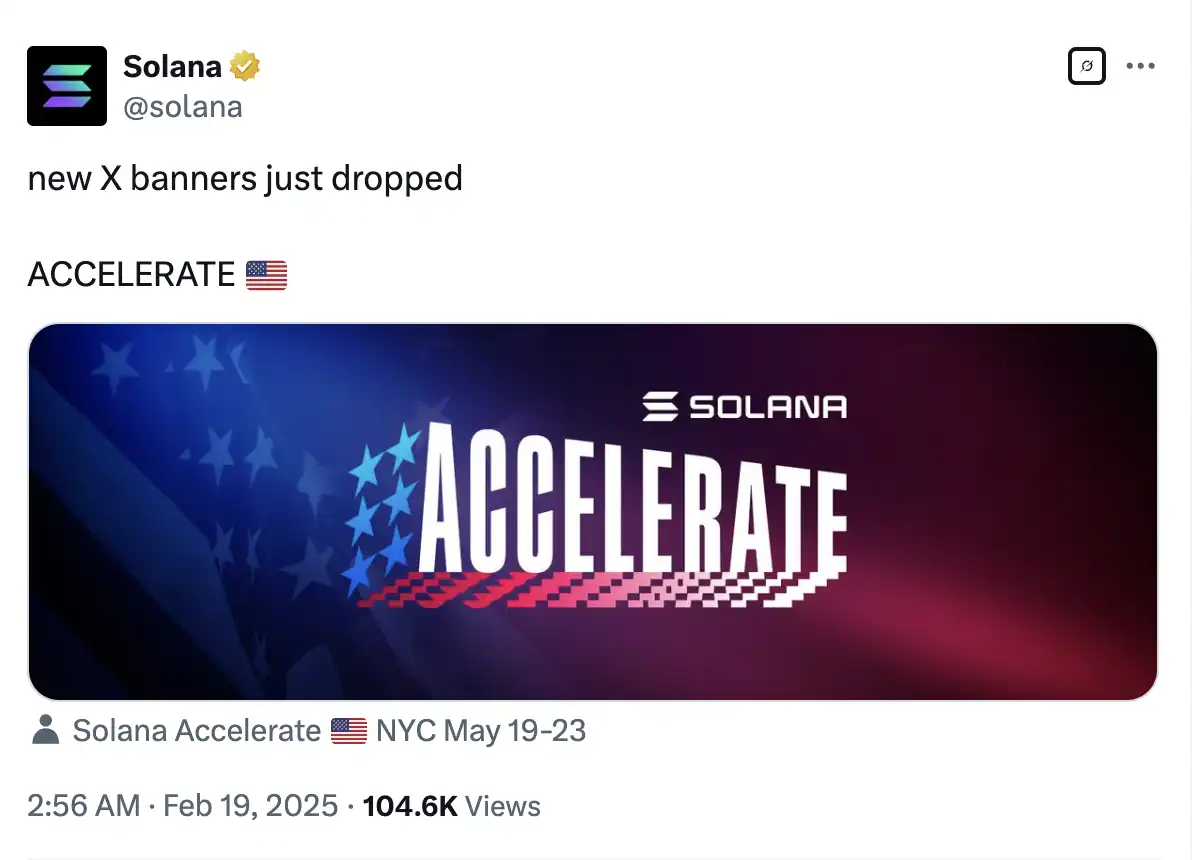
In February of this year, Solana updated its brand image with a banner promoting the word "ACCELERATE," with the background displaying the American flag.
The English-speaking community is currently in a heated debate over Solana's short film, with some expressing confusion as to why such an open-source project (especially one built on cryptography) like Solana would take such a strange stance, leaving many puzzled.
「Have you not realized that there is a disproportionately large number of transgender developers contributing to open source, cryptography, security, and intelligence software? Almost everyone who has grown up in the cypherpunk culture knows at least one transgender super developer or hacker, who is truly a legendary figure. What makes these communities so admirable is that they always adhere to this belief: we don't care who you are, we only care about what you have done.」
Some also argue in support of Solana, believing that since they have political resources, they should use them reasonably to maximize the ecosystem's development benefits.
Others think that this advertisement is a very clever marketing strategy, 「Those who cry out 'cryptocurrency should be decentralized, politically neutral' completely missed the point, this ad is designed to make people feel awkward and stir up anger, and you all fell for it — which in turn has made its spread even wider.」 Indeed, this is the case, as everyone is now sharing this ad clip.
Meanwhile, the community's complaints about Ethereum have not stopped, 「Say what you will about Solana's embarrassing marketing, but at least they are not afraid to try various things, no matter how foolish they may seem. Ethereum, on the other hand, is busy maintaining its 'trusted neutrality' and releasing a lot of clichés.」
As Solana anchors its brand image to the American flag and Base uses a commercial narrative to satirize the traditional financial system, the crypto space has irreversibly stepped into the ideological battleground. This "American Chain" values war has not only revealed the ambition of the public chain ecosystem to compete for political discourse power but also reflected the deep contradiction between decentralization beliefs and the pragmatism of survival.
Just as Bitcoin once tried to dissolve sovereign will with an algorithm, today's Layer1 networks are actively weaving political narratives — this may herald the script for the 2.0 of the crypto revolution: technical protocols are starting to learn to manipulate ideological tools, and the original doctrine of 'trusted neutrality' is being redefined by a more complex reality game. When the code cannot prove its position, perhaps the future of the crypto world will no longer be adjudicated solely by hash rate.
You may also like
What Is Vibe Coding? How AI Is Changing Web3 & Crypto Development
What is vibe coding? Learn how AI coding tools are lowering the barrier to Web3 development and enabling anyone to build crypto applications.

The parent company of the New York Stock Exchange strategically invests in OKX: The intentions behind the $25 billion valuation

WEEX P2P update: Country/region restrictions for ad posting
To improve ad security and matching accuracy, WEEX P2P now allows advertisers to restrict who can trade with their ads based on country or region. Advertisers can select preferred counterparty locations for a safer, smoother trading experience.
I. Overview
When publishing P2P ads, advertisers can now set the following:
Allow only counterparties from selected countries or regions to trade with your ads.
With this feature, you can:
Target specific user groups more precisely.Reduce cross-region trading risks.Improve order matching quality.
II. Applicable scenarios
The following are some common scenarios:
Restrict payment methods: Limit orders to users in your country using supported local banks or wallets.Risk control: Avoid trading with users from high-risk regions.Operational strategy: Tailor ads to specific markets.
III. How to get started
On the ad posting page, find "Trading requirements":
Select "Trade with users from selected countries or regions only".Then select the countries or regions to add to the allowlist.Use the search box to quickly find a country or region.Once your settings are complete, submit the ad to apply the restrictions.
When an advertiser enables the "Country/Region Restriction" feature, users who do not meet the criteria will be blocked when placing an order and will see the following prompt:
If you encounter this issue when placing an order as a regular user, try the following solutions.
Choose another ad: Select ads that do not restrict your country/region, or ads that allow users from your location.Show local ads only: Prioritize ads available in the same country as your identity verification.
IV. Benefits
Compared with ads without country/region restrictions, this feature provides the following improvements.
Aspect
Improvement
Trading security
Reduces abnormal orders and fraud risk
Conversion efficiency
Matches ads with more relevant users
Order completion rate
Reduces failures caused by incompatible payment methods
V. FAQ
Q1: Why are some users not able to place orders on my ad?
A1: Their country or region may not be included in your allowlist.
Q2: Can I select multiple countries or regions when setting the restriction?
A2: Yes, multiple selections are supported.
Q3: Can I edit my published ads?
A3: Yes. You can edit your ad in the "My Ads" list. Changes will take effect immediately after saving.

What are the key highlights of this year's Ethereum's most important upgrade, the Glamsterdam upgrade?

March 6 Key Market Update You Can't Miss! | Alpha Morning Report

Sell Nvidia, Buy Power Plant: 27-Year-Old AI Investor Earns $5 Billion in One Year
The $24 Million Heist Behind It: The Most Dangerous Vulnerability in the Crypto World is Actually Human

Justin Sun Lawsuit Dismissed, BlackRock Bullish on Tokenization, What Is the English-Speaking Community Paying Attention To?

Morning News | NYSE parent company invests in OKX; Morgan Stanley provides $500 million loan to Core Scientific; Western Union partners with Crossmint to launch stablecoin USDPT

These former crypto builders have transitioned to the hottest AI projects globally

Ethereum Overhaul 2026 Blueprint, this time to abandon "gradualism"
What Is OpenClaw? How AI Agents Could Change Crypto Exchange Trading
OpenClaw is a rapidly growing open-source AI agent that can autonomously execute tasks and interact with software, including connecting to crypto exchanges through APIs to analyze markets and automate trading strategies. While this creates new opportunities for smarter trading, it also introduces security and operational risks. Through this article, WEEX aims to help users better understand the potential and risks of AI trading agents so they can explore new technologies while trading more safely and responsibly.
Ethereum 2029 Strawmap Guide: Ultra-Fast Consensus, Native Privacy, and the "Acceleration Variables" Brought by AI

Altcoin ETF Surge: SOL and XRP Inflows Total $23 Million as Institutions Diversify
Key Takeaways Institutional interest in altcoin ETFs is expanding, with SOL and XRP showing significant inflows on March…
Vitalik Drops Ethereum Endgame Bombshell: ETH USD to $3,000?
Key Takeaways Vitalik Buterin introduces the “Sanctuary Tech” manifesto to address Ethereum’s non-financial limitations. A current lack of…
Exclusive: Yuliya Barabash Predicts the Most Regulated Could Be the Biggest Crypto Winners
Key Takeaways The aftermath of FTX and Celsius collapses has ushered a new regulatory era, reshaping the crypto…

iPhone Crypto Wallets Under Threat from State-Grade Malware
Key Takeaways: The Coruna exploit kit exploits 23 iOS vulnerabilities, threatening iPhone users’ crypto wallets. Initially state-level surveillance,…

Bitcoin Nears Two-Year ‘Make-or-Break’ Resistance: Future Implications
Key Takeaways Bitcoin’s price is approaching key resistance levels around $73,000, observed for the first time since early…
What Is Vibe Coding? How AI Is Changing Web3 & Crypto Development
What is vibe coding? Learn how AI coding tools are lowering the barrier to Web3 development and enabling anyone to build crypto applications.
The parent company of the New York Stock Exchange strategically invests in OKX: The intentions behind the $25 billion valuation
WEEX P2P update: Country/region restrictions for ad posting
To improve ad security and matching accuracy, WEEX P2P now allows advertisers to restrict who can trade with their ads based on country or region. Advertisers can select preferred counterparty locations for a safer, smoother trading experience.
I. Overview
When publishing P2P ads, advertisers can now set the following:
Allow only counterparties from selected countries or regions to trade with your ads.
With this feature, you can:
Target specific user groups more precisely.Reduce cross-region trading risks.Improve order matching quality.
II. Applicable scenarios
The following are some common scenarios:
Restrict payment methods: Limit orders to users in your country using supported local banks or wallets.Risk control: Avoid trading with users from high-risk regions.Operational strategy: Tailor ads to specific markets.
III. How to get started
On the ad posting page, find "Trading requirements":
Select "Trade with users from selected countries or regions only".Then select the countries or regions to add to the allowlist.Use the search box to quickly find a country or region.Once your settings are complete, submit the ad to apply the restrictions.
When an advertiser enables the "Country/Region Restriction" feature, users who do not meet the criteria will be blocked when placing an order and will see the following prompt:
If you encounter this issue when placing an order as a regular user, try the following solutions.
Choose another ad: Select ads that do not restrict your country/region, or ads that allow users from your location.Show local ads only: Prioritize ads available in the same country as your identity verification.
IV. Benefits
Compared with ads without country/region restrictions, this feature provides the following improvements.
Aspect
Improvement
Trading security
Reduces abnormal orders and fraud risk
Conversion efficiency
Matches ads with more relevant users
Order completion rate
Reduces failures caused by incompatible payment methods
V. FAQ
Q1: Why are some users not able to place orders on my ad?
A1: Their country or region may not be included in your allowlist.
Q2: Can I select multiple countries or regions when setting the restriction?
A2: Yes, multiple selections are supported.
Q3: Can I edit my published ads?
A3: Yes. You can edit your ad in the "My Ads" list. Changes will take effect immediately after saving.


 App
App