
- Buy Crypto
- Markets
 Futures
- Spot
- Copy Trade
- Earn
- More
Solana's "Troubles at Home and Threats from Afar": BSC Faces External Criticism, Pump.fun and Raydium Engage in Internal "Food Fight"

Original Title: "When BSC Declares War on Solana, Pump.fun and Raydium Have Begun a Civil War"
Original Source: DeepTech TechFlow
"What tweet did CZ post today?"
If you are asking this question, then obviously BSC has been one of the few recent hotspots on-chain.
With CZ and the top female influencer becoming increasingly active on Twitter, the play of attracting attention and creating memes has gradually emerged; at the same time, leveraging the strong secondary traffic capability of the Binance APP, directly integrating Binance Alpha into the app has also brought more heat to meme trading.
In the overall downtrend of the market, BSC has a taste of coming from behind, and what it is seizing is clearly the on-chain heat that Solana had before.
Traffic and fee income are the anxiety and desire of every chain.
Under business anxiety, there will inevitably be competition between different chains, but in fact, different protocols on the same chain are also competing.
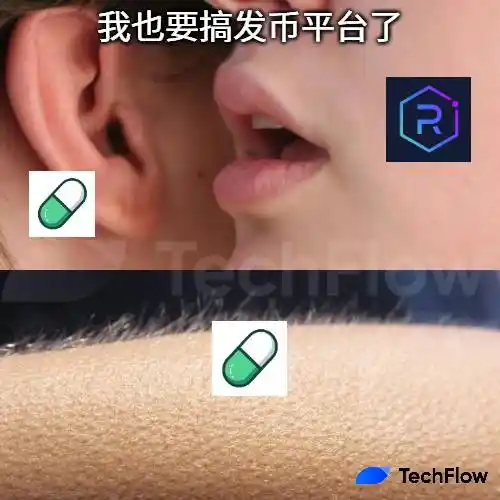
For example, Pump.fun and Raydium each launched a "copycat" of each other.
Pump.fun Does AMM
More than 20 days ago, Pump.fun started doing what Raydium does, launching its own AMM pool, attempting to divert the liquidity revenue originally belonging to Raydium.
(See "Pump.fun Doing Its Own AMM Pool? The Heart of Snatching Raydium's Profit is Exposed")
Since users' trades are first matched within Pump.fun's internal pool, relying on the platform's liquidity to complete the transactions; when the internal pool is filled, the trades are routed to the external pool, which actually relies on Raydium's liquidity pool.
In this mode, Pump.fun has always been Raydium's "liquidity provider," but is also therefore subject to Raydium's rules. Whenever a trade flows to the external pool, Pump.fun needs to pay a portion of the transaction fee, and this part of the profit ultimately flows to Raydium's liquidity providers (LPs), with each transaction on Raydium currently charging a 0.25% fee.
The motivation behind this is quite simple: In plain terms, it's because Pump.fun as a traffic entry point didn't fully capitalize on the benefits brought by the traffic.
At that time, we mentioned that in an unfavorable overall environment, not only were the "leeks" engaging in PvP, but projects were also seizing the opportunity to compete against each other.
Raydium Launching a Launchpad
And today, Raydium's counterattack strategy has also come to light.
According to Blockworks' report, Raydium is launching a token launchpad called LaunchLab, similar to a direct fork of pump.fun.
Although Raydium's official announcement did not directly mention this new change, where there's smoke, there's fire. This seems to imply that the tacit cooperation between Raydium and Pump.fun is gradually being broken.
As observers, this perception is quite obvious --- if you've encroached on my territory, then I can also encroach on yours.
Raydium's motivation is also very simple: as a liquidity pool backend, why not take a step forward and capture the frontend traffic as well?
But the prerequisite for encroachment is to have strength.
For token launchpads like Pump.fun, replicating a similar yet relatively simple product, strength might not necessarily come from technology but rather from funding.
The report further indicates that Raydium still has around $168 million on its balance sheet, giving it the greatest confidence to clone Pump.fun, i.e., to invest people and money.
Furthermore, Blockworks' interview with an anonymous Raydium core contributor indirectly confirms this:
"The protocol started developing LaunchLab several months ago but put the project on hold because it 'didn't want to make the team feel like Raydium was competing with them directly.' Generosity seems to have dried up since the AMM plans for pump.fun emerged."
In other words, while Pump.fun was working on its AMM, Raydium was already considering launching a launchpad.
This feels more like an unintentional competition, and a conscious effort to take the business further.
The project team is obviously more aware than the casual users that transactions are the soul of the crypto business, and it is easier to benefit from various aspects around transactions.
Of course, it would be best to have the ability to take a bite out of the entire process, from the front end to the back end.
Civil War Moat
The essence of the AMM pool is an open-source design, and launching a meme coin is not difficult either; since there are no development barriers on either side, Pump.fun and Raydium could have been doing their own businesses;
The only question is, where are the moats on both sides, and how can they win?
Pump.fun's moat is obviously the traffic advantage brought by user habits. As a Meme coin launch platform, Pump.fun has firmly grasped the attention of some users through its unique community culture and user stickiness.
Once this user habit is formed, it is difficult to easily transfer to another platform. More importantly, Pump.fun's user ecosystem itself has a traffic entry attribute, providing it with sustained growth momentum.
On the other hand, Raydium's moat is built on the transaction demand of its liquidity pools. As one of the most important DeFi infrastructures on Solana, Raydium's ecosystem control comes not only from its deep liquidity pools but also from its transaction network position across the entire Solana chain.
In other words, Raydium's advantage is not just technical but the entire ecosystem's reliance on it.
However, the strength of moats is not a static existence.
In the current environment, Pump.fun and Raydium's moats face different challenges:
Whether Pump.fun's traffic can continue to grow depends on its ability to continuously launch new features and gameplay to attract users. Meanwhile, Raydium needs to maintain its lead in liquidity competition and further consolidate its ecosystem position through financial and technological investments.
Liquidity Depletion: How Many Will Engage in This Civil War?
While the two protocols are busy competing with each other, a bigger question arises:
How many users will actually participate in this civil war? Is there really enough market space and user base to support it?
From the current market environment, it can be seen that the overall cryptocurrency industry is in a downturn, with liquidity and user activity decreasing significantly compared to before. In this context, whether it's Pump.fun or Raydium, they are actually competing for a shrinking piece of the pie.
Without new liquidity injection or more "sheep" entering the scene, this competition is actually not very meaningful.
Whether it's BSC, Solana, or other blockchains, the inter-chain and intra-chain competition is intensifying. Behind this competition is a reflection of the industry's overall desire for traffic and fee income. However, if the overall environment of the entire cryptocurrency industry does not improve, this competition may ultimately be short-lived.
For the entire industry, the real breakthrough lies not in civil wars or inter-chain wars, but in how to enhance the industry's overall attractiveness. Whether through innovative product forms, reducing user thresholds, or through more extensive education and promotion, attracting new liquidity is the key to solving the problem.
You may also like

Mining Companies' Great Migration: Some Have Already Secured $12.8 Billion in AI Orders
What Is Vibe Coding? How AI Is Changing Web3 & Crypto Development
What is vibe coding? Learn how AI coding tools are lowering the barrier to Web3 development and enabling anyone to build crypto applications.

The parent company of the New York Stock Exchange strategically invests in OKX: The intentions behind the $25 billion valuation
WEEX P2P update: Country/region restrictions for ad posting
To improve ad security and matching accuracy, WEEX P2P now allows advertisers to restrict who can trade with their ads based on country or region. Advertisers can select preferred counterparty locations for a safer, smoother trading experience.
I. Overview
When publishing P2P ads, advertisers can now set the following:
Allow only counterparties from selected countries or regions to trade with your ads.
With this feature, you can:
Target specific user groups more precisely.Reduce cross-region trading risks.Improve order matching quality.
II. Applicable scenarios
The following are some common scenarios:
Restrict payment methods: Limit orders to users in your country using supported local banks or wallets.Risk control: Avoid trading with users from high-risk regions.Operational strategy: Tailor ads to specific markets.
III. How to get started
On the ad posting page, find "Trading requirements":
Select "Trade with users from selected countries or regions only".Then select the countries or regions to add to the allowlist.Use the search box to quickly find a country or region.Once your settings are complete, submit the ad to apply the restrictions.
When an advertiser enables the "Country/Region Restriction" feature, users who do not meet the criteria will be blocked when placing an order and will see the following prompt:
If you encounter this issue when placing an order as a regular user, try the following solutions.
Choose another ad: Select ads that do not restrict your country/region, or ads that allow users from your location.Show local ads only: Prioritize ads available in the same country as your identity verification.
IV. Benefits
Compared with ads without country/region restrictions, this feature provides the following improvements.
Aspect
Improvement
Trading security
Reduces abnormal orders and fraud risk
Conversion efficiency
Matches ads with more relevant users
Order completion rate
Reduces failures caused by incompatible payment methods
V. FAQ
Q1: Why are some users not able to place orders on my ad?
A1: Their country or region may not be included in your allowlist.
Q2: Can I select multiple countries or regions when setting the restriction?
A2: Yes, multiple selections are supported.
Q3: Can I edit my published ads?
A3: Yes. You can edit your ad in the "My Ads" list. Changes will take effect immediately after saving.

What are the key highlights of this year's Ethereum's most important upgrade, the Glamsterdam upgrade?

March 6 Key Market Update You Can't Miss! | Alpha Morning Report

Sell Nvidia, Buy Power Plant: 27-Year-Old AI Investor Earns $5 Billion in One Year
The $24 Million Heist Behind It: The Most Dangerous Vulnerability in the Crypto World is Actually Human

Justin Sun Lawsuit Dismissed, BlackRock Bullish on Tokenization, What Is the English-Speaking Community Paying Attention To?

Morning News | NYSE parent company invests in OKX; Morgan Stanley provides $500 million loan to Core Scientific; Western Union partners with Crossmint to launch stablecoin USDPT

These former crypto builders have transitioned to the hottest AI projects globally

Ethereum Overhaul 2026 Blueprint, this time to abandon "gradualism"
What Is OpenClaw? How AI Agents Could Change Crypto Exchange Trading
OpenClaw is a rapidly growing open-source AI agent that can autonomously execute tasks and interact with software, including connecting to crypto exchanges through APIs to analyze markets and automate trading strategies. While this creates new opportunities for smarter trading, it also introduces security and operational risks. Through this article, WEEX aims to help users better understand the potential and risks of AI trading agents so they can explore new technologies while trading more safely and responsibly.
Ethereum 2029 Strawmap Guide: Ultra-Fast Consensus, Native Privacy, and the "Acceleration Variables" Brought by AI

Altcoin ETF Surge: SOL and XRP Inflows Total $23 Million as Institutions Diversify
Key Takeaways Institutional interest in altcoin ETFs is expanding, with SOL and XRP showing significant inflows on March…
Vitalik Drops Ethereum Endgame Bombshell: ETH USD to $3,000?
Key Takeaways Vitalik Buterin introduces the “Sanctuary Tech” manifesto to address Ethereum’s non-financial limitations. A current lack of…
Exclusive: Yuliya Barabash Predicts the Most Regulated Could Be the Biggest Crypto Winners
Key Takeaways The aftermath of FTX and Celsius collapses has ushered a new regulatory era, reshaping the crypto…

iPhone Crypto Wallets Under Threat from State-Grade Malware
Key Takeaways: The Coruna exploit kit exploits 23 iOS vulnerabilities, threatening iPhone users’ crypto wallets. Initially state-level surveillance,…
Mining Companies' Great Migration: Some Have Already Secured $12.8 Billion in AI Orders
What Is Vibe Coding? How AI Is Changing Web3 & Crypto Development
What is vibe coding? Learn how AI coding tools are lowering the barrier to Web3 development and enabling anyone to build crypto applications.
The parent company of the New York Stock Exchange strategically invests in OKX: The intentions behind the $25 billion valuation
WEEX P2P update: Country/region restrictions for ad posting
To improve ad security and matching accuracy, WEEX P2P now allows advertisers to restrict who can trade with their ads based on country or region. Advertisers can select preferred counterparty locations for a safer, smoother trading experience.
I. Overview
When publishing P2P ads, advertisers can now set the following:
Allow only counterparties from selected countries or regions to trade with your ads.
With this feature, you can:
Target specific user groups more precisely.Reduce cross-region trading risks.Improve order matching quality.
II. Applicable scenarios
The following are some common scenarios:
Restrict payment methods: Limit orders to users in your country using supported local banks or wallets.Risk control: Avoid trading with users from high-risk regions.Operational strategy: Tailor ads to specific markets.
III. How to get started
On the ad posting page, find "Trading requirements":
Select "Trade with users from selected countries or regions only".Then select the countries or regions to add to the allowlist.Use the search box to quickly find a country or region.Once your settings are complete, submit the ad to apply the restrictions.
When an advertiser enables the "Country/Region Restriction" feature, users who do not meet the criteria will be blocked when placing an order and will see the following prompt:
If you encounter this issue when placing an order as a regular user, try the following solutions.
Choose another ad: Select ads that do not restrict your country/region, or ads that allow users from your location.Show local ads only: Prioritize ads available in the same country as your identity verification.
IV. Benefits
Compared with ads without country/region restrictions, this feature provides the following improvements.
Aspect
Improvement
Trading security
Reduces abnormal orders and fraud risk
Conversion efficiency
Matches ads with more relevant users
Order completion rate
Reduces failures caused by incompatible payment methods
V. FAQ
Q1: Why are some users not able to place orders on my ad?
A1: Their country or region may not be included in your allowlist.
Q2: Can I select multiple countries or regions when setting the restriction?
A2: Yes, multiple selections are supported.
Q3: Can I edit my published ads?
A3: Yes. You can edit your ad in the "My Ads" list. Changes will take effect immediately after saving.


 App
App