
The Shadow Business Empire of Iran's New Supreme Leader: Oil, Real Estate, and Financial Intrigue

 Prefer us on Google

Original Title: "Iran's New Supreme Leader's Shadowy Business Empire: The Oil, Real Estate, and Financial Underworld"
Original Author: Zen, PANews
Facing an external attack and a crisis of top leadership vacuum, as well as pressure from the Islamic Revolutionary Guard Corps (IRGC), Iran's Expert Assembly has determined that the assassinated Supreme Leader's son, Mojtaba Khamenei, will assume the role of Iran's third Supreme Leader.
Those unfamiliar with Iranian politics may have never heard Mojtaba's name, and that's not surprising. Even within Iran, he has long remained out of the public eye. He has never come to power through elections or been formally appointed to any government position, operating consistently in secrecy and low-key. Since the deaths of his father and wife, this individual, seen by the outside world as a leading candidate for Supreme Leader, has never appeared in public.
Moreover, U.S. President Trump seems dissatisfied with Iran's new Supreme Leader. He had previously stated that while Mojtaba is the most likely successor, this outcome is unacceptable to him. Trump also contemptuously stated: "They are wasting time, Khamenei's son is a nobody." He also said that if this candidate does not receive his approval beforehand, the new leader will not last long in office.
Perhaps Mojtaba is not necessarily a decisive variable in the face of U.S. military pressure. But within Iran, this long-time elusive figure has actually been at the center of power.
Furthermore, a survey released by Bloomberg earlier this year brought Mojtaba's hidden business empire to light: an alleged cross-border real estate network operating through intermediaries, spanning London, Dubai, Frankfurt, and Mallorca, with cryptocurrency also serving as a key medium for fund flows.
Mojtaba: From Behind the Scenes to the Spotlight
Mojtaba Khamenei was born in 1969 in Mashhad, Iran, as the second son of Iran's Supreme Leader Ali Khamenei. As the son of the Supreme Leader, Mojtaba's public identity is that of a mid-level cleric who has long maintained a low profile, rarely appearing in public or speaking.
On the surface, Mojtaba's life has been spent outside of government departments, never holding any official positions. However, he has actually maintained close ties to the centers of power and has long been at the heart of power.
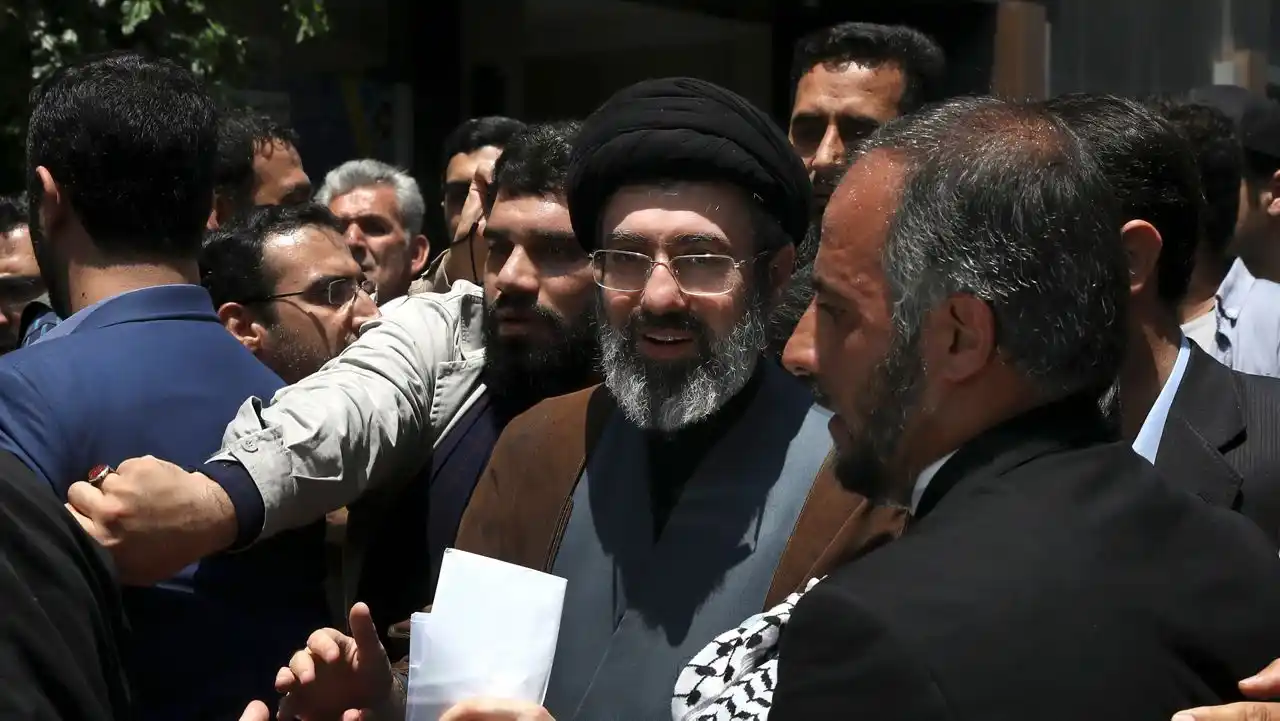
In 2019, the U.S. Treasury Department announced sanctions on Mojtaba, stating that he had never been elected or appointed to government positions but had acted on behalf of the Supreme Leader in an official capacity. The statement also mentioned that Mojtaba had been entrusted with some leadership responsibilities by Khamenei and closely cooperated with the Islamic Revolutionary Guard Corps' Quds Force commander and the Basij Resistance Force.
The Iran International reported that for at least the past twenty years, Mujtaba has been Ayatollah Khamenei's closest advisor, effectively controlling the Office of the Supreme Leader. As Iran's highest power institution, the Office of the Supreme Leader combines the traditional religious institution known as the "Beit" (the office of the religious authority "Marja") with a bureaucratic model, controlling the country's lifelines: key security, political, and financial levers. Mujtaba has been lurking in the Office of the Supreme Leader, acting as his father's confidant and power broker.
During the Iran-Iraq War in the 1980s, Mujtaba served in the Habib Brigade, which was part of the Islamic Revolutionary Guard Corps, and many of his comrades later rose to senior positions in Iran's security and intelligence apparatus. These wartime relationships also helped Mujtaba lay the foundation for long-standing connections within Iran's security apparatus.
As a key figure in Tehran's power structure operating behind the scenes, Mujtaba has close ties to the Islamic Revolutionary Guard Corps (IRGC), thereby consolidating his influence in the regime's power structure. In 2009, Mujtaba orchestrated election fraud to help then-President Mahmoud Ahmadinejad win re-election, triggering a long-lasting protest that eventually evolved into a nationwide movement against the government and the Supreme Leader. Subsequently, Mujtaba led the crackdown on the post-election protests known as the "Green Movement."
For years, Mujtaba has been seen as a potential successor to Khamenei. Iran's former prime minister, Mir-Hossein Mousavi, who has been under house arrest, stated in a 2022 memoir, "Rumors of the son conspiring to inherit his father's throne have been circulating for thirteen years. If this is not true, why has no one denied it?" Following this, former Iranian President Ibrahim Raisi, who was once rumored to be in the final round with Mujtaba, died in a helicopter crash in 2024.
Therefore, for Iran in a wartime stage, especially for the core circle of hardline Iranian politicians and security apparatus that make up the regime's power nucleus, electing Mujtaba, who combines legitimacy and control, to power is a natural course of action.
Building a Global Real Estate Empire
Mujtaba, who has established a strong influence in Iran's political, security, and religious institutions, has an even more covert control and dominance over the financial network.
In January of this year, Israel's Channel 14 claimed, citing a source familiar with the Islamic Revolutionary Guard Corps' economic activities, that Iranian leaders transferred $1.5 billion to a trust account in Dubai via cryptocurrency within two days, with Mujtaba being one of the individuals involved in these transfers.
The Khamenei family has always been depicted in Iran's official narrative as living a simple and devout life, completely devoid of extravagance. However, according to a year-long investigation by Bloomberg, Mojtaba's secretive vast wealth contradicts his professed pious image. As one of the most powerful figures in Iran and the Middle East, Mojtaba holds a massive investment empire.
Despite being sanctioned by the U.S. in 2019, it is estimated that Khamenei has continued to channel billions of dollars into Western markets through his extensive business network. Insiders revealed that Mojtaba's wealth spans various assets, from Persian Gulf shipping to Swiss bank accounts, European luxury hotels, and a UK luxury property worth over £100 million (approximately $138 million). Insiders claimed that the funds for these acquisitions primarily came from Iranian oil sales.
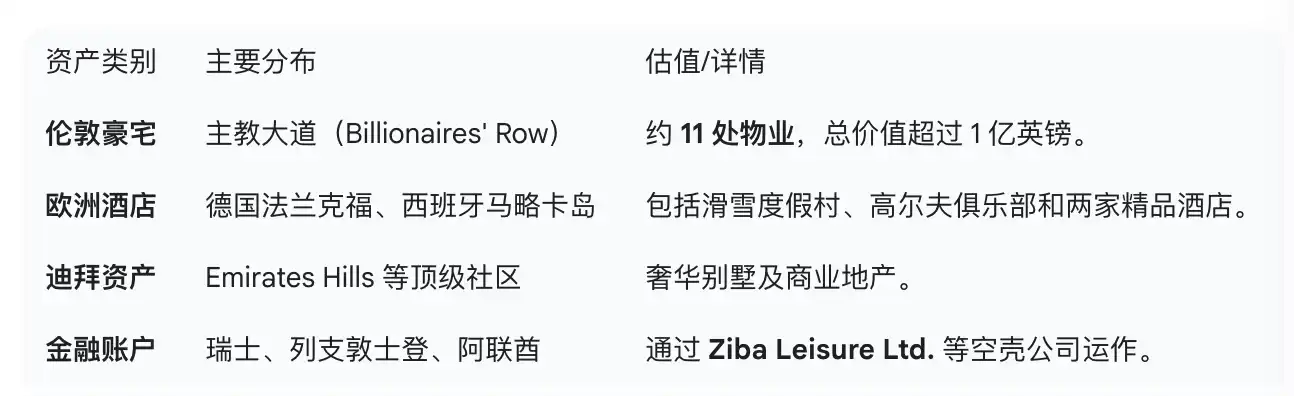
However, Bloomberg found after reviewing all documents that these assets are not under Mojtaba's name but are purchased and held by an Iranian businessman named Ali Ansari. "If you analyze his (Mojtaba's) financial network, you will find that Ali Ansari is his primary account holder. This makes Ansari one of the most influential oligarchs in present-day Iran," said Farzin Nadimi, a senior fellow at the Washington Institute who has studied the Khamenei family's financial empire.
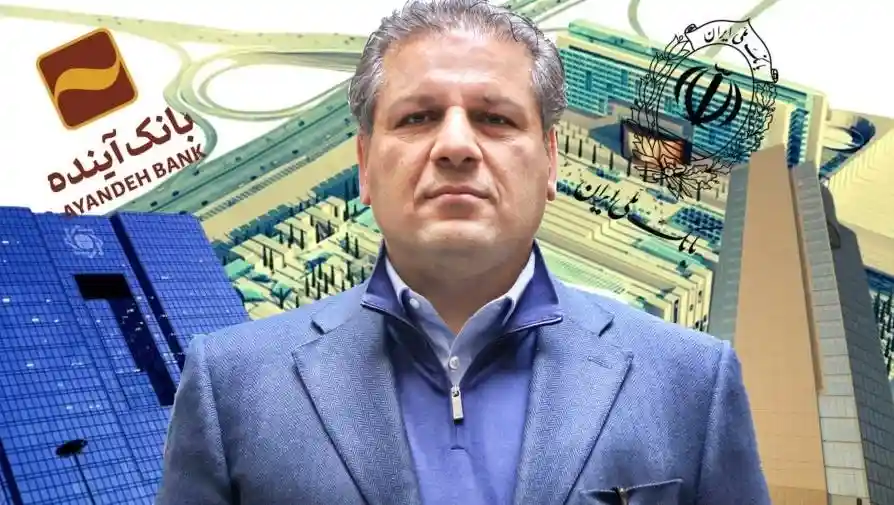
Iranian Banker Ali Ansari
At the age of 57, Ansari was designated last year by UK authorities as a "corrupt Iranian banker and businessman" and sanctioned for "supporting" activities of the Islamic Revolutionary Guard Corps (IRGC) in Iran. Domestically, Ansari's extensive business network has made him one of the most prominent private entrepreneurs.
It is said that when Ansari was young, his father joined a reconstruction committee funded by the Office of the Supreme Leader, responsible for renovating religious sites. This work allowed Ansari's father to meet senior clerics, including members of Khamenei's inner circle. Furthermore, Ansari enlisted in the military during the final stages of the Iran-Iraq War, forming a "comradeship" with Mojtaba, the son of Iran's President at the time, Khamenei. At Ansari's father's funeral in June 2025, the Supreme Leader's family and senior advisors attended, highlighting the continued close relationship between the Ansari family and Iran's leadership.
Following the end of the Iran-Iraq War, Ansari gradually emerged as a rising entrepreneur in Iran. He founded TAT Bank in 2009 and later established Ayandeh Bank through a merger in 2013. In line with Ansari's vision, the bank officially began construction of the luxurious "Iran Mall" in 2018. Iran Mall is touted as the world's largest shopping center, setting a Guinness World Record for the longest continuous concrete pour during its early construction phases.
Last year, Ayandeh Bank collapsed due to debt, internal lending and Ponzi scheme allegations, and controversy surrounding its close political ties with officials, and was merged into the Central Bank of Iran. Publicly, Ansari was a major shareholder in Ayandeh Bank. However, sources revealed that Mujtaba was a key figure in Ayandeh Bank's operations and shopping center projects. Ansari was allegedly meeting Mujtaba privately in upscale residential areas of Tehran and held secret meetings in Ayandeh's offices.
According to sources, as Ansari's business empire expanded within Iran, his role as Mujtaba's financial conduit overseas became increasingly significant—he established banking relationships across Europe and funneled oil export profits through a convoluted network of companies in the UAE. U.S. officials and sources revealed that sanctions have pushed the majority of the National Iranian Oil Company's (NOC) crude oil transactions into opaque channels involving shell companies, middlemen, and informal traders.
Through the intricate web of companies, the Ansari Group has built a vast real estate commercial empire overseas. Bloomberg traced this network to own dozens of properties in London alone, and multiple five-star hotels in financial hubs like Frankfurt and Spain.
"The Iranian government is trying to establish itself in the German financial system," said Najis Eskandari-Ghanebeiglo, the Vice Mayor of Frankfurt who was born in Tehran and has long criticized the leadership of the Islamic Republic of Iran. "They are abusing our system."
The Supreme Leadership Intensifies Iran's Power Struggle
From political and military influence to laying out a financial network, Mujtaba has been quietly preparing to inherit the supreme leadership.
However, the long shadowed Mujtaba also faces dissent. According to Iran International, a group of dissenters contacted the Speaker of the Parliament and members of the Leadership Council last Wednesday, warning that Mujtaba's succession could raise public concerns about hereditary leadership and turning the Islamic Republic into a monarchical state.
A parliament member, in a call with the Speaker and parliamentary leadership, said, "Ayatollah Ali Khamenei does not endorse the idea of his son taking on a leadership role and has never allowed this issue to be raised in his lifetime." Furthermore, members stated that Mujtaba lacks a defined, publicly known religious and jurisprudential position, therefore, selecting him as the Supreme Jurisprudent lacks religious legitimacy. These dissenting representatives called for Mujtaba to withdraw, or else the election process may be deemed "invalid."
Amid increasing reports of divergence and stalemate, Iran's Expediency Discernment Council decided to suspend the Assembly of Experts' operations (the constitutional body responsible for selecting the Supreme Leader) and transfer power to an interim leadership entity. Per Article 111 of the Iranian Constitution, this shift elevated the position of President Masoud Pezeshkian to a level akin to the Supreme Leader, granting him many of the Supreme Leader's powers, including commanding the armed forces.
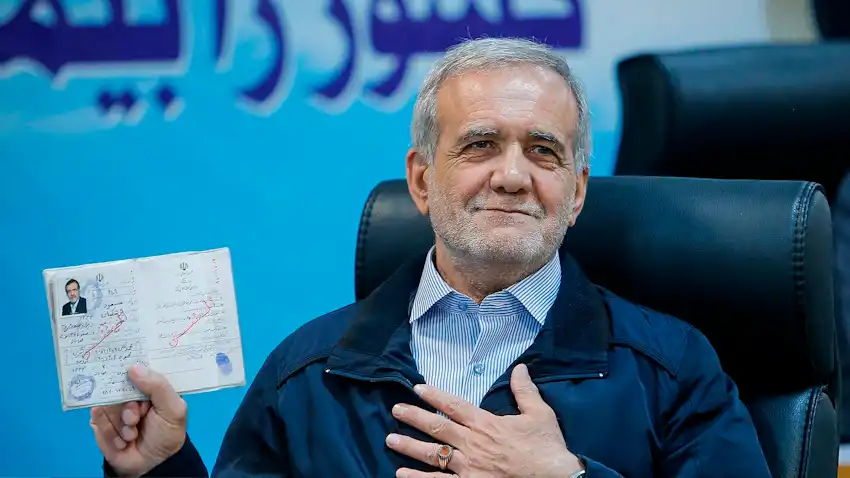
Iranian President Mahmoud Peshehkiyan
But Peshehkiyan appears to lack the ability to control the situation. On March 7, the Iranian president claimed that the interim leadership committee had approved not to launch attacks on neighboring countries or missile strikes. However, several Gulf countries were still targeted by drone strikes. Peshehkiyan also retracted the apology statement after facing criticism from other hardline Iranian leaders.
Evidently, the Iranian Revolutionary Guard continues to play a central role in both war and domestic politics, deeply involved in the selection and ratification of the Supreme Leader. Despite constitutional sensitivities and resistance from some religious institutions, the organization remains steadfast in its support of Mujtaba. Sources revealed that the Guard commander has been directly contacting and persuading members, exerting threatening pressures in an attempt to convince opposition representatives.
As for Mujtaba, stepping out of the ruins of his father's era, this long-presented hardliner as the new leader. After experiencing the deaths of his father and wife in airstrikes, perhaps making it harder for him to achieve any compromise.
However, since Israel and the U.S. view the successor as a "clear elimination target," Mujtaba, if adamant on the Islamic law principle of "an eye for an eye" (qisas), will inevitably face greater risks; but if he accepts Trump's demands for a policy shift, it means relinquishing his father's 37-year political legacy.
Today, the Islamic Republic of Iran, deeply embroiled in war and economic crisis, stands at a crossroads.
-- Price
This content is provided for general informational purposes only and doesn't constitute financial, investment, legal, or tax advice. Any events, rewards, online promotions, or related information mentioned herein should not be considered a recommendation, solicitation, or invitation to purchase, sell, trade, or otherwise deal in any crypto assets. Crypto assets are highly volatile and may result in loss. The availability of WEEX services, products, and related events may vary by region. You are responsible for ensuring that your participation is in accordance with applicable local laws and regulations.
You may also like

Futu has had all its illegal gains confiscated, reminding cryptocurrency exchanges

Kraken's parent company Payward has received preliminary approval from Dubai VARA to conduct cryptocurrency business
Chinese and American police jointly crack down on a Dubai-based fraud gang for the first time, suspected of luring victims with high-return cryptocurrency projects

The US FBI, in collaboration with multiple countries, has dismantled several "pig butchering" cryptocurrency scam networks, involving amounts totaling millions of dollars

Gate's Q1 2026 report is online, compliance layout strengthens global competitiveness

70x in a Month: When $RAVE Put Istanbul’s Dancefloor on the Chain
A Web3 project with zero VCs and no whitepaper started with a midnight party for 200 people. Eighteen months later, its token $RAVE is up 70x, and its contract liquidations briefly eclipsed Ethereum’s. Is this just pure speculation, or are we looking at a new breed of cultural asset?

Soaring 50 times, with an FDV exceeding 10 billion USD, why RaveDAO?
Binance provides temporary transfers for employees in the UAE to address disruptions in operations in the region due to the Middle East conflict
Dubai releases regulatory framework for derivatives trading on cryptocurrency exchanges

2025 Crypto Violence Retrospective: 65 Physical Assaults, 4 Fatal Incidents

UAE Accelerates Digital Dirham Pilot with Its First Successful Transaction
Key Takeaways The UAE’s pilot program for its central bank digital currency (CBDC), the digital dirham, has achieved…
SAFEX has officially rebranded to YUBIT, ushering in a new era of globalization and innovation.
WLFI collaborates with RaveDAO to host its first offline event, bringing the world's first USD1 offline payment scenario to life.
Reuters: A huge explosion was heard in Dubai

The world belongs to Chinese people who speak English
Drone attacks on oil tanks near Dubai airport, Emirates flights suspended

USDC's market value is approaching its historical high of 80 billion USD, with analysts attributing this to capital outflow from the UAE
The Dubai TOKEN2049 summit is proposed to be postponed to April 2027 due to geopolitical influences

Stablecoins are breaking away from cryptocurrency, becoming the next generation of infrastructure for global payments

Due to the impact of the geopolitical situation, the demand for stablecoins in Dubai has surged, with over 2.3 billion USDC minted in the past week
Hong Kong Crypto Ecosystem 2.0: Stablecoins, RWA, and the New Battleground for Financial Institutions

Political Prediction Market 67% Win Rate Star Account Wagers $27,100 on "US-Iran Ceasefire in March"

Token2049 Dubai Organizer: Despite Escalating Middle East Conflict, Conference Will Proceed as Planned
Dubai gold is experiencing rare discounted trading, possibly due to logistics disruptions caused by the Middle East conflict
36 years, 4 wars, 1 script: How does capital price the world in conflict?
MegaETH Co-founder: 48 Hours After Leaving Dubai, I Reassessed the Entire Crypto Space
Near Dubai's renowned wealthy enclave "Palm Jumeirah," a loud explosion, thick smoke, and fire were reported.
Elliptic Highlights Russian Crypto Platforms Evading Sanctions
Key Takeaways: A network of Russian crypto exchanges is reportedly aiding users in circumventing Western sanctions. Five major…

WEEX AI Trading Hackathon Dubai Opening Ceremony Ends, Live Viewers Exceed 150,000
Bybit to Introduce Dollar Accounts With Partner Banks – Can Crypto Go Mainstream?
Key Takeaways Bybit plans to introduce “MyBank” dollar accounts in partnership with licensed financial institutions, enhancing seamless conversion…
Futu has had all its illegal gains confiscated, reminding cryptocurrency exchanges
Kraken's parent company Payward has received preliminary approval from Dubai VARA to conduct cryptocurrency business
Chinese and American police jointly crack down on a Dubai-based fraud gang for the first time, suspected of luring victims with high-return cryptocurrency projects
The US FBI, in collaboration with multiple countries, has dismantled several "pig butchering" cryptocurrency scam networks, involving amounts totaling millions of dollars
Gate's Q1 2026 report is online, compliance layout strengthens global competitiveness
70x in a Month: When $RAVE Put Istanbul’s Dancefloor on the Chain
A Web3 project with zero VCs and no whitepaper started with a midnight party for 200 people. Eighteen months later, its token $RAVE is up 70x, and its contract liquidations briefly eclipsed Ethereum’s. Is this just pure speculation, or are we looking at a new breed of cultural asset?

Contents
Latest articles

Latest coin listings on WEEX


