
Wall Street Bears Target Ethereum: Vitalik In the Know Takes Flight, Tom Lee Remains Bullish


Original Source: Culper Research
Original Translation: Azuma, Odaily Planet Daily
Editor's Note: On March 6, the Wall Street short-selling firm Culper Research suddenly published an article announcing that they were shorting ETH and BMNR-related securities. Culper Research's logic is that developers like Vitalik miscalculated Ethereum's demand elasticity before the Fusaka upgrade, leading to the upgrade breaking ETH's tokenomics. Culper Research also mentioned that Vitalik is well aware of this and is taking practical action to front-run it, while the stubborn Tom Lee is heading towards a dead end.
In response to this large-scale short by the institution, Vitalik himself and Tom Lee have not yet responded, but Vitalik's father Dmitry Buterin (dima.eth) responded by saying, "When you see the phrase 'Vitalik knows this and is selling,' you don't need to read further. They are clowns eager for attention, not researchers."
Below is the original content from Culper Research, translated by Odaily Planet Daily. Translating this article does not imply our endorsement of Culper Research's views, but is merely to present part of the Wall Street institutional perspective on ETH and market manipulation.

It has been disclosed that we are shorting ETH and ETH-related stocks, including Bitmine (BMNR).
We believe that after the Fusaka upgrade in December 2025, Ethereum's tokenomics has been disrupted. Vitalik is well aware and is selling off; meanwhile, ETH's staunchest bull Tom Lee continues to add to futile investments. ETH will continue to decline.
Tom Lee's Bitmine has been defending ETH, claiming that "due to increasing utility, ETH is not in a death spiral." He cited the surge in Ethereum's active addresses and transaction volume after the Fusaka upgrade as evidence of "fundamental improvement" and institutional adoption, but he is completely mistaken.
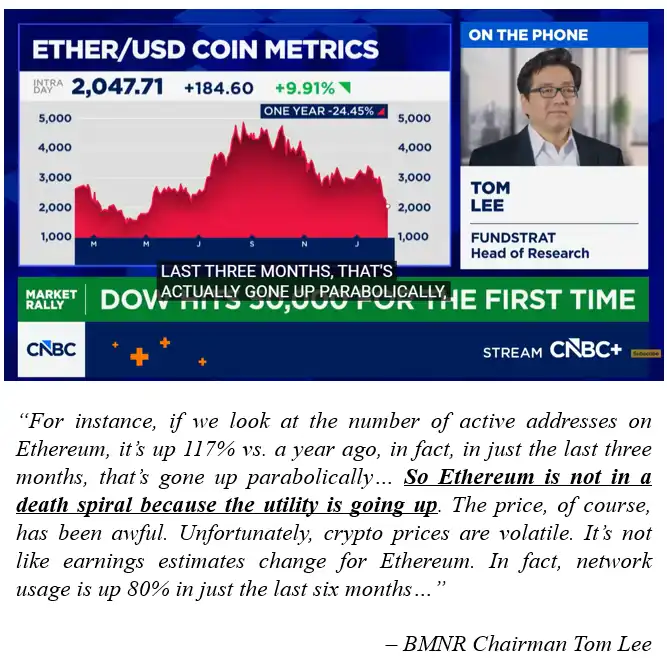
According to Tom Lee's own logic, if Ethereum's on-chain activity does not actually reflect real growth in usage and fundamental improvement, then ETH is indeed in a death spiral.
Our research indicates that this is exactly what is happening.
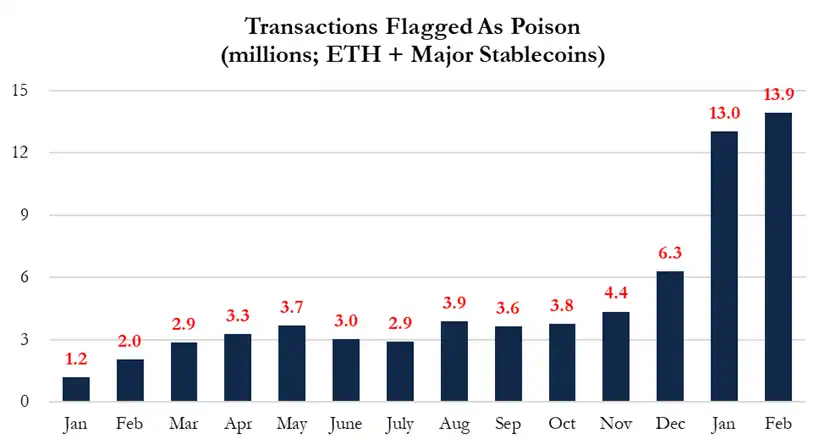
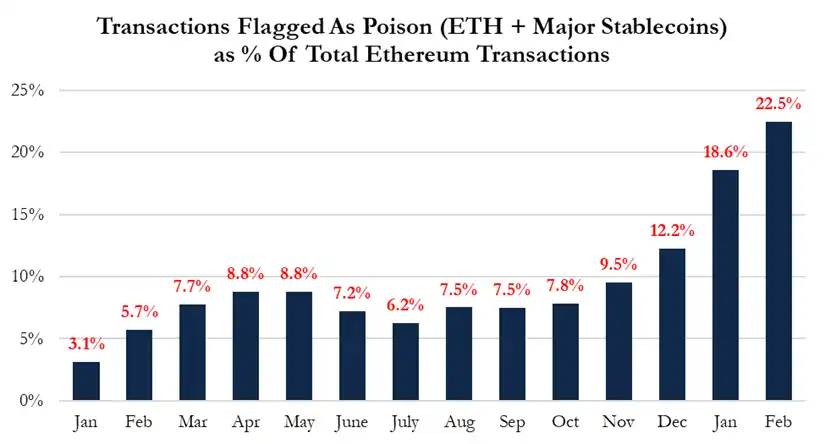
We conducted a comprehensive analysis of on-chain data from January 2025 to February 2026, and the results show that what Lee referred to as "institutional adoption driving Ethereum's activity growth" can actually be explained by a significant amount of address poisoning and wallet dusting behavior from low-value addresses. These behaviors were triggered by the Fusaka upgrade-induced block space surplus.
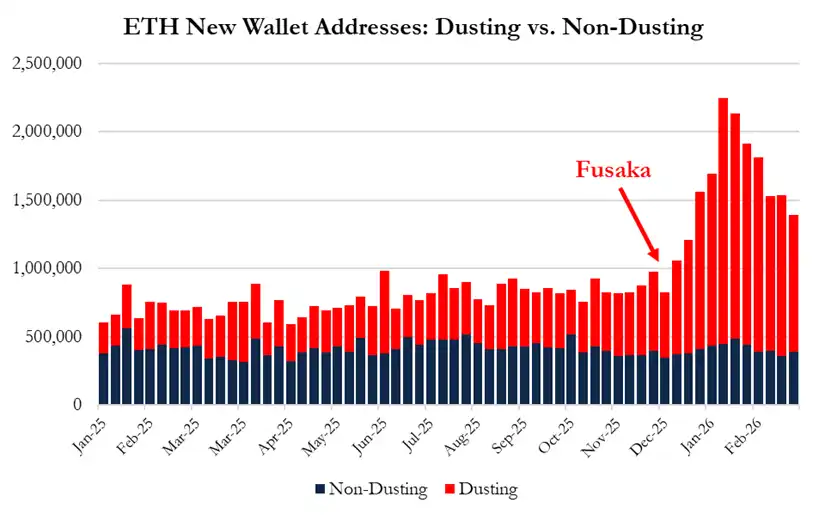
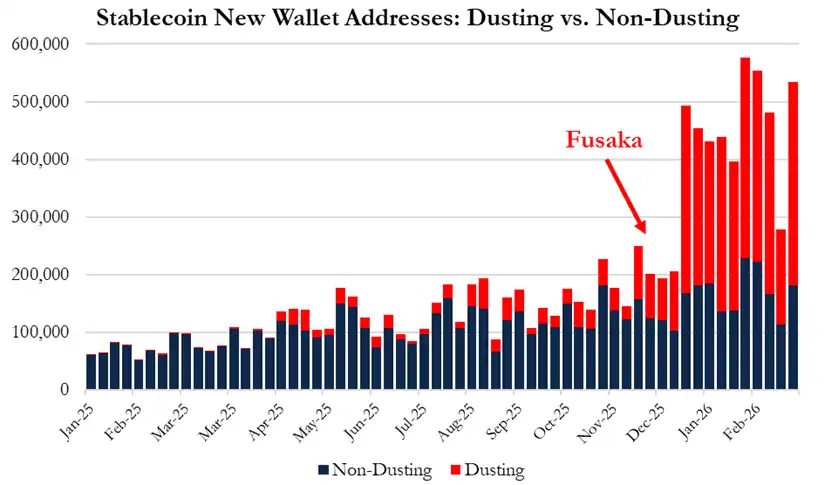
Post-Fusaka Upgrade:
· 95% of new wallet growth is from newly created dust addresses;
· The number of dusting attacks has grown by over 3x;
· Dusting behavior explains over 50% of Ethereum transaction growth;
· Currently, dusting transactions account for 22.5% of all Ethereum transactions;
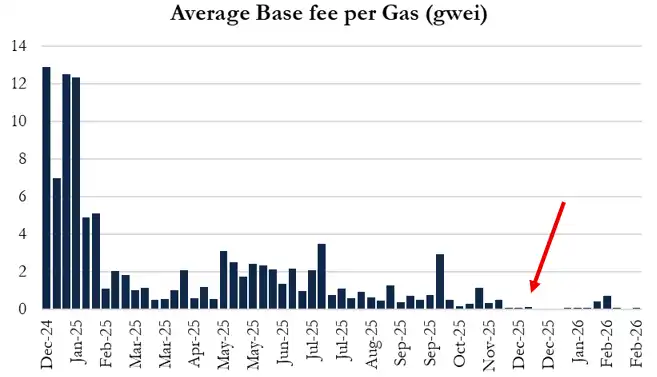
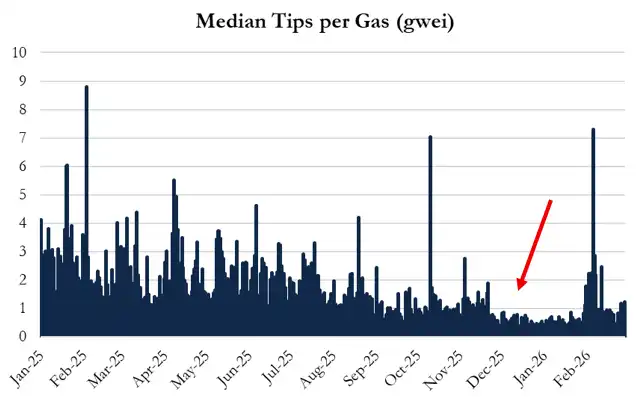
The Fusaka upgrade increased the gas limit from 45M to 60M to expand Ethereum's Layer1 capacity. Vitalik and the protocol team had previously anticipated a 10%-30% reduction in gas fees, but the actual reduction has been around 90%.


Vitalik and validators severely miscalculated the elasticity of demand on Layer1. They relied on outdated mathematical models (based on assumptions pre-EIP-1559 and pre-Layer2) and overestimated Layer1 demand by 3 to 9 times. This is also why we believe Vitalik is selling a significant amount of ETH. On January 30, Vitalik pre-announced a sale of 16,384 ETH to fund the Ethereum Foundation's "austerity period," but since then, he has sold over 19,300 ETH and continues to do so.
Vitalik Understands What Tom Lee Doesn't — ETH's Tokenomics Have Been Broken
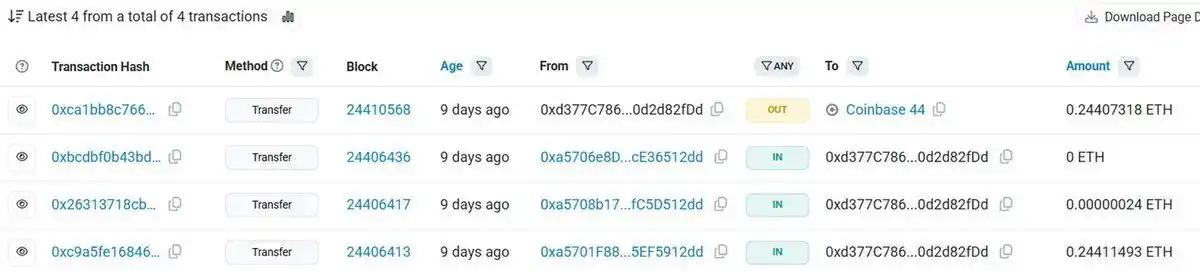
We personally documented the Ethereum network address poisoning phenomenon. We created two new addresses and sent a transaction between them. Within 5 minutes, we were already under an address poisoning attack. We encourage readers to verify this phenomenon themselves. Currently, the speed of losses due to address poisoning has increased by over 8x since the Fusaka upgrade.
Furthermore, the increase in gas limit has also impacted Ethereum's validator community, with validators now experiencing a 40%–50% decrease in fee income per gas unit. The reduced yield will weaken staking demand and high-value transaction activity, further undermining institutional adoption. This negative feedback loop has now started to spin in reverse.
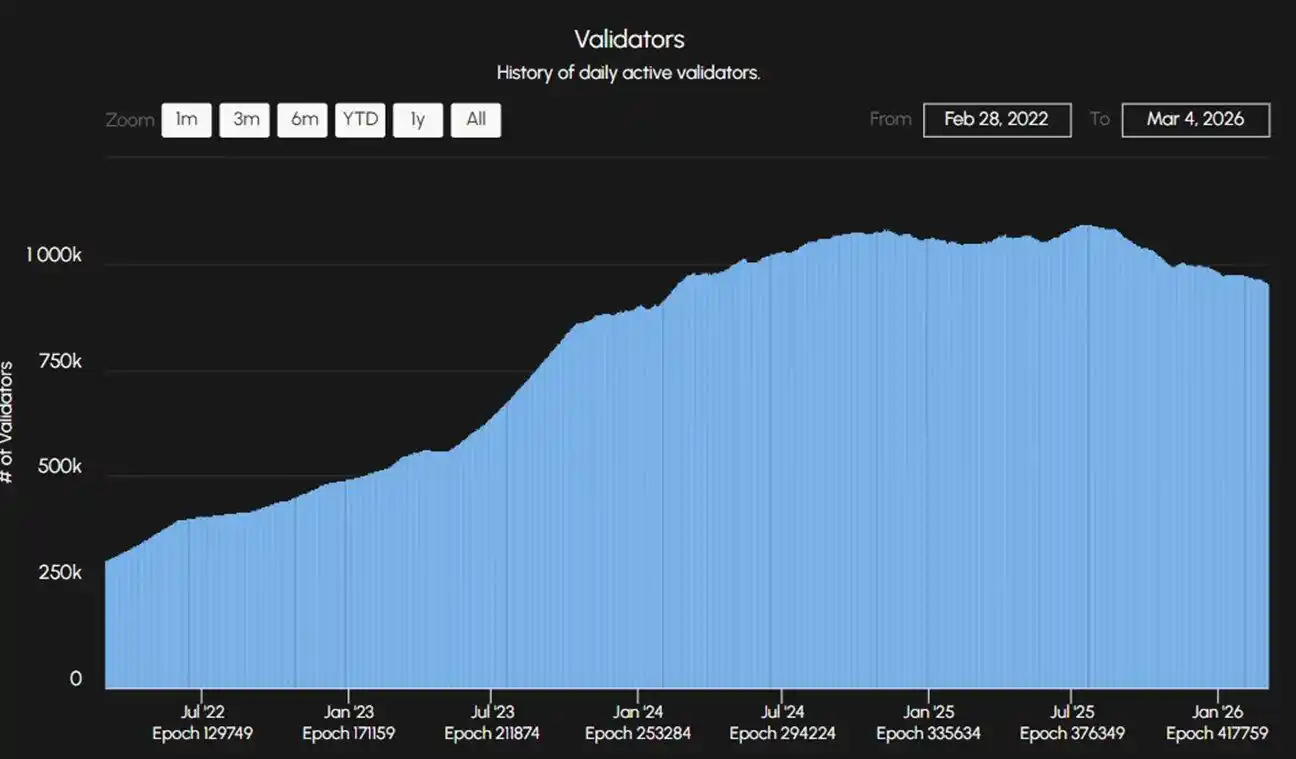
Meanwhile, Ethereum continues to steadily lose market share to Solana and its own Layer 2 networks.
· Solana developer count grew by 29% in 2025;
· Ethereum developer growth was only 6%;
· Talent is leaving the Ethereum ecosystem;
· Institutions like Visa and Citigroup are opting for Solana in DeFi applications;
· Solana DEX trading volume has already surpassed Ethereum's by 2x.
During the Internet bubble era, Netscape and Nokia once dominated the market for over 10 years, but the real winners in the end were Google and Apple. We believe Ethereum is in a similar situation — we believe Ethereum's tokenomics have already collapsed, Tom Lee is stuck in his own position, and ETH's price will continue to decline.
You may also like

Pantera Capital Partner: How Tokenization is Restructuring the Private Equity and Early Investment Ecosystem?

New York Proposes Stricter Stablecoin Issuer Rules Aligned With Federal GENIUS Act
NYDFS proposed stricter stablecoin issuer rules aligned with the GENIUS Act, covering reserves, custody, redemption timelines, audits, and capital buffers.
Every exchange is a "Universal Exchange."

The counterattack of traditional finance: Alliance chains are quietly reviving

CryptoQuant Says Bitcoin Profitable Supply Is Near 45% Pressure Zone as On-Chain Data Points to Market Repricing
CryptoQuant said Bitcoin’s profitable supply is nearing the 45% pressure zone, signaling rising market stress, unrealized losses, and a possible on-chain repricing phase.

Bitcoin Falls Below 200-Week Moving Average as On-Chain Data Shows Over Half of Supply in Loss
Bitcoin dropped below its 200-week moving average as on-chain data showed over 50% of circulating supply is now in loss, signaling rising market stress.

CFTC Reportedly Plans New Prediction Market Rules Focused on Manipulation Risk and Public Interest Review
The CFTC is reportedly preparing new prediction market rules focused on manipulation risk, public interest review, and retail trader protections.

Meet the new WEEX trial fund—your gateway to greater profits

WEEX Labs Lands at Dutch Blockchain Week: A Disruptive Crypto × AI Conversation Sets Sail in Amsterdam

SK Hynix Reportedly Plans U.S. ADR Listing as Early as August, With SEC Approval Possible in Late June
SK Hynix may pursue a U.S. ADR listing as early as August, with SEC approval reportedly possible in late June amid strong AI chip supply chain demand.

SpaceX vs Tesla vs xAI: Which Elon Musk Trade Has the Biggest Upside in 2026?
OpenAI Reveals It Has Confidentially Submitted an S-1 to the SEC, Keeping the Door Open for a Future IPO
On June 9, according to an OpenAI announcement, the company recently confidentially submitted a draft S-1 registration statement to the U.S. Securities and Exchange Commission (SEC), beginning the preliminary compliance process for a potential initial public offering. OpenAI said it chose to disclose this proactively because it expected the news might leak; however, the company has not yet set a specific listing timeline, and related arrangements may still take some time.

Latest research from 13 top universities including Cornell University: The current state, challenges, and misconceptions of the fusion of Crypto and AI
Deconstructing Anthropic: The Best AI Company, Possibly Also a Type of Organizational Invention
Apollo and Blackstone Reportedly Back $35 Billion Anthropic Chip Financing as Deal Details Remain Unclear
On June 9, according to currently available news alerts, Apollo and Blackstone Group participated in a $35 billion financing for an Anthropic “chip project.” Based on the original wording of the report, the funding has already been raised, but public information remains limited. The financing structure, use of proceeds, project entity, and whether Apollo and Blackstone participated through equity, debt, or project financing have not yet been disclosed.

Humanity Protocol Security Incident Escalates: More Than $31 Million Stolen From Related Addresses as Attacker Continues Selling H for ETH
On June 9, according to monitoring by Onchain Lens, more than $31 million has been stolen from addresses linked to Humanity Protocol, and the attack is still ongoing, with the hacker continuously swapping H tokens for ETH. Project founder Terence Kwok later confirmed the security incident on X, saying the issue involved a private key leak.

Bloomberg: As Bitcoin Weakens, Stablecoins and RWA Continue to Drive Expansion in Crypto Businesses
In June, Bloomberg reported that despite Bitcoin falling below $60,000 last week, wiping out about $235 billion in market value within seven days, and dropping close to 50% from last year’s peak, some core businesses in the crypto industry are still expanding, mainly in stablecoins, real-world asset tokenization (RWA), payments, and infrastructure. The report also noted that overall altcoin activity has contracted significantly: altcoin market capitalization has fallen from a peak of about $431 billion in November 2021 to around $170 billion, and among the tens of millions of tokens issued in recent years, fewer than 1,700 still maintain meaningful trading activity.

Galaxy Deep Research Report: How Hyperliquid's HIP-4 Upgrade Changes the Landscape of Prediction Markets?
Pantera Capital Partner: How Tokenization is Restructuring the Private Equity and Early Investment Ecosystem?
New York Proposes Stricter Stablecoin Issuer Rules Aligned With Federal GENIUS Act
NYDFS proposed stricter stablecoin issuer rules aligned with the GENIUS Act, covering reserves, custody, redemption timelines, audits, and capital buffers.
Every exchange is a "Universal Exchange."
The counterattack of traditional finance: Alliance chains are quietly reviving
CryptoQuant Says Bitcoin Profitable Supply Is Near 45% Pressure Zone as On-Chain Data Points to Market Repricing
CryptoQuant said Bitcoin’s profitable supply is nearing the 45% pressure zone, signaling rising market stress, unrealized losses, and a possible on-chain repricing phase.
Bitcoin Falls Below 200-Week Moving Average as On-Chain Data Shows Over Half of Supply in Loss
Bitcoin dropped below its 200-week moving average as on-chain data showed over 50% of circulating supply is now in loss, signaling rising market stress.


