
- Buy Crypto
- Markets
 Futures
- Spot
- Copy Trade
- Earn
- More
Why Has the Cryptocurrency Market Sentiment Suddenly Become So Bearish?

Original Article Title: Why Did Crypto Sentiment Get So Bearish?
Original Author: Jack Inabinet, Bankless
Translation: Peggy, BlockBeats
Editor's Note: Just four days after Bitcoin hit a new all-time high, the crypto market saw an unprecedented "10/10 Flash Crash." Not only did major coins plummet, but several altcoins went to zero, and even exchanges faced liquidation crises. Meanwhile, high-leverage yield funds like Stream Finance went bust in succession, revealing the fragile nature of the "trust me" bubble. The optimistic sentiment on social platforms quickly turned into panic, and market confidence took a heavy blow.
This article reviews the events leading up to this series of incidents and attempts to answer a key question: why did crypto market sentiment suddenly become so bearish? In the current environment of a bursting bubble and a crisis of trust, we may be at a turning point in a new cycle.
The following is the original text:
On Monday, October 6, 2025, Bitcoin hit a new all-time high, breaking through the $126,000 mark for the first time. Whether in the trenches of Crypto Twitter or between the lines of CNBC's news, hodlers were immersed in the ubiquitous "fog of hope."
Despite little change in fundamentals in the following month, just four days later on October 10, the crypto market faced a crisis—the "10/10 Flash Crash" is now seen as the largest liquidation event in crypto history.

In this catastrophic downturn, major coins plummeted by double digits, many altcoins went straight to zero, and several exchanges teetered on the brink of bankruptcy (almost all major perpetual contract platforms triggered automatic deleveraging due to inability to cover short profits).
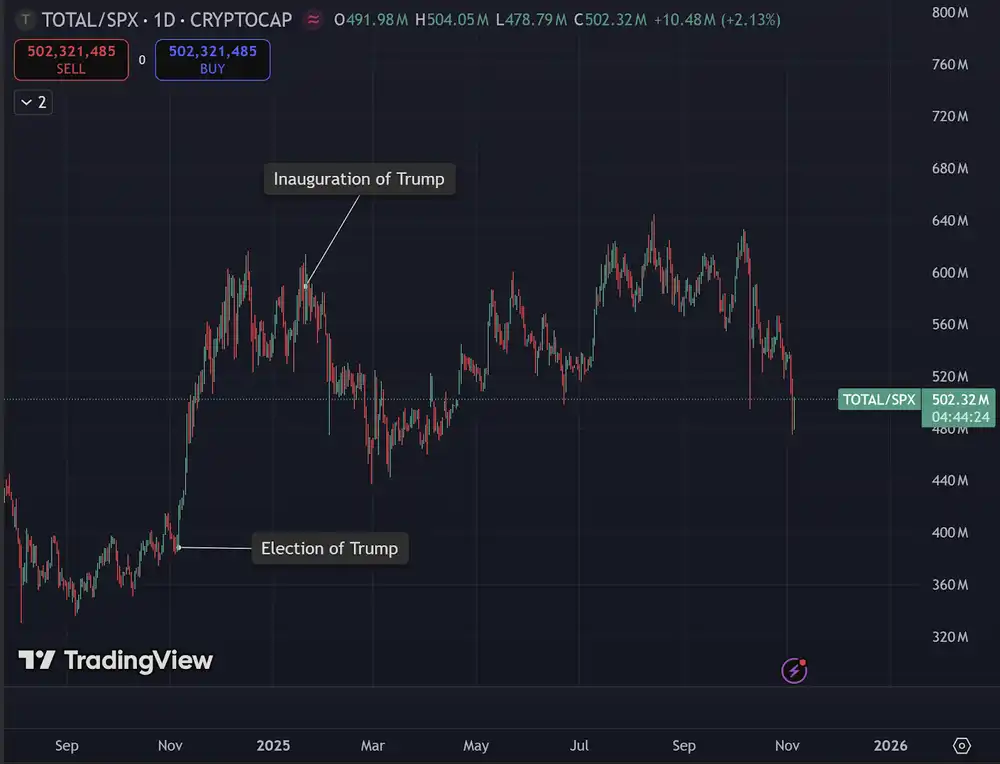
While Trump's election as president was seen as a positive development for the crypto industry—from establishing a strategic Bitcoin reserve to appointing seemingly pro-crypto regulatory officials—the price of crypto assets continued to languish.
Apart from a brief rally shortly after Trump's election in November last year, the total crypto market cap (TOTAL) has remained relatively flat compared to the S&P 500 index for nearly a year. In fact, the ratio between the two since Trump's official inauguration on January 20 has shown a staggering negative growth.
As the market continues to digest the aftermath of the 10/10 liquidation event, more and more questions are beginning to surface.
Just this past Monday, Stream Finance announced bankruptcy. This was a $200 million "trust me" style crypto yield fund that relied on leverage to provide depositors with above-market returns. Its "external fund manager" lost approximately $93 million in assets through its operations.
While details have not been disclosed, Stream is likely the first publicly known "Delta Neutral" strategy fund to blow up due to the 10/10 auto-deleveraging mechanism. Despite its structure having long been questioned, this collapse still caught many lenders off guard—they sacrificed security for higher returns without a clear risk signal.
Following Stream's collapse, panic quickly spread throughout the entire DeFi ecosystem as investors began collectively exiting similar high-risk yield strategies.
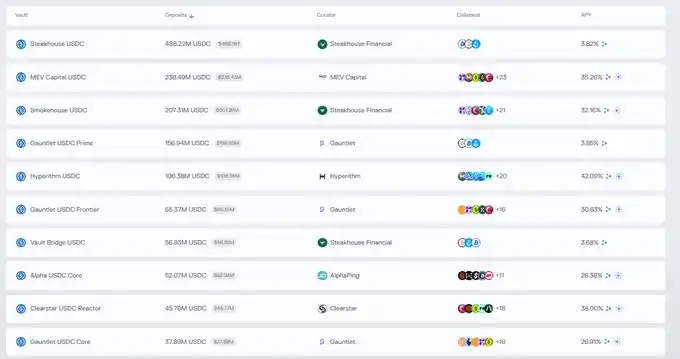
While the domino effect of Stream has not yet fully spread, this event has exposed the risk of the increasingly popular "stablecoin mining" strategy in DeFi—using deposit receipts from existing high-risk strategies to leverage up for higher returns.
Stream's self-reported losses also revealed the significant losses Delta Neutral funds could face in the 10/10 auto-deleveraging event: short hedges were forcibly unwound by the system, while spot longs were instantly liquidated.
Although the news headlines have shifted, it is certain that the losses on October 10th were catastrophic.
Whether through public DeFi operations or secretive CeFi operations, there are billions of dollars in leverage present in crypto yield funds. The question of whether the market has enough liquidity to withstand a potential wave of liquidations remains unanswered.
It is currently unclear who is "skinny dipping," but it is certain that someone in the crypto casino is already without swim trunks. If the market experiences another downturn, especially after allegations of insolvency against centralized exchanges during the 10/10 liquidation period, the concern shifts from "if something will go wrong" to "can the entire industry handle it."
You may also like

AI Agent Gets ID and Wallet on the Same Day | Rewire News Morning Brief

IOSG: Power Flexibility Paradigm Shift: From Macro Assets to Distributed Intelligence Layer

Murata 35% Price Increase Explained: A Capacitor that Gives AI Empire a Cold
MiniMax: A Henan County Youth and His 300 Billion

From Abandoned Project to Sky-High Target, Mastercorp Acquires BVNK for $1.8 Billion

Is Polymarket's Pricing Accurate? I Simulated a Crisis with 200 Agents to Find Out

A Decade of Regulation Finally Clarified, Victory for Crypto-Native Logic

The United States Establishes the "Five Categories Law" for Cryptographic Assets: A Summary to Understand the New Regulatory Framework

Morning Report | Mastercard plans to acquire BVNK for up to $1.8 billion; Solana Foundation launches aggregator Tokens on Solana; Bitcoin sees its first 8 consecutive rises in four years

Aster Chain officially launches: defining a new era of on-chain privacy and transparency

Stargate Debut Illustrated: The 1.4 Trillion Computing Power Empire Dream, Awakened
A Billion-Dollar Life Buy Threat Triggered by an Iranian Missile
BlackRock Launches ETHB: Ethereum ETF Enters 'Interest-Bearing Age'
Nvidia Starts Putting Chips in the Road | Rewire News Evening Update

RootData: February 2026 Cryptocurrency Exchange Transparency Research Report
「One and Done SEA」, so OpenSea chooses to wait a little longer
Ray Dalio: The Resolution of the US-Iran Conflict Is In the Strait of Hormuz



 App
App