
- Buy Crypto
- Markets
 Futures
- Spot
- Copy Trade
- Earn
- More
Exclusive Interview with 'Dove' Eugene: In the Crypto World, Survival Always Comes First | In-Depth Conversation

Original Interview: Taiki Maeda;
Guest: Darryl Wang (@0xENAS), renowned trader Eugene, Tangent Co-founder;
Original Translation: Deepseek
Editor's Note: This article summarizes the professional journey and trading insights of renowned cryptocurrency trader Eugene over the past 3-4 years. He has grown from the setback of nearly being liquidated in 2021, founded the Tangent investment company, and focused on the liquidity market and long-term strategies. Darryl emphasizes the importance of risk management, position concentration, and teamwork, advises newcomers to focus on on-chain assets, and maintain patience. He also hopes to support space exploration and other ventures through cryptocurrency success, encouraging traders to pursue success and give back to society.
The following is the original content (slightly reorganized for better readability):
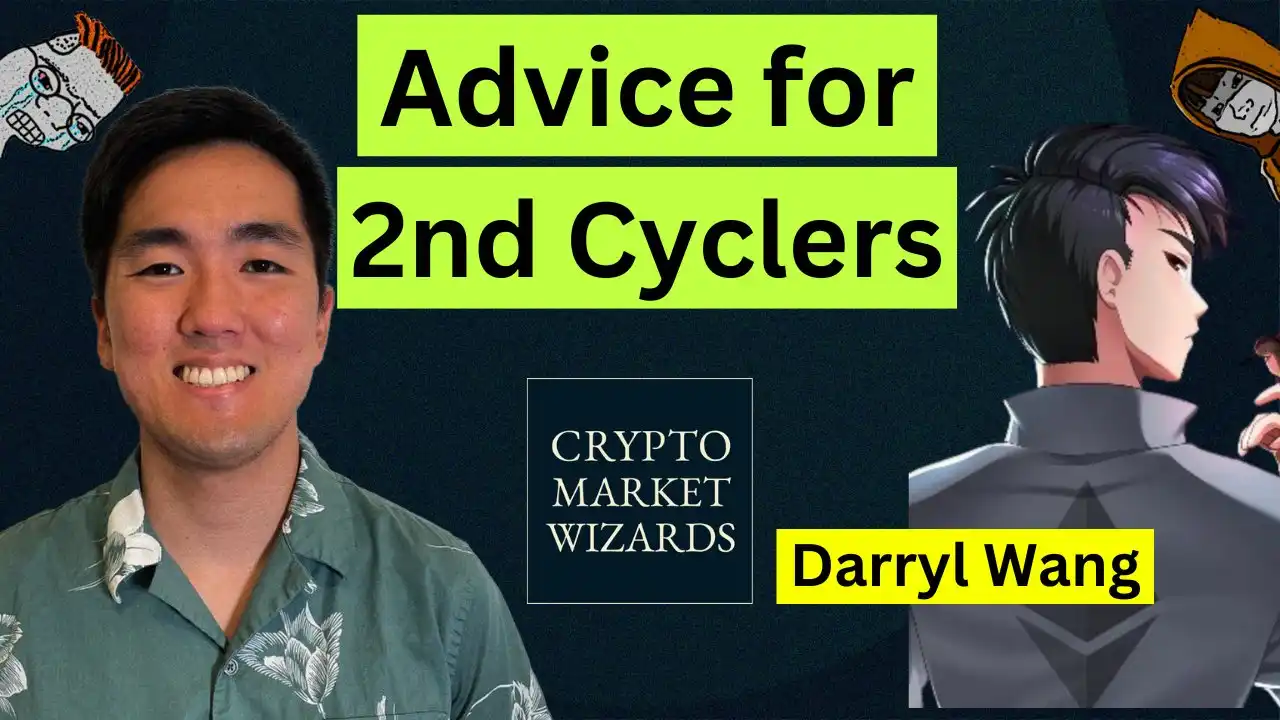
Many people know Darryl (renowned trader Eugene) by his account on X as 0xENAS, where he frequently shares trade records, monthly reflections, and market insights. He is one of the world's top cryptocurrency traders, but his journey has been full of ups and downs. After nearly being liquidated in May 2021, he successfully transformed into an investor and established one of the most reputable funds in the field.
Since 2022, I have had several conversations with Darryl on my YouTube channel, hoping to transcribe those insights and takeaways that have been most helpful for my trading. He is one of the sharpest minds in the field, and I hope these contents will also be helpful to you.
Trader Eugene's Journey
For those unfamiliar, could you share about your current work?
I co-founded Tangent, a multi-strategy principal investment firm, where I focus on the liquidity market, while my partner Jason oversees venture capital. We also jointly manage a spot investment portfolio guided by a long-term fundamental strategy. Previously, I was the head of Defiance Capital. I entered the cryptocurrency space in 2020 as a retail trader, but since then, I have grown significantly.
You are now a very successful trader, but I remember you faced some setbacks in 2021 as well. Could you share about your mistakes and what you learned from them?
At the beginning of 2021, I was fully in a high-risk mode, actively using leverage. I made some profit in February, but March reversed the gains — leading to a crash in May that I couldn't dodge. Due to overexposure and attempting to catch the falling knife with leverage, I experienced an 80% drawdown at the worst, forcing me to deleverage core positions at the bottom. It was brutal, but it taught me the most crucial lesson: survival comes first.
I cut my losses and started over. One major mistake was overallocating to a single DeFi protocol that never recovered after the downturn. That loss reinforced the need for diversification, no matter how strong my conviction was.
The key is to stay in the game. No single trade should bankrupt you. Adaptability, risk management, and learning from mistakes are key to long-term success. Even today, as we size our bets, minimizing the risk of bankruptcy is our most critical consideration.
How has your trading style evolved?
The first step is understanding how you should position yourself — looking for those asymmetric opportunities with significant upside potential. The harder part is identifying these opportunities in real-time. There's no crystal ball; it comes from experience, trial and error, and nurturing intuition.
For me, cryptocurrency still feels very intuition-driven. When I see a new opportunity, I usually have an intuition within minutes, and over time, I find that my initial intuition is often correct. Looking back, I try to analyze what triggered that intuition — what specific factors made me confident in an investment. These patterns often repeat. While the market is ever-changing, the biggest winners usually have similar traits. Over time, we've built a proprietary framework at Tangent to help crystallize and quantify these characteristics so we can better identify them in the future. These frameworks have been immensely helpful in improving accuracy and allowing others within the company to benefit from my market experience.
How do you deal with psychological issues in trading?
Yes, this is a significant challenge. In a 24/7 market like cryptocurrency, you're constantly battling emotions of greed, fear, and the sense that someone will dump on you. Keeping a clear head is paramount. If I feel emotions taking over, I take a step back. Sometimes, I completely step away from cryptocurrency for two to three days to reset.
One key lesson I've learned is that you can't catch every opportunity. You have to accept missing out on some opportunities. I stick to my lane. Recognizing your strengths and ignoring distractions is key to long-term success. As GCR once said, "He who runs after two hares will catch neither."
How do you view bet size?
I believe in concentration. Sometimes we'll put 80% of the portfolio into our top three ideas. It's about aligning your portfolio with your highest-conviction bets. The key is to ensure your position size matches your conviction. Of course, this also means you need strict risk management to avoid significant drawdowns.
How do you navigate the internal struggle of wanting to avoid risk but also seeking outsized returns?
That's a tricky question. In the first cycle, I took on significant risk — like putting 80% of net worth into a single asset. While in hindsight that may sound absurd, that bold move led to significant returns. Now, as a second-cycle investor, I'm more cautious, but I still ask myself: what allowed me to make those bold moves before and how can I replicate them now in a more measured manner? The challenge is to take on risk while not losing sight of past convictions and maintaining a realistic view of market volatility.
Past Investment Experiences
I remember you allocated 80% of your net worth to AVAX in 2021. Looking back, if given the opportunity, do you think you would make the same decision again?
That's a tough question. In hindsight, it may seem absurd, but that risk exposure allowed me to compound returns significantly. Today, I ask myself if I could still do the same. As I've matured, I have a higher understanding of risk and have a completely different set of systems and frameworks to prevent major mistakes. Back then, I was more naive, and I believe that mindset played a significant role in the success of the previous cycle. It's crucial to be aware of risk, but also to dare to dream when the market presents an opportunity.
So, are you saying your current approach is more cautious, but you still need to be able to take on similar risks to achieve those outsized returns?
Exactly. Even though it may be daunting, understanding the need to make large, concentrated bets is crucial. It's challenging, but the best cycle returns stem from this. You have to be willing to take those risks, even if they make you uncomfortable.
It sounds like you've built a lot of discipline over the years. Could you share an example of a bad trade you made and what you learned from it?
I am also human and make mistakes frequently. One recent transaction that left a scar on me was when I overleveraged on $SOL at $210 and did not respect my stop-loss at $200. The most important lesson from the trade was controlling downside risk, and to enjoy this limited downside risk, a stop-loss must be executed. Once you become careless in this aspect, errors can accumulate in a more dangerous manner, risking much more than initially planned for in the trade.
What would you tell your past self at that moment?
I would ask myself, "If you sold your entire investment portfolio today, would you buy back the same assets in the same proportion?" Most people realize they wouldn't, yet they continue to hold onto a bad position due to emotional attachment. Additionally, the opportunity cost is significant—every dollar invested in one asset is a dollar not invested elsewhere.
Another thing is to avoid the "make it all back in one trade" mindset. This is a common trap. Instead of revenge trading, focus on compounding small wins.
How do you know when to exit a position?
This is the hardest part. Many people hold onto losing positions because of emotional attachment or simply hoping for a turnaround. But the key is to be honest with yourself. If you reassess your thesis and things haven't improved, it's time to let go. This is something many retail investors struggle with.
How to Avoid Mistakes?
How do you ensure your biases don't affect your judgment?
Having a team definitely helps. In my company, we make everything transparent, so when I make some questionable decisions, people can point it out. Accountability keeps me on my toes. We rigorously and often harshly analyze every significant decision, and encourage everyone, including new hires, to actively highlight issues with more "senior" members of the company in an extremely transparent manner. In the market, there is no room for ego; building a team committed to thorough honesty without emotion is crucial. If you are trading alone, find someone to share your positions with and get feedback. This helps mitigate emotional decisions.
So, accountability plays a significant role in keeping you focused?
Absolutely. Having a team or even a trusted individual to discuss trades with ensures you don't find yourself in trouble when things go wrong. If you make a mistake, it's essential to accept it, move on, rather than dig yourself into a deeper hole. This kind of accountability prevents you from making more mistakes.
Can you share an example of how this helped you avoid a mistake?
Sure. I once shorted a significant amount of Dogecoin in an event that I thought would trigger a sell-off. One of my team members questioned my decision, and instead of doubling down, I paused to reflect and realized that the position was not sound. This transparent and honest feedback allowed me to cut my losses early and reassess. If I had been operating alone, I might have held onto the position, watching my losses pile up.
What advice do you have for participants looking to find their trusted community or circle of friends?
Many alphas have already shifted from Crypto Twitter/X to Telegram chats and Discord communities. Twitter/X is a great platform for initially building an online presence and sharing ideas, but today I prefer Telegram channels as my primary communication medium.
What are the common traits of successful traders?
Let's switch gears. Who do you admire in the market?
I saw a tweet by Stanley Druckenmiller that resonated with me. He mentioned that we should compete with opportunity sets rather than benchmarks. If you perfectly capture an opportunity, you've merely met expectations rather than exceeded them. You are truly competing with yourself, continuously improving over time. The goal is to minimize errors as much as possible, and if you achieve that, you naturally become a better trader or investor over time.
What are the common traits of successful traders?
Successful traders excel at handling pressure. When the market is volatile, they can make decisions without panicking. This is not something easily learned—it's a natural skill. If you have this ability, hone it. If not, recognize that and don't force yourself into high-pressure environments. Understanding your strengths and weaknesses and choosing a position that suits you is crucial.
What is the most common mistake traders make?
I often see people celebrating too early before things materialize. This occurs when individuals get caught up in the "I've made it" mindset due to portfolio growth and begin making significant lifestyle changes. They believe the money on paper is real money and start purchasing things they don't need, such as expensive cars or luxury watches. However, the reality is, it's not real money until it's in your bank account and you've paid taxes. I always view cryptocurrency this way—it's a game until it's cashed out. When people fail to understand this, they often mismanage their wealth and lifestyle.
Advice and Expectations
What are some common misconceptions people have about cryptocurrency?
One of the biggest misconceptions is that you should allocate funds based on fundamentals. People believe that if a project has strong fundamentals, then the price will rise accordingly. But in reality, the market does not care about fundamentals 90% of the time. True profits come from predicting which narratives will become popular ahead of others. Fundamentals are crucial when there is a catalyst, but most of the time, it's about catching the next trend and increasing your position when you see it. At least that's been my experience. It's a bit like knowing something is about to happen, and then it suddenly does—you grab onto it as much as you can because the market's movement speed and magnitude can far exceed your expectations.
For someone entering the cryptocurrency space today, how would you advise them to be successful?
Honestly, if I were entering the cryptocurrency space today, I would question whether it's worth it. But if you still want to get in, I would say a few things: First, focus on on-chain assets. They are the assets with the most significant upside potential and can provide the fastest compounding growth for a smaller portfolio. But the on-chain market won't last forever—on-chain assets have specific seasons, and when those seasons end, you need to be able to trade on centralized exchanges as well. The ability in both of these trading aspects is crucial, but I would focus on mastering one and being proficient in the other rather than trying to master both simultaneously.
You've been in the cryptocurrency space for some time now. What are your personal goals for the next 10 years? Do you see cryptocurrency as just a means to an end?
First and foremost, I absolutely love this game. Competing with the best traders and investors in the world was one of the key reasons I entered this space. Over the next 10 years, my goal is to build the best proprietary fund in the cryptocurrency space. Long term, my goals shift toward the stars.
I've always dreamed of contributing to humanity's advancement as an interstellar species. A big part of that is supporting space exploration in any way possible. One of my bucket list items is to go to space before I die.
Wow, that's incredible. So, you see cryptocurrency not just as wealth accumulation—it's part of a broader vision?
Exactly. A lot has been said about the mission of cryptocurrency, and I don't need to repeat that here. For me, beyond that, cryptocurrency is also a platform for achieving extraordinary wealth, giving us the opportunity to compete on a global scale. I hope to use this success to support larger causes like biomedical research, space exploration, and environmental conservation. Through my company and through my co-founder's and my personal investments, we've actually invested in robotics, biocomputing, at-home cancer detection, and pre-crypto or crypto-curious cutting-edge tech. Sometimes the founders are even ex-crypto or crypto-curious themselves. It's all interconnected.
What advice do you have for those looking to succeed in the cryptocurrency space?
My motto is very simple: "Live, Laugh, Long." "Live" means taking care of yourself, enjoying life when you're young. "Laugh" means appreciating where you are and making the most of every moment. "Long" means being patient, understanding when to allocate resources, and knowing where you want to contribute. If you live with this mindset, you're not only contributing to society, but you're also planning for the long term. That's how you succeed, not just in the cryptocurrency space, but in life.
That's a great mindset to have. Any final advice for the audience?
One thing I want to say is give back to society. If you achieve success, remember that someone paved the way for you. Express gratitude and share your knowledge with others; it's one of the most meaningful things you can do in this field.
From a trading perspective, don't get too attached to your position. The market always has surprises in store for you. When you make a mistake, quickly cut your losses and humbly admit you're wrong. Most importantly, see your investments as points on a scoreboard—it's not real money until it's in your bank account. If you remember that, you'll avoid some of the biggest pitfalls in this field.
You may also like

Mining Exodus: Someone Holds $12.8 Billion AI Order

March 6 Market Key Intelligence, How Much Did You Miss?

a16z: The True Opportunity of Stablecoins is in Complementing, Not Disrupting

Predict LALIGA Matches, Shoot Daily & Win BTC, USDT and WXT on WEEX
The WEEX × LALIGA campaign brought together football excitement and crypto participation through a dynamic interactive experience. During the event, users predicted matches, completed trading tasks, and took daily shots to compete for rewards including BTC, USDT, WXT, and exclusive prizes.

Ray Dalio Dialogue: Why I'm Betting on Gold and Not Bitcoin

Who Took the Money in the AI Era? A Must-See Investment Checklist for HALO Asset Trading
Wall Street Bears Target Ethereum: Vitalik In the Know Takes Flight, Tom Lee Remains Bullish

Pump.fun Hacker Steals $2 Million, Receives 6-Year Prison Sentence, Opts for 'Self-Detonation'

6% Annual Percentage Yield as Musk Declares War on Traditional Banks

36 years, 4 wars, 1 script: How does capital price the world in conflict?

Mining Companies' Great Migration: Some Have Already Secured $12.8 Billion in AI Orders
What Is Vibe Coding? How AI Is Changing Web3 & Crypto Development
What is vibe coding? Learn how AI coding tools are lowering the barrier to Web3 development and enabling anyone to build crypto applications.
The parent company of the New York Stock Exchange strategically invests in OKX: The intentions behind the $25 billion valuation
WEEX P2P update: Country/region restrictions for ad posting
To improve ad security and matching accuracy, WEEX P2P now allows advertisers to restrict who can trade with their ads based on country or region. Advertisers can select preferred counterparty locations for a safer, smoother trading experience.
I. Overview
When publishing P2P ads, advertisers can now set the following:
Allow only counterparties from selected countries or regions to trade with your ads.
With this feature, you can:
Target specific user groups more precisely.Reduce cross-region trading risks.Improve order matching quality.
II. Applicable scenarios
The following are some common scenarios:
Restrict payment methods: Limit orders to users in your country using supported local banks or wallets.Risk control: Avoid trading with users from high-risk regions.Operational strategy: Tailor ads to specific markets.
III. How to get started
On the ad posting page, find "Trading requirements":
Select "Trade with users from selected countries or regions only".Then select the countries or regions to add to the allowlist.Use the search box to quickly find a country or region.Once your settings are complete, submit the ad to apply the restrictions.
When an advertiser enables the "Country/Region Restriction" feature, users who do not meet the criteria will be blocked when placing an order and will see the following prompt:
If you encounter this issue when placing an order as a regular user, try the following solutions.
Choose another ad: Select ads that do not restrict your country/region, or ads that allow users from your location.Show local ads only: Prioritize ads available in the same country as your identity verification.
IV. Benefits
Compared with ads without country/region restrictions, this feature provides the following improvements.
Aspect
Improvement
Trading security
Reduces abnormal orders and fraud risk
Conversion efficiency
Matches ads with more relevant users
Order completion rate
Reduces failures caused by incompatible payment methods
V. FAQ
Q1: Why are some users not able to place orders on my ad?
A1: Their country or region may not be included in your allowlist.
Q2: Can I select multiple countries or regions when setting the restriction?
A2: Yes, multiple selections are supported.
Q3: Can I edit my published ads?
A3: Yes. You can edit your ad in the "My Ads" list. Changes will take effect immediately after saving.

What are the key highlights of this year's Ethereum's most important upgrade, the Glamsterdam upgrade?

March 6 Key Market Update You Can't Miss! | Alpha Morning Report

Sell Nvidia, Buy Power Plant: 27-Year-Old AI Investor Earns $5 Billion in One Year
The $24 Million Heist Behind It: The Most Dangerous Vulnerability in the Crypto World is Actually Human
Mining Exodus: Someone Holds $12.8 Billion AI Order
March 6 Market Key Intelligence, How Much Did You Miss?
a16z: The True Opportunity of Stablecoins is in Complementing, Not Disrupting
Predict LALIGA Matches, Shoot Daily & Win BTC, USDT and WXT on WEEX
The WEEX × LALIGA campaign brought together football excitement and crypto participation through a dynamic interactive experience. During the event, users predicted matches, completed trading tasks, and took daily shots to compete for rewards including BTC, USDT, WXT, and exclusive prizes.


 App
App