From 30% Profit to Losing It All: Beware of the "Greed Trap" in the Crypto Bear Market

 Prefer us on Google


Original Article Title: How to survive a bear market in DeFi market neutral
Original Article Author: Santisa, Crypto KOL
Original Article Translation: Felix, PANews
Before delving into the content of this article, let's first consider the following story (or perhaps reality).
An "endless" tariff list is announced. Subsequently, the market crashes, and meme coins collapse.
Your original low-risk "mining farm" yield drops from 30% to nearly Treasury bill levels.
This is unacceptable to you. You had planned to retire with $300,000, earning $90,000 annually from "mining." Therefore, the yield had to be high.
So, you start exploring down the risk curve, chasing an imagined level of yield as if the market would favor you.
You swapped blue-chip projects for unknown new projects; you increased your yield by deploying assets to high-risk new fixed-term protocols or AMMs. You started feeling smug.
Weeks later, you begin to question why you had been so risk-averse in the first place. It was clearly a "safe and reliable" way to make money.
Then, a surprise comes.
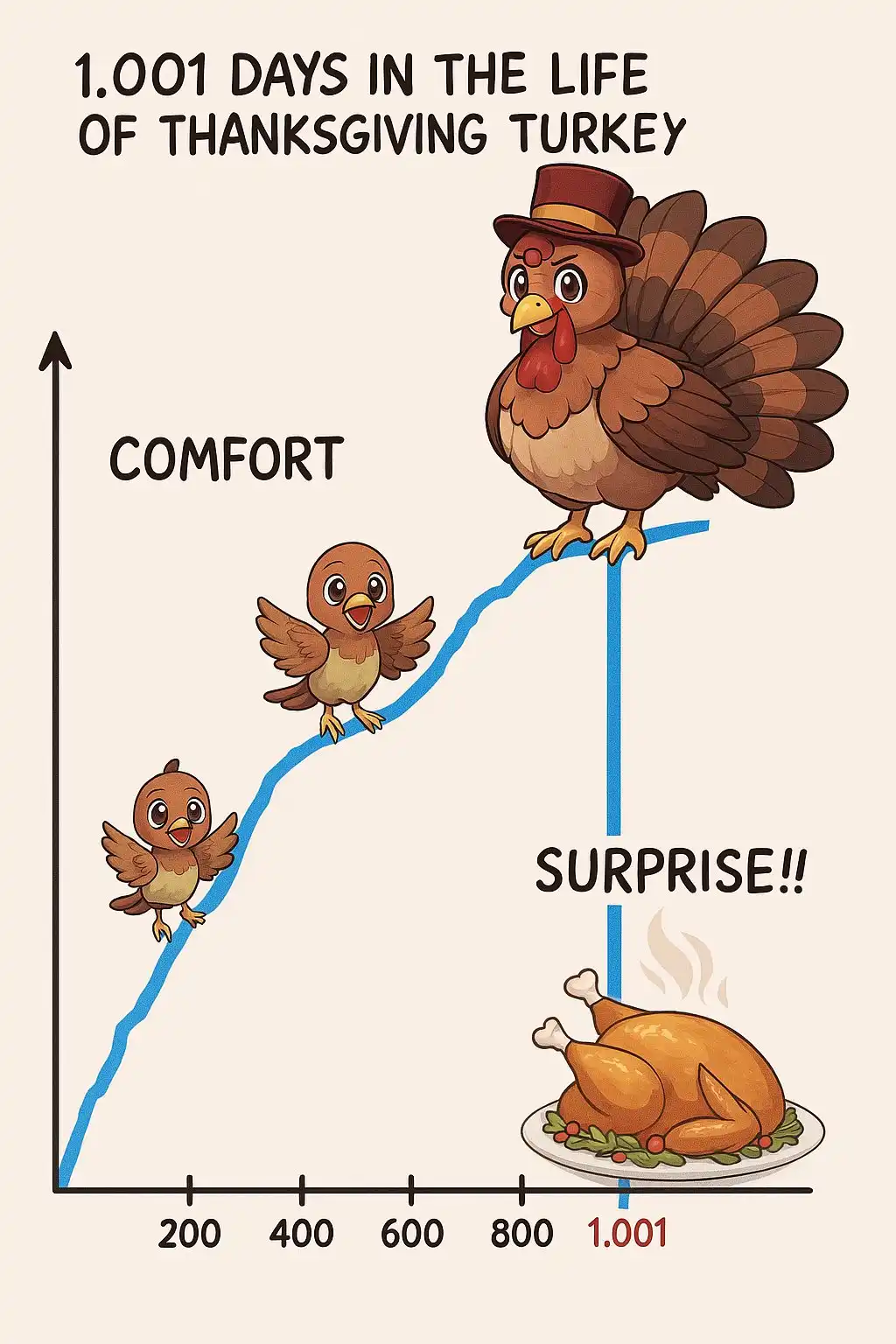
The ultra-liquid infrastructure trading project you entrusted your life savings to, custody, leverage, L2-wrapped, collapses, and now your PT-shitUSD-27AUG2025 has lost 70%. You received some airdropped governance tokens, only for the project to be abandoned months later.
While this story is exaggerated, it reflects the reality that unfolds repeatedly during a bear market when yields are compressed. Based on this, this article will attempt to provide a survival manual for the yield bear market.
People strive to adapt to the new reality, facing market crashes, they increase risk to compensate for the yield shortfall while ignoring the potential costs of these decisions.
Market-neutral investors are also speculators, with their advantage lying in finding unadjusted rates. Unlike their directional trading counterparts, these speculators face only two outcomes: either making a little profit every day or losing a substantial amount in one go.
Personally, I believe that crypto market-neutral rates become severely mismatched during an uptrend, offering alpha higher than their true risk, but conversely during a downtrend, they provide returns lower than the risk-free rate (RFR) while taking on a significant amount of risk.
Clearly, sometimes you need to take risks, and sometimes you need to mitigate risks. Those who fail to see this will become someone else's "Thanksgiving dinner".
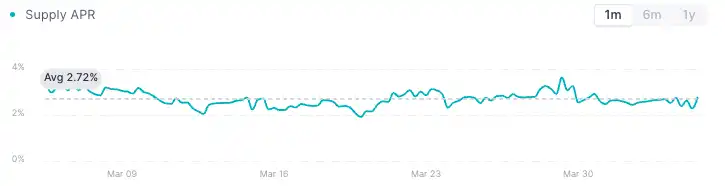
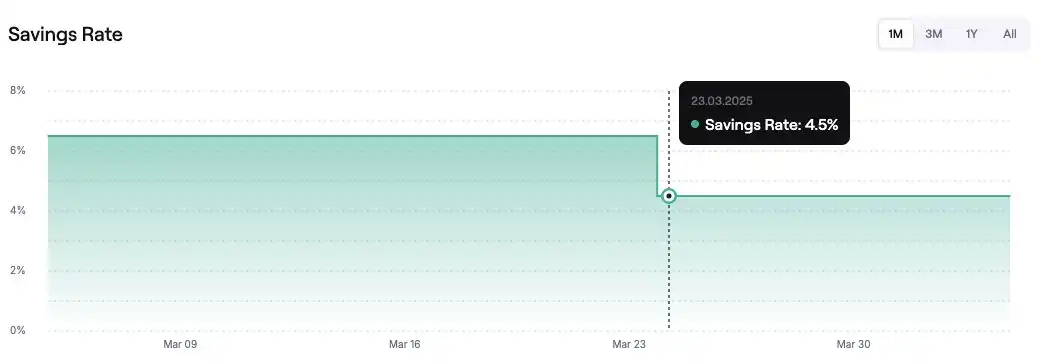
For example, at the time of writing this article, AAVE's USDC yield is 2.7%, and sUSD's yield is 4.5%.
· AAVE USDC bears 60% of the RFR while also bearing smart contract, oracle, custody, and financial risks.
· Maker, while bearing smart contract and custody risks and actively investing in higher-risk projects, bears a fee of 25 basis points above the RFR.
When analyzing the interest rate of a neutral investment in the DeFi market, you need to consider:
· Custodial risk
· Financial risk
· Smart contract risk
· Risk-free rate
You can assign an annual risk percentage to each type of risk, then add the RFR to determine the "risk-adjusted return" required for each investment opportunity. Anything above this rate is considered alpha, while anything below is not alpha.
A recent calculation found that Maker's risk-adjusted required return is 9.56% for a fair compensation.
Maker's current rate is approximately 4.5%.
Both AAVE and Maker hold Tier 2 capital (about 1% of total deposits), but even with substantial insurance, depositors should not accept yields below the RFR.
In the era of Blackroll T-bills and regulated on-chain issuers, this is the consequence of lethargy, key loss, and foolish capital.
So what should you do? It depends on your scale.
If your portfolio scale is small (less than $5 million), there are still attractive options. Check out protocols that are more secure in all chain deployments; they often provide incentives on some lesser-known chains with lower TVL or engage in basic trading on high-yield, low-liquidity perpetuals.
If you have a large amount of capital (over $20 million):
Buy short-term Treasury bills and wait for things to evolve. The favorable market conditions will eventually return. You can also look into OTC trading; many projects are still looking for TVL and are willing to significantly dilute their holders.
If you have LP, let them know, even let them exit. The on-chain treasury bond is still below the real trade. Don't let the untuned risk-return ratio cloud your judgment. Good opportunities are obvious. Keep it simple, avoid greed. You should stay here for the long term, manage your risk-return properly; if not, the market will take care of it for you.
Related Reading: Comprehensive Data Analysis: Where Did the Funds Flow Behind the $100 Billion Growth of Stablecoins? Shitcoins didn't rise, where did the money go?
-- Price
This content is provided for general informational purposes only and doesn't constitute financial, investment, legal, or tax advice. Any events, rewards, online promotions, or related information mentioned herein should not be considered a recommendation, solicitation, or invitation to purchase, sell, trade, or otherwise deal in any crypto assets. Crypto assets are highly volatile and may result in loss. The availability of WEEX services, products, and related events may vary by region. You are responsible for ensuring that your participation is in accordance with applicable local laws and regulations.
You may also like
49.8 Gigawatt Data Center Faces Delays in Texas Power Grid Review
Nscale Seeks to Raise $3 Billion in IPO in the U.S.
Citadel Reduces Total Risk of AI Fund by Over 80%
Bercy Plans to Extend the Surcharge on Large Companies
Government Changes Support for 'Slavski' Investment Project in Lviv Region

Scholarships in Ukraine to Double from September 1
Mortgage Issuance in Ukraine Decreases for the Second Consecutive Month

In July, banks issued 1 billion hryvnias in loans to businesses
DeepSeek V4 Flash Narrows Performance Gap with Claude
Take-Two's Market Value Decreased by $2.83 Billion Due to GTA 6 Leaks
Qianhe Yibang's Global First 4-Layer 3D DRAM Chip Successfully Lights Up
1.5 million individual entrepreneurs owe 16.6 billion UAH in taxes

China's Zhongke Fifth Epoch Secures Over 1 Billion Yuan in Investment

Income Tax Revenues Increased by 18.7%, Over UAH 411 Billion in the Budget

Petition to Delay Cryptocurrency Taxation Until 2029
Reconstruction after earthquake in Colombia will cost over 9.5 billion dollars

OpenAI's GPT-6 Model Astra Likely to Release by September 30
Taiwan Offers 300 Euros to Every Citizen
Anthropic Could Surpass SpaceX in the Largest IPO of 2026
Family Offices Accumulate $3.8 Billion Stake in SpaceX, Hyatt Heir Holds $1.8 Billion
Harvard University Holds $2.2 Billion in SpaceX Stock, University of California Holds $1 Billion
Kraken's Profits Plunge 71% Despite 17% Revenue Growth
Swissquote lowers annual outlook, shares drop 14%
GF Securities Maintains Buy Rating on CoreWeave with Target Price of $172

Singapore Exchange Considers Launching Single Stock and Leveraged ETFs

Marine Oil Exports from Russia Hit Lowest Level Since Late May

Kiwoom Securities Lowers Nexen Tire's Target Price to 10,500 Won
Emerging Asian Central Banks Stabilize Local Currencies with Forex Funds
Bybit sues North Korea, Lazarus Group over 1.5 billion dollar hack
Shopify Reports 34% Revenue Growth in Q2, Stock Price Rises 17%
49.8 Gigawatt Data Center Faces Delays in Texas Power Grid Review
Nscale Seeks to Raise $3 Billion in IPO in the U.S.
Citadel Reduces Total Risk of AI Fund by Over 80%
Bercy Plans to Extend the Surcharge on Large Companies
Government Changes Support for 'Slavski' Investment Project in Lviv Region
Scholarships in Ukraine to Double from September 1