
- Buy Crypto
- Markets
 Futures
- Spot
- Copy Trade
- Earn
- More
JELLY Exposes HLP Risk Vulnerability, How Does Hyperliquid Counterattack?

Original Article Title: Hyperliquid Risk Dashboard
Original Author: asxn_r, Crypto Researcher
Original Translation: DyNamic Deep
Editor's Note: The article analyzes the event where a JELLY price surge led to the liquidation of a $4 million USD short position, revealing design flaws in HLP's backstop exposing platform risk. It introduces risk management optimizations through measures such as the HLP Liquidation Reserve, dynamic Unrealized Contract Limit, and asset delisting. It also launches a multi-table dashboard to monitor open interest, liquidity, funding rates, and other metrics in real-time to help validators identify manipulation risks and make asset delisting decisions.
The following is the original content (slightly reorganized for readability):
On March 26, a trader opened a $4 million USD USDC short position through self-trades when the JELLY price was $0.0095. Subsequently, the JELLY price surged over 4x, resulting in the position being liquidated. The platform's backstop, HLP, took over the loss-making position, thus impacting its account value.
Despite the platform employing a dynamic Unrealized Contract Limit formula (based on global liquidity and open interest from major exchanges), this $4 million USD short was within limits and initially permitted. Once the limit was reached, the system automatically prevented new open interest.
The core issue arose post-liquidation: the HLP Liquidation Reserve holding the short position shared collateral with other strategy reserves. This design choice meant that the Auto-Deleveraging (ADL) was not triggered, leaving the platform exposed to further loss risks as the JELLY price continued to rise.
To mitigate this risk, Hyperliquid strengthened risk management through the following key measures:
· HLP Liquidation Reserve: Strictly limit the reserve's share of the HLP's total value, reduce rebalancing frequency, and employ more advanced logic to handle backstop liquidations. ADL will only be triggered when the Liquidation Reserve's loss exceeds a set threshold, not by extracting collateral from other reserves. ADL is not expected to activate under normal market conditions.
· Dynamic Unrealized Contract Limit: The open interest limit will be dynamically adjusted based on market value.
· Asset Delisting: Validators will vote on-chain to delist assets based on a preset threshold.
Following the recent event, ASXN has created the Hyperliquid Risk Metrics Dashboard to provide real-time visibility into position risks and help validators build consensus on asset delisting based on multiple metrics.
Dashboard Structure
Table 1: Perpetual Market Overview
This table provides an overview of key metrics for Hyperliquid's perpetual futures market:
· Open Interest (OI): The total USD value of all outstanding perpetual futures positions.
· Market Cap: The total circulating market capitalization of the underlying asset (price × circulating supply).
· OI/Market Cap Ratio: The open interest divided by the market cap, expressed as a percentage. This ratio helps identify markets on Hyperliquid that may have a disproportionately large open interest relative to the token's circulating supply, posing a manipulation risk. For example, the HLP liquidation treasury inherited a position that exceeded 40% of JELLY's circulation.
· Max Leverage: The maximum leverage allowed for perpetual futures trading.
· 24-Hour Trading Volume: The total trading volume over the past 24 hours, reflecting market activity.
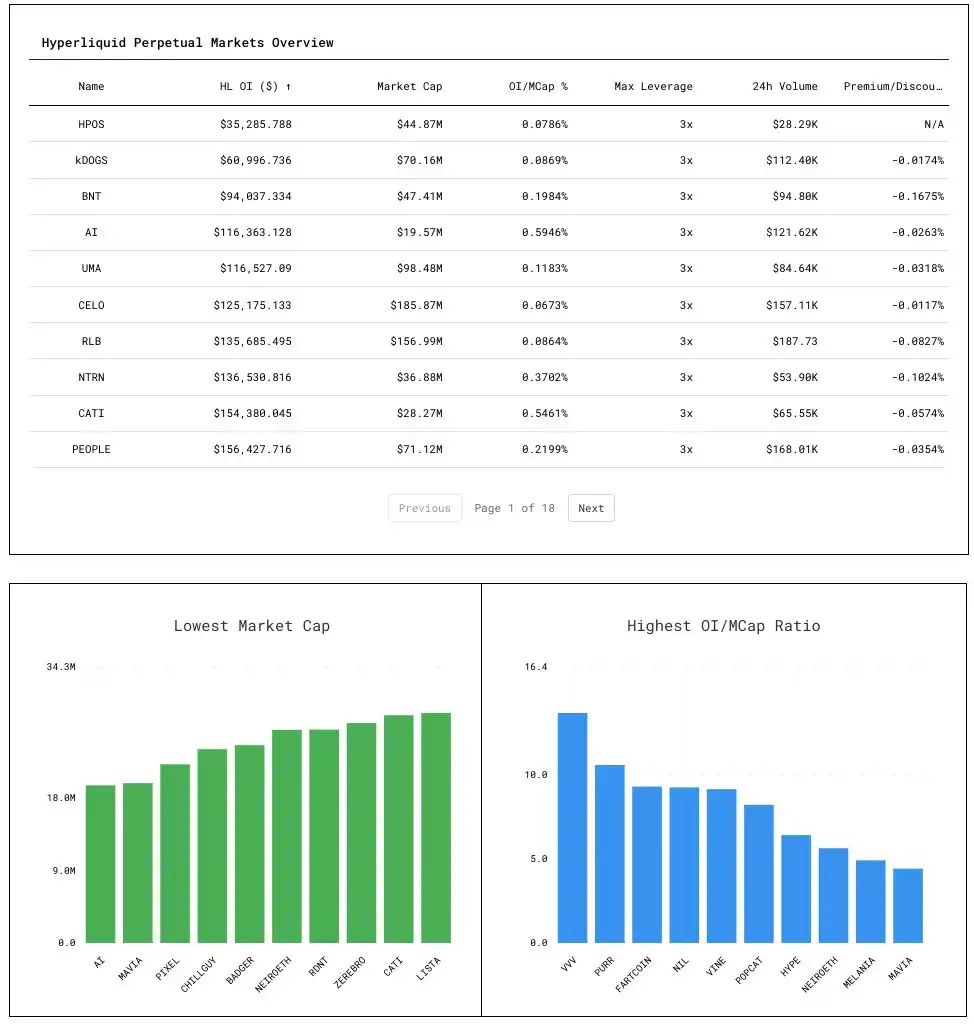
Table 2: Assets Reaching the Hyperliquid OI Cap
This table displays assets that have reached or are close to the maximum permitted open interest cap, along with their market cap and OI/Market Cap ratio percentage.
Markets that reach the open interest cap are no longer allowed to open new positions and can only close existing ones. From a risk perspective, monitoring assets that reach the cap is crucial as it provides real-time feedback on which assets may be exposed to manipulation risks or have already been manipulated.
The JELLY position quickly reached the cap, but due to HLP being the primary counterparty for malicious traders (via liquidation positions), HLP is in a settlement deadlock with the traders.
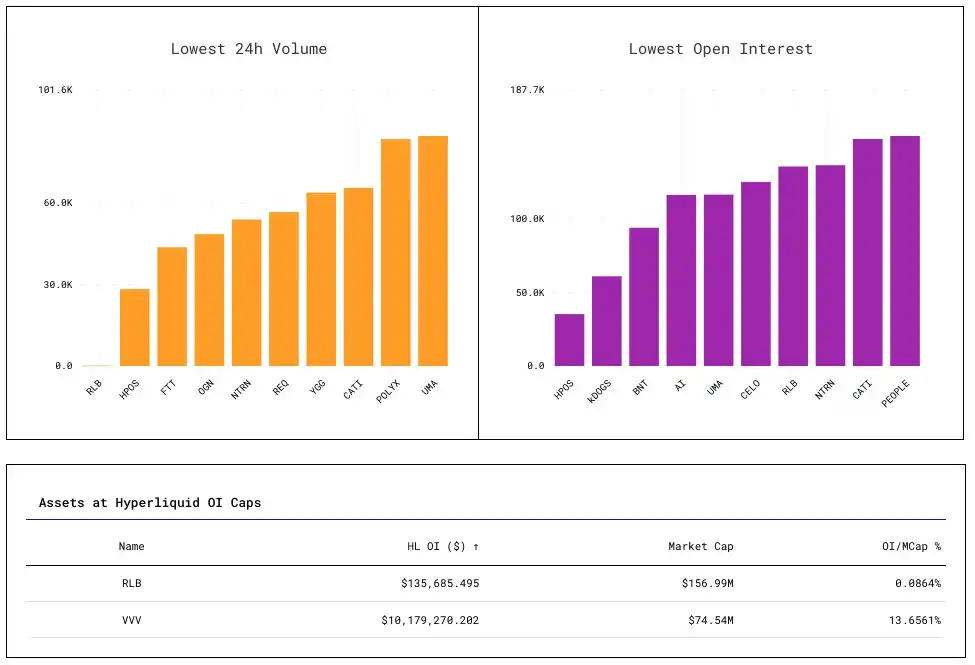
Table 3: Centralized Exchange Liquidity (±2% Order Book Depth)
Measures the cost of moving the price up or down by 2% on major centralized exchanges:
· +2% Depth: The volume of buy orders needed to push the price up by 2%.
· -2% Depth: The volume of sell orders needed to push the price down by 2%.
· Data aggregated from Binance (Spot and Perpetual), Bybit (Spot and Perpetual), Kucoin, and OKX, selecting the market with the deepest liquidity for the ±2% readings.
· The liquidity on centralized exchange order books beyond the best bid/ask price allows us to assess the risk of asset manipulation. Assets with low liquidity enable attackers to move the price with lower capital, making the attack cost-effective.
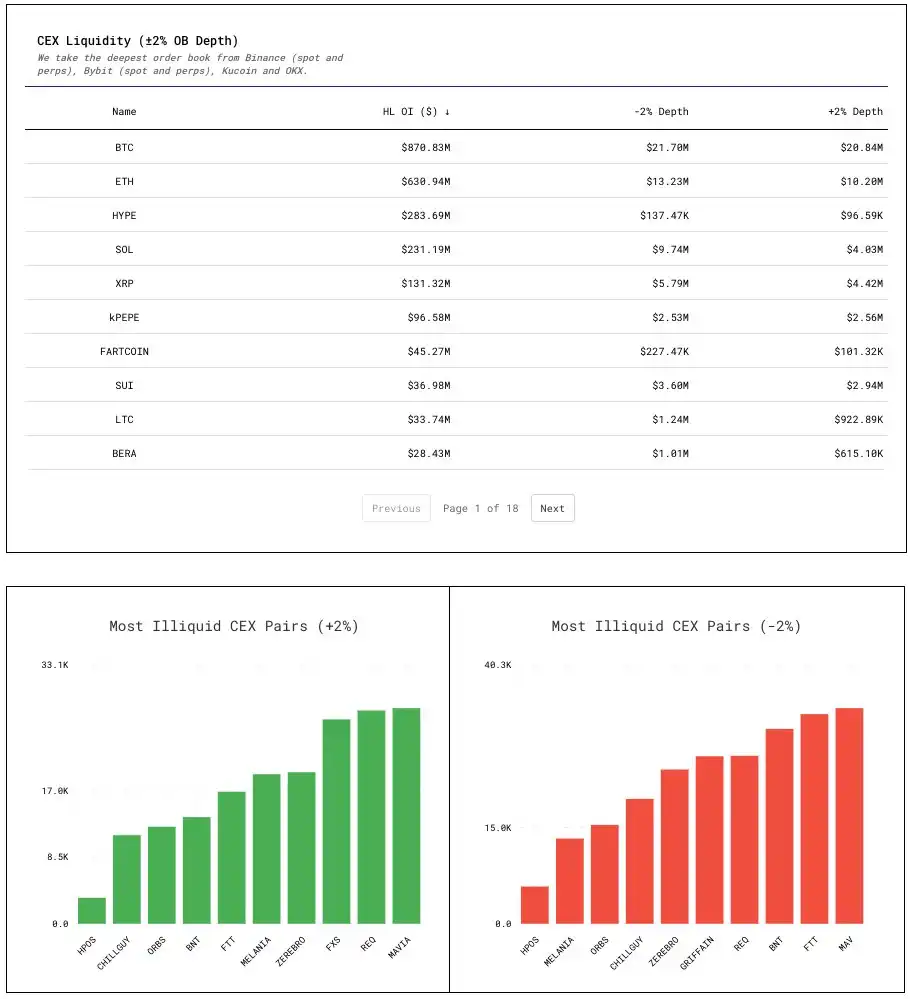
Table 4: Decentralized Exchange Liquidity
Tracking liquidity metrics on various chains:
· Total Reserve: Available liquidity in the DEX pool (in USD), including the USD value of base and quote assets.
· 24-Hour Trading Volume: Total trading activity.
· Buy/Sell Trades: Number of buy/sell trade transactions.
· Traders: Number of unique addresses conducting trades.
· Displays DEX market depth and liquidity.
· As of today, the DEX pools we track cover cosmos, evmos, canto, kava, binance-smart-chain, ethereum, moonriver, harmony-shard-0, moonbeam, energi, polygon-pos, optimistic-ethereum, arbitrum-one, arbitrum-nova, sui, fantom, near-protocol, xdai, milkomeda-cardano, avalanche, base, aptos, polygon-zkevm, solana, ronin, manta-pacific, tomochain, sonic, the-open-network, linea, neon-evm, celo, zksync, opbnb, starknet, and mantle.
· The DEX liquidity table allows us to quickly view token on-chain liquidity and its manipulation risk, as well as identify signs of hoarding by holders.
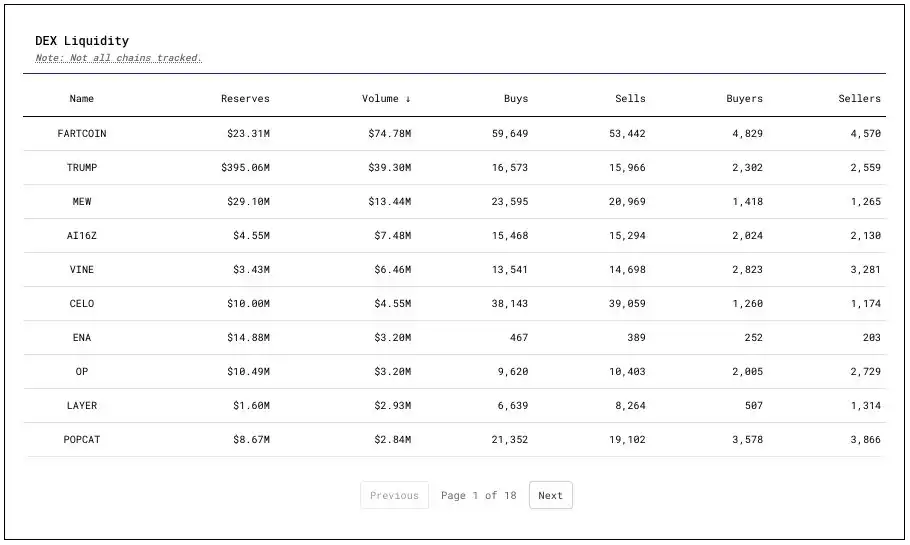
Table 5: Price Impact
By examining the order book depth beyond the best bid/ask price on Hyperliquid, we can understand the price impact. The price impact shows the nominal impact size of market orders (with ETH and BTC at $20,000 and other assets at $6,000) expected to cause a price effect.
For example, Impact Sell Price shows the price the asset would reach if a notional impact scaled market sell occurs.
· Notional Impact Scale: ETH and BTC at $20,000, all other assets at $6,000, based on the Hyperliquid documentation.
· Impact Price (Buy/Sell): The expected price after executing a market order.
· Impact Percentage: The percentage change from the current price. This metric gives us an overview of the liquidity of assets on Hyperliquid, helping to identify assets that are easily manipulated.
· Note: HPOS and RLB are only available in isolated mode, with lower risk. HLP will not be liquidated, and unrealized Profit and Loss (uPnL) cannot be used for cross-margin.
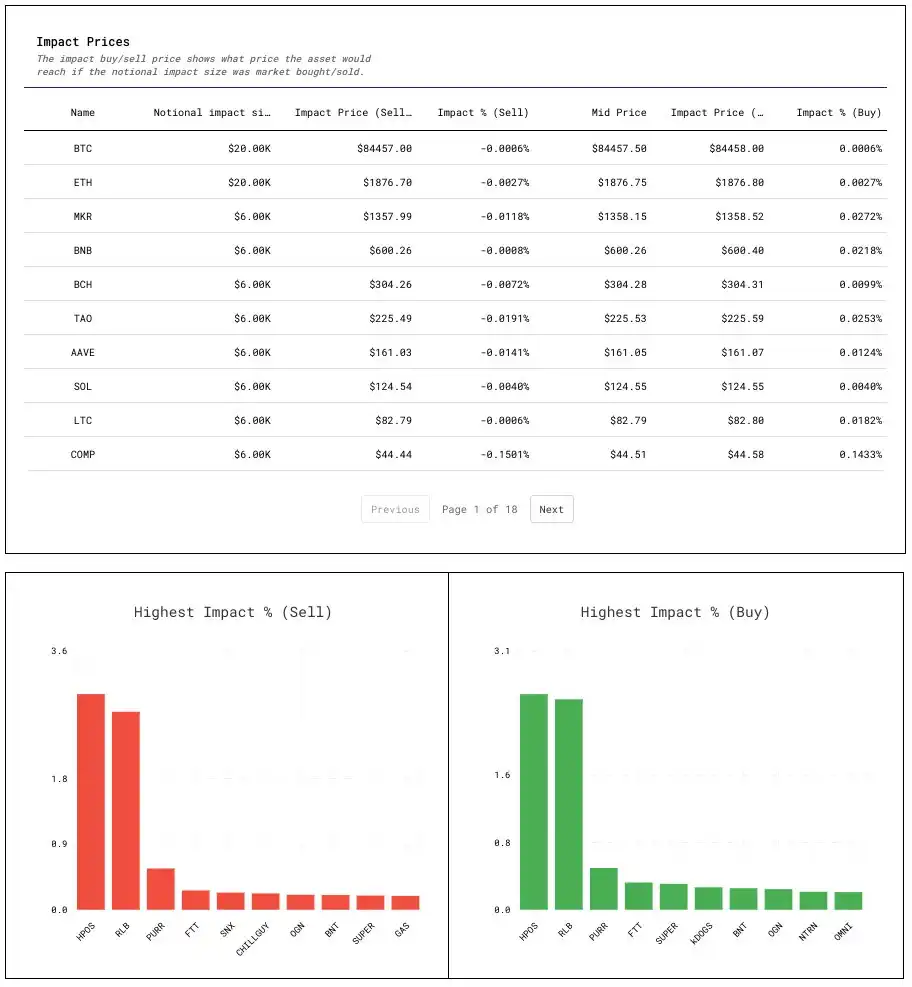
Table 6: Funding Rate Comparison (Annualized)
This table compares the perpetual futures funding rates on Hyperliquid, Bybit, and Binance:
· Notional Open Interest: The total USD value of all open perpetual futures positions on Hyperliquid.
· Funding Rates (HL, Binance, Bybit): The annualized percentage rate traders holding positions need to pay/receive.
· Exchange-HL Arbitrage: The difference in funding rates between the exchange (Binance/Bybit) and Hyperliquid.
· Comparing funding rates with major centralized exchanges allows us to identify potentially manipulable assets. When large positions enter illiquid open interest, funding rates may exhibit anomalies compared to other exchanges.
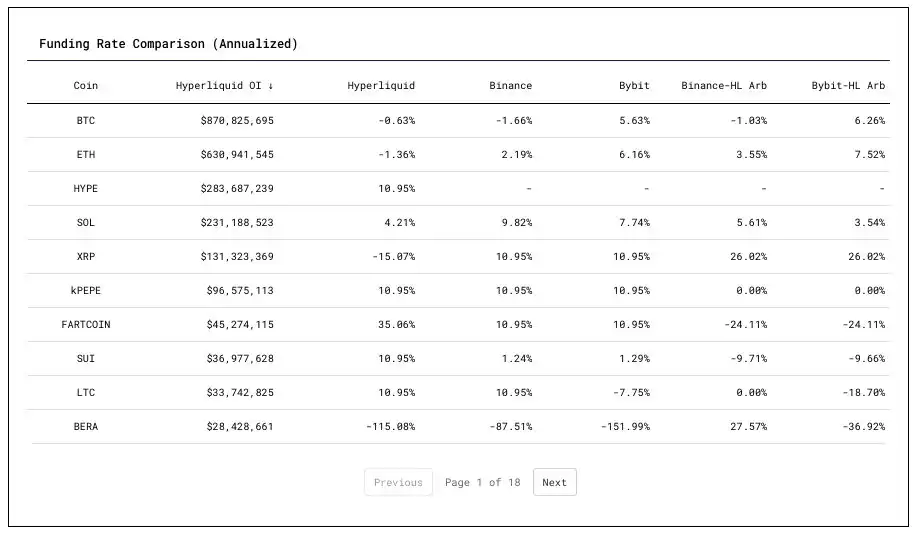
Table 7: HLP Financial Metrics
These metrics analyze the financial performance of HLP and its three sub-treasuries (HLP-A, HLP-B, and Liquidation Treasury), deriving the performance of HLP and each sub-treasury's TVL.
We estimate HLP returns, but due to data granularity constraints, they may slightly differ from actual performance. Based on these estimated returns, we calculate the following indicators:
· Maximum Drawdown: The maximum drawdown faced by depositors due to HLP strategy losses.
· Sharpe Ratio: A measure used to evaluate the risk-adjusted return on investment, reflecting the excess return obtained for assuming additional volatility (risk). A 4% risk-free rate is used here.
· Sortino Ratio: A risk-adjusted measure similar to the Sharpe Ratio, but only penalizing downside volatility (negative returns) rather than total volatility.
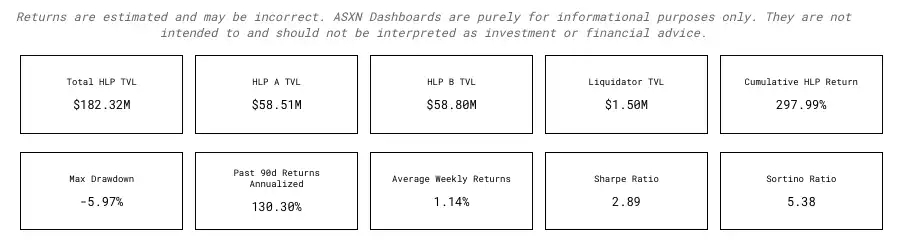
Table 8: HLP Treasury Position
· Display the real-time positions of each HLP treasury as part of the strategy.
· The HLP parent treasury appears to hold idle USDC, while the HLP-A and HLP-B child treasuries have active market-making positions.
· The Liquidation Treasury currently has no position but will have an active position if needed for backstops.
· Real-time monitoring of each treasury position is crucial to act promptly when some positions approach the platform risk limits.
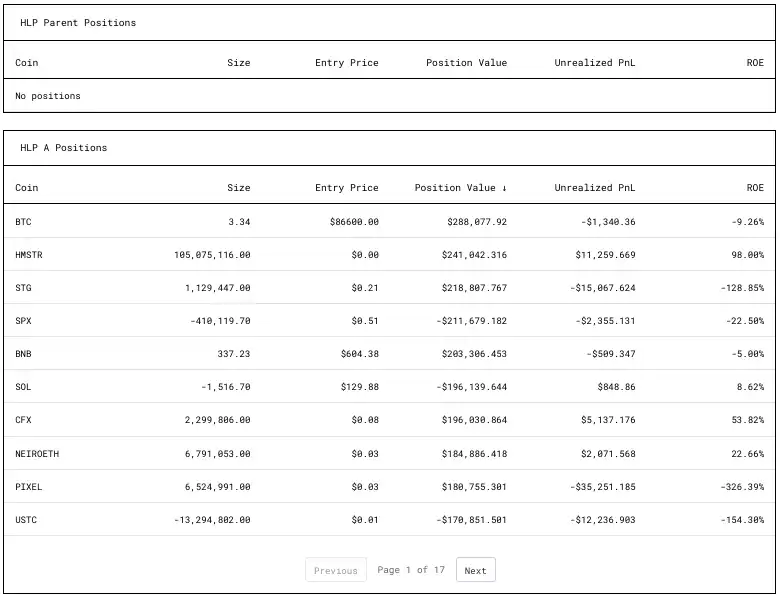
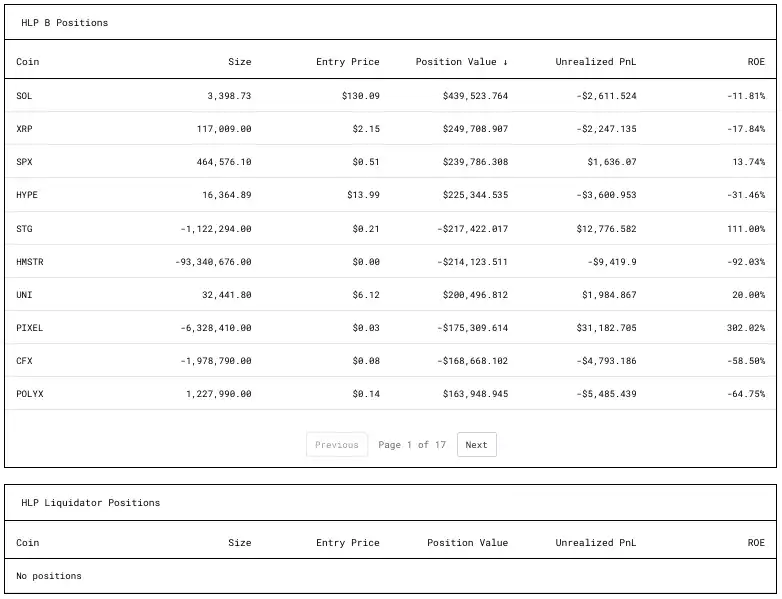
Table 9: HLP Treasury Time Series
Showing the account value and cumulative P&L of each HLP treasury.
· Note: "Total HLP" refers to the sum of HLP-A, HLP-B, Liquidation Treasury, and Parent Treasury.
· We also provide an estimated weekly return for the Total HLP.
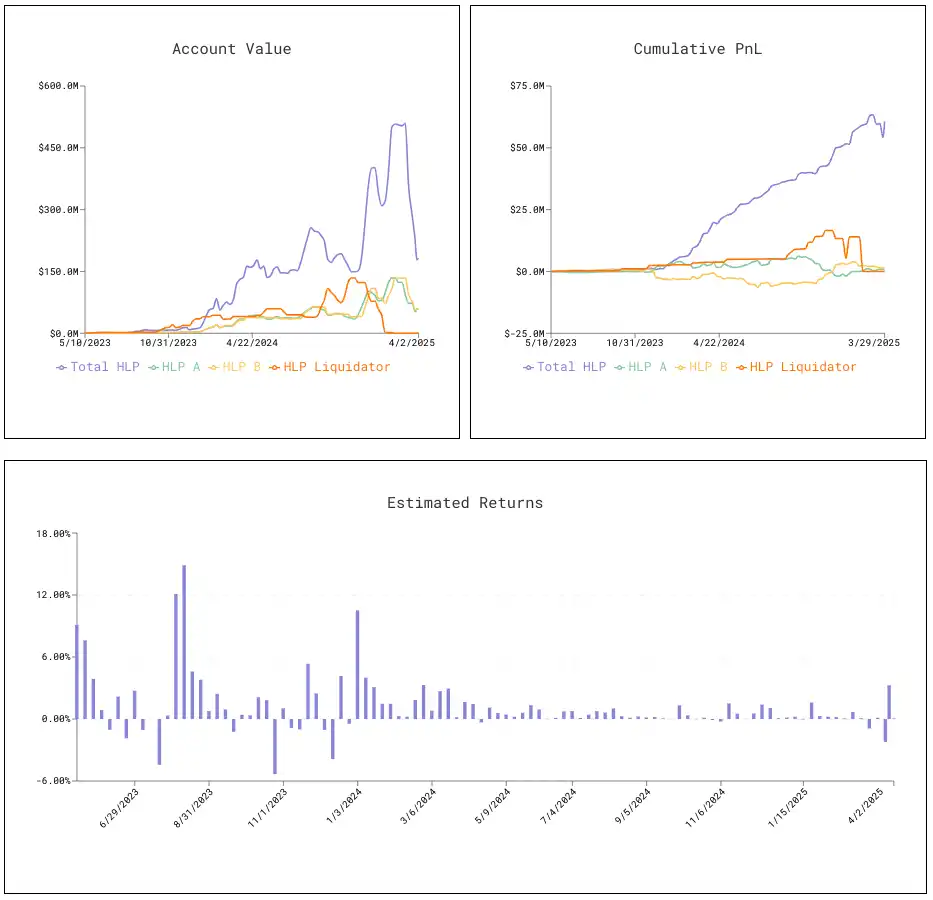
Table 10: HLP Net Position
In the cumulative net position table, we aggregate all HLP child treasury positions, displaying HLP's net exposure to specific positions/assets. It can be sorted by each treasury's maximum nominal position.
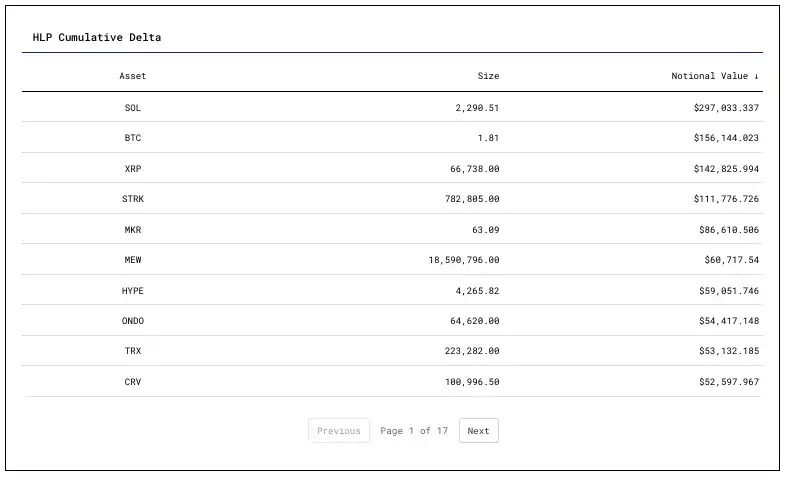
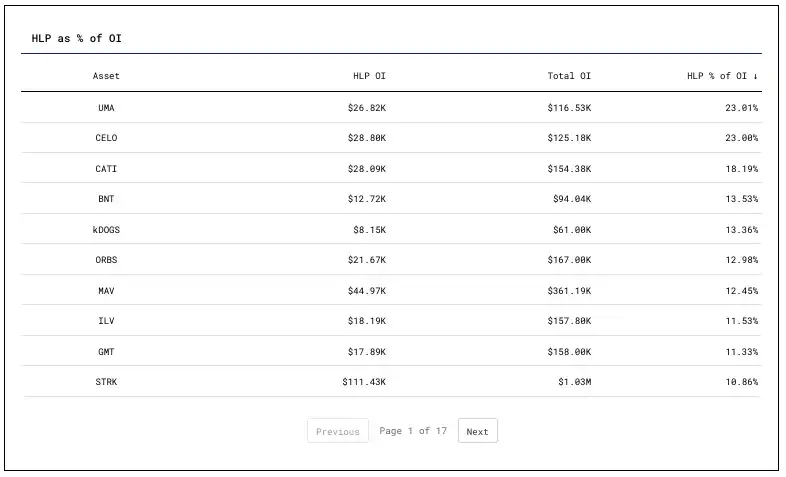
Table 11: HLP Share of Total Open Interest
· Based on HLP's cumulative net position, calculate the HLP position as a percentage of Hyperliquid's total open interest.
· Assets with low demand and external market maker quote likelihood may pose a lower risk. HLP having a high percentage in providing liquidity increases the risk of manipulation by malicious market participants. For example, HLP holds nearly 50% of the open interest on the JELLY market, while manipulators hold the other half.
· Tracking the HLP Ratio of each asset's total open interest can help us identify susceptible assets to manipulation.
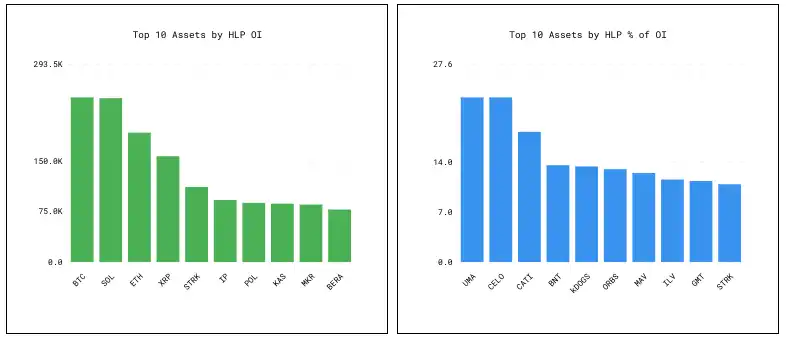
The public dashboard will enable us and Hyperliquid mainnet validators to leverage data-driven metrics to assess asset offboarding and real-time platform risk.
You may also like

Social Capital CEO: How Equity Tokenization is Reshaping Capital Markets from US Stocks to SpaceX?

CoinGecko Report: Surge of 346% vs Dip of 20.8%, The Wild Rise of DEX

a16z: The Real Opportunity of Stablecoins Lies Not in Disruption but in Filling Gaps

Mining Exodus: Someone Holds $12.8 Billion AI Order

March 6 Market Key Intelligence, How Much Did You Miss?

a16z: The True Opportunity of Stablecoins is in Complementing, Not Disrupting

Predict LALIGA Matches, Shoot Daily & Win BTC, USDT and WXT on WEEX
The WEEX × LALIGA campaign brought together football excitement and crypto participation through a dynamic interactive experience. During the event, users predicted matches, completed trading tasks, and took daily shots to compete for rewards including BTC, USDT, WXT, and exclusive prizes.

Ray Dalio Dialogue: Why I'm Betting on Gold and Not Bitcoin

Who Took the Money in the AI Era? A Must-See Investment Checklist for HALO Asset Trading
Wall Street Bears Target Ethereum: Vitalik In the Know Takes Flight, Tom Lee Remains Bullish
Pump.fun Hacker Steals $2 Million, Receives 6-Year Prison Sentence, Opts for 'Self-Detonation'

6% Annual Percentage Yield as Musk Declares War on Traditional Banks
36 years, 4 wars, 1 script: How does capital price the world in conflict?

Mining Companies' Great Migration: Some Have Already Secured $12.8 Billion in AI Orders
What Is Vibe Coding? How AI Is Changing Web3 & Crypto Development
What is vibe coding? Learn how AI coding tools are lowering the barrier to Web3 development and enabling anyone to build crypto applications.
The parent company of the New York Stock Exchange strategically invests in OKX: The intentions behind the $25 billion valuation

WEEX P2P update: Country/region restrictions for ad posting
To improve ad security and matching accuracy, WEEX P2P now allows advertisers to restrict who can trade with their ads based on country or region. Advertisers can select preferred counterparty locations for a safer, smoother trading experience.
I. Overview
When publishing P2P ads, advertisers can now set the following:
Allow only counterparties from selected countries or regions to trade with your ads.
With this feature, you can:
Target specific user groups more precisely.Reduce cross-region trading risks.Improve order matching quality.
II. Applicable scenarios
The following are some common scenarios:
Restrict payment methods: Limit orders to users in your country using supported local banks or wallets.Risk control: Avoid trading with users from high-risk regions.Operational strategy: Tailor ads to specific markets.
III. How to get started
On the ad posting page, find "Trading requirements":
Select "Trade with users from selected countries or regions only".Then select the countries or regions to add to the allowlist.Use the search box to quickly find a country or region.Once your settings are complete, submit the ad to apply the restrictions.
When an advertiser enables the "Country/Region Restriction" feature, users who do not meet the criteria will be blocked when placing an order and will see the following prompt:
If you encounter this issue when placing an order as a regular user, try the following solutions.
Choose another ad: Select ads that do not restrict your country/region, or ads that allow users from your location.Show local ads only: Prioritize ads available in the same country as your identity verification.
IV. Benefits
Compared with ads without country/region restrictions, this feature provides the following improvements.
Aspect
Improvement
Trading security
Reduces abnormal orders and fraud risk
Conversion efficiency
Matches ads with more relevant users
Order completion rate
Reduces failures caused by incompatible payment methods
V. FAQ
Q1: Why are some users not able to place orders on my ad?
A1: Their country or region may not be included in your allowlist.
Q2: Can I select multiple countries or regions when setting the restriction?
A2: Yes, multiple selections are supported.
Q3: Can I edit my published ads?
A3: Yes. You can edit your ad in the "My Ads" list. Changes will take effect immediately after saving.



 App
App