
Without Narrative Power, Web3 Will Not Tap into the Vastness

 Prefer us on Google

Original Article Title: Web3 Fails Without Storytelling
Original Article Author: Noir, Solana Content Creator
Original Article Translation: Chopper, Foresight News
The failure of Web3 has never been due to a lack of creativity. In fact, its problem lies in the difficulty of building resonance.
The current narrative of Web3 is mostly filled with abstract concepts: public chains, infrastructure, protocols, layers... These terms are not inherently wrong! However, they lack any "human touch," making it impossible for the average person to feel a connection.
This is where the value of storytelling lies. In the Web3 space, the importance of storytelling far exceeds that of any other industry.
Web3 is Built on Logic, Yet Lacks Emotional Resonance

In other fields, people already have a cognitive context. For example: talking about food will stimulate your appetite; discussing fitness can help you visualize progress; mentioning travel will immediately bring to mind the scenery of your destination.
But Web3 fails to do this. Creators and project teams are always earnestly explaining: how amazing those invisible systems and intangible processes are.
Without a story to set the stage, everything will seem distant and cold.
In short: incredibly dull. Obviously, no one will pay for something boring.
Storytelling is the Gateway for Ordinary People to Enter Web3

Most creators and project teams are eager to explain right off the bat: how this thing works. But they forget that the beginning of a good story always lies in describing: what feelings this thing brings.
Confusion, laughter, relief, vulnerability... these emotions are completely absent from Web3 narratives.
My friend, following this trend will lead to an obvious outcome. Even if people don't understand the technology, these emotions are universal. The key is that when someone recognizes familiar feelings in a story, they will subconsciously follow you to listen to your subsequent professional insights.
Stop Just Listing Features, Talk More About User Experience Moments

Comparing the two ways of expression makes it clear which one is superior.
Functionality First Version: This feature improves system scalability by optimizing throughput.
There's nothing wrong with that statement, but you forget it as soon as you hear it, and... What exactly is it trying to say?
Story First Version: I kept refreshing the page, mentally preparing myself to wait again... Only to find out that the transaction had been completed long ago.
It conveys the same core information, but the latter adds warmth and is more easily understood.
Telling a story is not meant to dumb down the technology but to prepare the audience's brain to receive complex information in advance.
Understood? I hope you've grasped it, so let's continue...
-- Price
Complex Concepts Need to Be Grounded in Everyday Scenarios
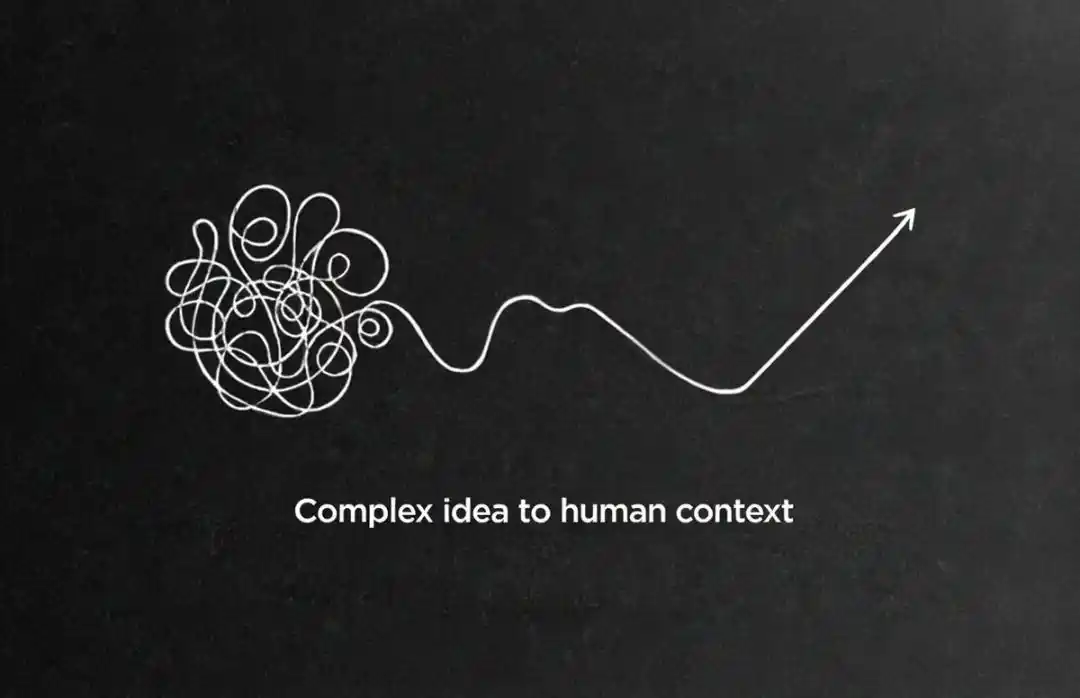
When faced with a complex problem, people often wonder, "How is this relevant to me?"
However, a story can subtly provide the answer. All it takes is a simple everyday scenario to establish a connection.
In fact, you don't need to explain every detail comprehensively. You just need to showcase a key moment: a frustrating bottleneck, a moment of pressure release, a small victory.
That's enough to make a complex concept feel real and relatable.
Real-world Validation: This Methodology Really Works
At the core of my work is creating story-driven video content for Web3 bounty programs and sponsors.
Over time, I've noticed a pattern: the videos that win are not the ones with the most technical explanations but those that start with heartwarming moments.
I don't jump right into listing features or explaining principles; instead, I focus on these scenes: the awkwardness of first using the product, the struggles before understanding a certain feature, the aha moment upon successful connection.
This narrative approach always keeps the audience engaged longer and helps them understand quicker. This is why my videos stand out in bounty competitions.
It's not because I delve into more technical details but because I make complex concepts feel human and emotionally engaging.
This content is provided for general informational purposes only and doesn't constitute financial, investment, legal, or tax advice. Any events, rewards, online promotions, or related information mentioned herein should not be considered a recommendation, solicitation, or invitation to purchase, sell, trade, or otherwise deal in any crypto assets. Crypto assets are highly volatile and may result in loss. The availability of WEEX services, products, and related events may vary by region. You are responsible for ensuring that your participation is in accordance with applicable local laws and regulations.
You may also like

SOL Strategies Locks 54.97% of Solana as Collateral

Yakovenko proposes expanding SOL supply for company acquisition

Solana’s Alpenglow bug hunt charges researchers 0.5 SOL to report flaws

Jurassic Finance Advances Dinosaur Fossil Tokenization on Solana

Scale AI Launches RSI Bench to Test AI's Self-Improvement Capabilities

Solana activates Agave 4.2, reducing block time to 200 ms and storage costs by 90%

SOL Spot ETF Sees Net Inflow of $10.26 Million Last Week
Multicoin Completes Stake Liquidation in Forward Industries

Solana Company Reports $2.5 Million Revenue and $30.3 Million Net Loss in Q2

Solana Aims to Reduce Final Transaction Confirmation Time to 150 Milliseconds

Forward Industries Reports Q2 Net Loss of $69 Million Due to SOL Price Decline
Eco Launches Any-to-Any Token Swap Feature

Wise Integrates 66,000 SOL into Its Own Validator Node

Solana Network Nearly Halts, Losing Approximately 333 SOL Staking Rewards

Solana Records 171.9 Million Non-Voting Transactions in a Day
67% of Crypto Card Payments Processed by Optimism, Solana, and Base

Passport Prime Releases KeyOS 1.3.1 with New Mnemonic Last Word Generation Feature
Hugging Face Recovers 17,600 Breach Attacks

SOL Spot ETF Sees Net Inflow of $2.82 Million Last Week

Kimi Releases Open Source PerceptionBench, GPT-5.6-Sol Achieves Top Accuracy of 59.7%
Claude Opus 5 Tops Vending Machine AI Evaluation, Controversy Arises Over Frequent Collusion Threats
Running Costs Decrease by 20% After Launch of GPT-5.6
Kimi Releases Open Source PerceptionBench, GPT-5.6-Sol Achieves Top Accuracy of 59.7%

Kimi K3 Scores Close to Fable 5, Costs Rise to 10 Times Previous Generation

Kimi K3 Ranks 4th, User Confirmation Success Metric First
Suspected FTX/Alameda address transfers 201000 SOL to BitGo Custody

Over 2 Billion Yen May Have Flowed Out from Early Solana Whales, Awakening After 5 Years

Codex Users Reach 6 Million as OpenAI Lifts 5-Hour Usage Limit

OpenAI CEO Altman Launches GPT-5.6 Sol Creation Challenge

SOL Spot ETF Sees Daily Net Inflow of $150,500
SOL Strategies Locks 54.97% of Solana as Collateral
Yakovenko proposes expanding SOL supply for company acquisition
Solana’s Alpenglow bug hunt charges researchers 0.5 SOL to report flaws
Jurassic Finance Advances Dinosaur Fossil Tokenization on Solana
Scale AI Launches RSI Bench to Test AI's Self-Improvement Capabilities
Solana activates Agave 4.2, reducing block time to 200 ms and storage costs by 90%

Contents
Latest articles


Latest coin listings on WEEX


