
- Buy Crypto
- Markets
 Futures
- Spot
- Copy Trade
- Earn
- More
WSJ: Making Billions Overnight, He Bets Big on Bitcoin to Turn It Around

Original Title: The Man Making Billions From the Wildest Bitcoin Bet
Original Author: Gregory Zuckerman, WSJ
Translation: Luffy, Foresight News
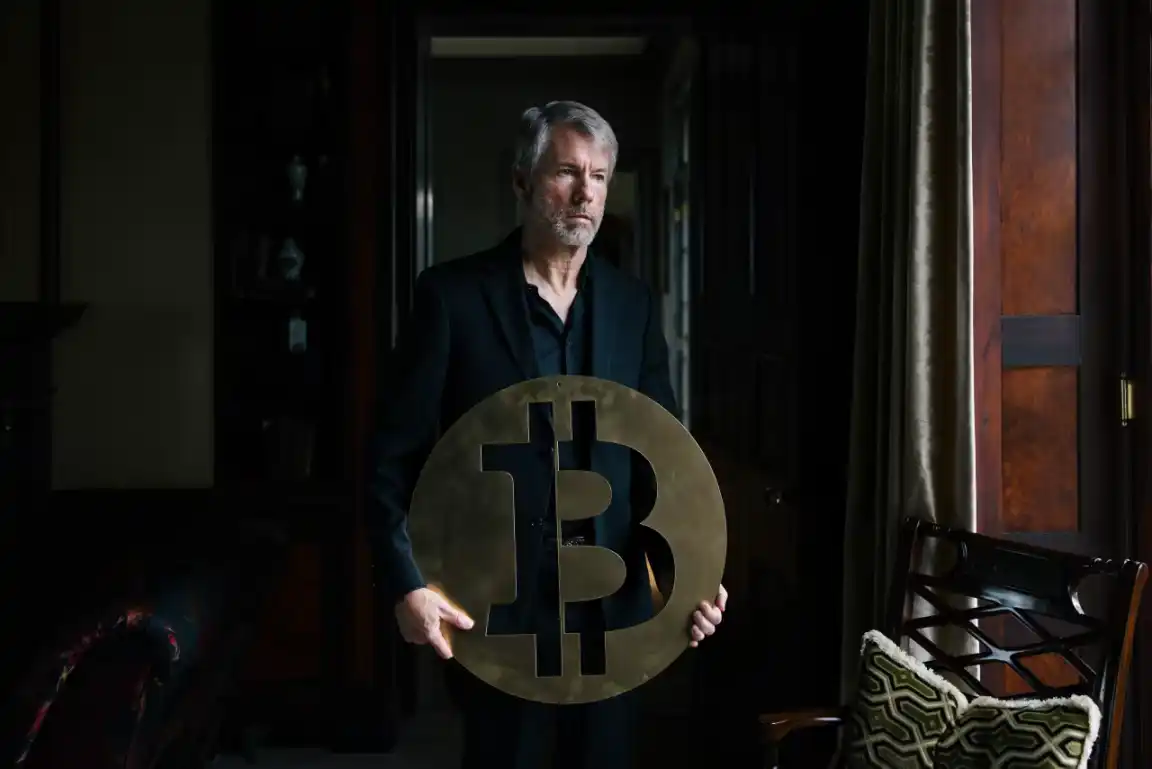
MicroStrategy CEO Michael Saylor
Michael Saylor's company has not launched any popular products or services. What he and MicroStrategy have done is to sell new shares and bonds at a historically rapid pace, then invest all the funds in Bitcoin, vowing to do so repeatedly.
Over the past year, MicroStrategy's stock price has risen by about 690%. The 59-year-old chairman holds about 10% of the company, worth around $9.7 billion, and personally holds about $1.9 billion worth of Bitcoin.
Saylor has become a public face of the recent Bitcoin frenzy, with nearly 4 million followers on X Platform (formerly Twitter). To celebrate Bitcoin breaking $100,000, Saylor hosted a New Year's Eve party at his waterfront mansion in Miami, inviting hundreds of cryptocurrency community members, with his luxury yacht moored nearby. At the party, six dancers dressed in gold costumes performed. Prominent figures from various fields and investment heavyweights gathered, including former Legg Mason fund manager Bill Miller, Fortress Investment Group Chairman Peter Briger, and Capital Group's key portfolio manager Mark Casey. The event was live-streamed on YouTube to tens of thousands of Bitcoin enthusiasts, with Saylor hosting the party in a black suit jacket and a Bitcoin-themed T-shirt.
The enthusiasm for Saylor's company is so high that it has led to a perplexing situation: MicroStrategy holds about $47 billion worth of Bitcoin, but its stock market value has reached $97 billion. It's as if investors were spending $2 to buy a $1 bill. Equally surprising is that experienced investors are among the largest buyers, including the well-established mutual fund company Capital Group, which held about 8% of MicroStrategy as of September 30, and Norway Bank Investment Management, managing $1.5 trillion in assets from the Norwegian Government Pension Fund, holding nearly 1% of MicroStrategy.
Fans say that this premium reflects their belief that Saylor will continue to profit from his Bitcoin bet. They believe that Bitcoin's limited total supply of 21 million coins will increase its value. SYZ Capital partner Richard Byworth holds MicroStrategy stock personally and states that Saylor, by issuing stock at a high price and selling bonds to the company at favorable terms, is able to create value for shareholders while expanding MicroStrategy's Bitcoin reserves.
"This premium is reasonable and will continue to exist," said Wall Street veteran Jordi Visser, who previously worked at Morgan Stanley and recently bought MicroStrategy stock. "No other company can do what he has done. They now own about 2% of the Bitcoin supply; who else can own more?"
However, Saylor's strategy also comes with significant risks. He has ridden the investment waves, sometimes losing billions of dollars of personal wealth in a single day when the wave peaks and crashes.
Saylor declined to comment for this article.
Saylor, who has never been married, will turn 60 next month. He has faced setbacks in his career and clashed with financial regulatory authorities. Last year, he agreed to pay $40 million to the District of Columbia to settle an income tax dispute. Previously, Washington officials claimed he was, in fact, a District resident, not a resident of Florida or Virginia as he had claimed, and therefore should pay taxes to the District.
Saylor's father was a career Air Force officer. Saylor studied Aeronautics and Astronautics at MIT and participated in the Air Force Reserve Officer Training Corps. A few years after graduation, in 1989, he co-founded MicroStrategy in Tyson's Corner, Virginia, with a college friend. It started as a data mining software company.
During the late 1990s Internet bubble, MicroStrategy rose rapidly. His stock was worth about $10 billion, enough for him to throw lavish parties for employees and others, as well as organize Caribbean cruises. MicroStrategy also bought domain names such as Mike.com, Michael.com, Hope.com, and Voice.com, selling Voice.com for $30 million.
But everything came crashing down when the Internet bubble burst in 2000. As regulators examined industry revenue recognition practices, MicroStrategy was forced to restate its revenue and earnings. The failure was so dramatic that it even caught the attention of tabloids: in March of that year, the New York Daily News ran a story titled "Loses $6 Billion in a Day" with a photo of the then 35-year-old Saylor, looking neat in a suit and tie but with a bewildered expression on his face.

Saylor has always been a prominent figure in the Bitcoin space, and the above image shows him speaking at a conference in 2023
Later that year, Saylor, along with two other executives and the company, paid $11 million to settle accounting fraud charges brought by the U.S. Securities and Exchange Commission (SEC) over a financial restatement. The SEC alleged that the company had overstated its revenue and income, showing profits instead of losses, but Saylor and others neither admitted nor denied the allegations.
In July 2002, MicroStrategy's stock closed at 45 cents, a significant drop from its peak of $313 in 2000, and the company was facing debt issues.
During a lunch at a Hamptons villa in New York, venture capitalist Rick Rickertsen expressed sympathy to Saylor and asked him if he was worried about losing his company.
“It’s possible,” Saylor said, “but I would start over.”
Saylor restructured MicroStrategy's debt and implemented a 10-for-1 stock split to avert the crisis. Over the years, Saylor had been on the lookout for the next big opportunity. At one point, he made a significant personal gain by investing in stocks like Google and Apple, but he dismissed Bitcoin, once tweeting in 2013 that Bitcoin was “days numbered.”
By 2020, MicroStrategy's stock had remained almost unchanged for years with dim growth prospects. The company had a market capitalization of only $1.5 billion but was still profitable with around $500 million in cash.
During the COVID-19 pandemic in 2020, Saylor contemplated what to do with the company's cash from his home in Miami. Concerned that government spending to maintain economic stability might lead to inflation, Saylor revisited Bitcoin and became a staunch supporter. Soon, he proposed to the board to buy Bitcoin with the cash, a move the board agreed to mainly because the company seemed to have no better options. They believed that at least this move would attract some beneficial attention.
“The company was at a standstill at the time, with little to no Wall Street attention,” Rickertsen, who later became a board member, said. “The future looked bleak.”
That year, Saylor took half of the company's cash, about $250 million, and bought Bitcoin at a price of around $11,000 per coin. He himself also put in over $100 million. However, the Bitcoin price soon dropped to $9,000, resulting in a paper loss of about $40 million for MicroStrategy.
"Most of our board members were like, 'Oh my God, what have we done, we're going to get sued,'" Rickertsen said, "Saylor was also very worried."
This panic did not last long. The price of Bitcoin started to rise, breaking $26,000 by the end of 2020. MicroStrategy borrowed billions of dollars to buy more Bitcoin, including a $205 million loan at a floating interest rate of 8.27%, which was challenging loan terms at the time.
Then, by the end of 2022, the cryptocurrency exchange FTX collapsed, causing the Bitcoin price to drop below $17,000, and MicroStrategy's stock price also fell to around $17. The company's cost basis for the held Bitcoin was around $30,000, resulting in a paper loss. Rumors spread that the company was in trouble. However, Saylor and the company doubled down on their bet.
With Saylor doubling down on the strategy of raising funds through stock and bond offerings to purchase Bitcoin, and with the continued rise in the price of Bitcoin, the company's stock price began to soar. According to investment bank Benchmark Company analyst Mark Palmer, in just 2024, MicroStrategy raised $23.2 billion through stock and bond sales.
Saylor's rhetoric may be somewhat repetitive and simplistic, but his belief in Bitcoin has always been unwavering. He emphasizes that Bitcoin's supply is limited, a characteristic that sets it apart from the U.S. dollar and even gold. Saylor believes this makes Bitcoin perform better in resisting inflation. He also states that Bitcoin's digital nature makes it more convenient and cost-effective for holders to store and use, without the need for intermediaries, making it a "revolutionary" form of currency.
Some mutual funds and other institutions have internal rules prohibiting the purchase of Bitcoin and Bitcoin ETFs, making MicroStrategy's stock their indirect path to betting on Bitcoin. Even some large conservative investors view the stock as a potential way to gain an advantage over competitors who are unwilling to enter the cryptocurrency space.
Indeed, Saylor is adept at creating various types of equity and debt investment products, such as bank loans, convertible bonds, common stock, etc., to ensure a continuous influx of funds.
“His genius is in creating different products for different audiences,” said Brett Messing, a partner at SkyBridge Capital, a firm that manages funds with significant Bitcoin investments and provides advisory services to a fund holding MicroStrategy stock.
Over the past month or so, Saylor has been aggressively promoting MicroStrategy and Bitcoin on TV shows, popular podcasts, industry conferences, and other venues. “If you’re not buying Bitcoin at the highs, you’re missing out on an opportunity to make money,” he recently tweeted.
“He’s bombastic in public and detailed in private,” said Matt Hougan, Chief Investment Officer at Bitwise Asset Management, recounting how last summer, he heard Saylor speak at a dinner with 12 investors. His firm manages an ETF holding MicroStrategy stock.
If Bitcoin continues to rise, the premium on holding MicroStrategy stock may persist. However, if Bitcoin prices crash, MicroStrategy’s stock may follow suit. Even if the premium disappears, the stock could still be affected as long as Bitcoin prices remain stable. Skeptics point out that similar investment vehicles, such as closed-end funds, often trade below the value of their underlying assets, not at a premium.
Nevertheless, the company may not be facing a going-concern issue. MicroStrategy currently has $7.26 billion in unsecured debt, most of which is issued at very low rates. The company holds 450,000 Bitcoins at an average cost of around $62,000 per coin. The value of the Bitcoins held by the company would only fall below its debt if Bitcoin dropped below $16,000 and stayed around that level at debt maturity.
Just over a week ago, Saylor unveiled a novel way for MicroStrategy to raise funds from investors to support its Bitcoin purchase plans. He announced that the company would issue $2 billion in “perpetual preferred stock” this quarter. The news prompted analyst Palmer to reiterate his $650 price target for MicroStrategy stock, about 65% above the current price.
You may also like

AI within artillery range
“The cloud” is a metaphor, but the data center isn’t.

March 4th Market Key Intelligence, How Much Did You Miss?

Taking Stock of Crypto's Washington Power Players: Who is Advocating for US Crypto Regulation?

DDC Enterprise Limited Announces 2025 Unaudited Preliminary Financial Performance: Record Revenue Achieved, Bitcoin Treasury Grows to 2183 Coins
On March 4, 2026, DDC Enterprise Limited (NYSE American: DDC) today announced preliminary, unaudited full-year financial performance for the year ended December 31, 2025. The company expects to achieve record revenue and record positive adjusted EBITDA, primarily driven by continued growth in its core consumer food business and overall margin improvement. The final audited financial report is expected to be released in mid-April 2026.
Revenue: Expected to be between $39 million and $41 million, reaching a new company high.
Organic Growth: Excluding the impact of the company's strategic contraction of its U.S. operations, core revenue is expected to grow 11% to 17% year over year.
Gross Profit Margin: Expected to be between 28% and 30%, reflecting continued operational efficiency improvements.
Adjusted EBITDA: The company expects to achieve a positive full-year result in 2025, a significant improvement from a $3.5 million loss in 2024, mainly due to rigorous cost controls and a higher-margin sales mix.
In 2025, DDC's core consumer food business maintained strong operational performance.
The company also disclosed Core Consumer Food Business Adjusted EBITDA, a metric that further excludes costs related to its Bitcoin reserve strategy and non-cash fair value adjustments related to its Bitcoin holdings from adjusted EBITDA to more accurately reflect the core business performance.
In 2025, Core Consumer Food Business Adjusted EBITDA is expected to be between $5.5 million and $6 million.
In the first half of 2025, DDC initiated a long-term Bitcoin accumulation strategy, holding Bitcoin as its primary reserve asset.
As of December 31, 2025: The company holds 1,183 BTC.
As of February 28, 2026: Holdings increased to 2,118 BTC
Today's additional purchase of 65 BTC brings the company's total holdings to 2,183 BTC
DDC Founder, Chairman, and CEO Norma Chu stated, "We are proud to have closed 2025 with record revenue and positive adjusted EBITDA, demonstrating the steady growth of the company's consumer food business and the ongoing improvement in profitability. We are building a disciplined, growth-oriented food platform and strategically allocating capital to Bitcoin assets with a long-term view, aligning with our core beliefs. We believe that this dual-track model of 'Steady Consumer Business + Strategic Bitcoin Reserve' will help DDC create lasting long-term value for shareholders."
For the full year 2025, the company defines "Adjusted EBITDA" (a non-GAAP financial measure) as: Net income / (loss) excluding the following items:· Interest expense· Taxes· Foreign exchange gains/losses· Long-lived asset impairment· Depreciation and amortization· Non-cash fair value changes related to financial instruments (including Bitcoin holdings)· Stock-based compensation
DDC Enterprise Limited (NYSE: DDC) is actively implementing its corporate Bitcoin Treasury strategy while continuing to strengthen its position as a leading global Asian food platform.
The company has established Bitcoin as a core reserve asset and is executing a prudent, long-oriented accumulation strategy. While expanding its portfolio of food brands, DDC is gradually becoming one of the public company pioneers in integrating Bitcoin into its corporate financial architecture.

Uncovering YZi Labs 229 Investment: Over 18% of the portfolio is already inactive, with an average project transparency score of 78

The business of crypto VC is becoming promising

China's AI Compute Power Counterstrike

Global Assets Plunge: Hormuz, Chips, and a South Korean Holiday

Bloomberg has reported twice, Hyperliquid once again in Wall Street's radar

Trump Backs Crypto Bill, SEC Halts Leveraged ETF, What Is the English-Speaking Crypto Community Talking About?

OpenClaw Floods Into Polymarket, Some Making Tens of Thousands Per Month
Understanding Trump's "Warfare Playbook": Ten Signals Investors Must Know

Iranian Missile Heading Toward UAE, Claude Also Within Range
Successive Core Team "Heroes" Depart, Has Aave's DAO Dream Crumbled?

Is This the Year of the Robot? A Deep Dive into Robotics Projects
When AI Takes Over Money: Bitcoin Becomes the "First Choice," Fiat Is Left Out

AI Trading in Live Markets: 4 Lessons From a WEEX Hackathon Top 10 Finalist
AI trading meets real markets. Explore 4 lessons from a WEEX Hackathon Top 10 finalist on surviving volatility, trusting AI models, and building smarter crypto trading systems.

MegaETH Co-founder: 48 Hours After Leaving Dubai, I Reassessed the Entire Crypto Space
AI within artillery range
“The cloud” is a metaphor, but the data center isn’t.
March 4th Market Key Intelligence, How Much Did You Miss?
Taking Stock of Crypto's Washington Power Players: Who is Advocating for US Crypto Regulation?
DDC Enterprise Limited Announces 2025 Unaudited Preliminary Financial Performance: Record Revenue Achieved, Bitcoin Treasury Grows to 2183 Coins
On March 4, 2026, DDC Enterprise Limited (NYSE American: DDC) today announced preliminary, unaudited full-year financial performance for the year ended December 31, 2025. The company expects to achieve record revenue and record positive adjusted EBITDA, primarily driven by continued growth in its core consumer food business and overall margin improvement. The final audited financial report is expected to be released in mid-April 2026.
Revenue: Expected to be between $39 million and $41 million, reaching a new company high.
Organic Growth: Excluding the impact of the company's strategic contraction of its U.S. operations, core revenue is expected to grow 11% to 17% year over year.
Gross Profit Margin: Expected to be between 28% and 30%, reflecting continued operational efficiency improvements.
Adjusted EBITDA: The company expects to achieve a positive full-year result in 2025, a significant improvement from a $3.5 million loss in 2024, mainly due to rigorous cost controls and a higher-margin sales mix.
In 2025, DDC's core consumer food business maintained strong operational performance.
The company also disclosed Core Consumer Food Business Adjusted EBITDA, a metric that further excludes costs related to its Bitcoin reserve strategy and non-cash fair value adjustments related to its Bitcoin holdings from adjusted EBITDA to more accurately reflect the core business performance.
In 2025, Core Consumer Food Business Adjusted EBITDA is expected to be between $5.5 million and $6 million.
In the first half of 2025, DDC initiated a long-term Bitcoin accumulation strategy, holding Bitcoin as its primary reserve asset.
As of December 31, 2025: The company holds 1,183 BTC.
As of February 28, 2026: Holdings increased to 2,118 BTC
Today's additional purchase of 65 BTC brings the company's total holdings to 2,183 BTC
DDC Founder, Chairman, and CEO Norma Chu stated, "We are proud to have closed 2025 with record revenue and positive adjusted EBITDA, demonstrating the steady growth of the company's consumer food business and the ongoing improvement in profitability. We are building a disciplined, growth-oriented food platform and strategically allocating capital to Bitcoin assets with a long-term view, aligning with our core beliefs. We believe that this dual-track model of 'Steady Consumer Business + Strategic Bitcoin Reserve' will help DDC create lasting long-term value for shareholders."
For the full year 2025, the company defines "Adjusted EBITDA" (a non-GAAP financial measure) as: Net income / (loss) excluding the following items:· Interest expense· Taxes· Foreign exchange gains/losses· Long-lived asset impairment· Depreciation and amortization· Non-cash fair value changes related to financial instruments (including Bitcoin holdings)· Stock-based compensation
DDC Enterprise Limited (NYSE: DDC) is actively implementing its corporate Bitcoin Treasury strategy while continuing to strengthen its position as a leading global Asian food platform.
The company has established Bitcoin as a core reserve asset and is executing a prudent, long-oriented accumulation strategy. While expanding its portfolio of food brands, DDC is gradually becoming one of the public company pioneers in integrating Bitcoin into its corporate financial architecture.


 App
App